

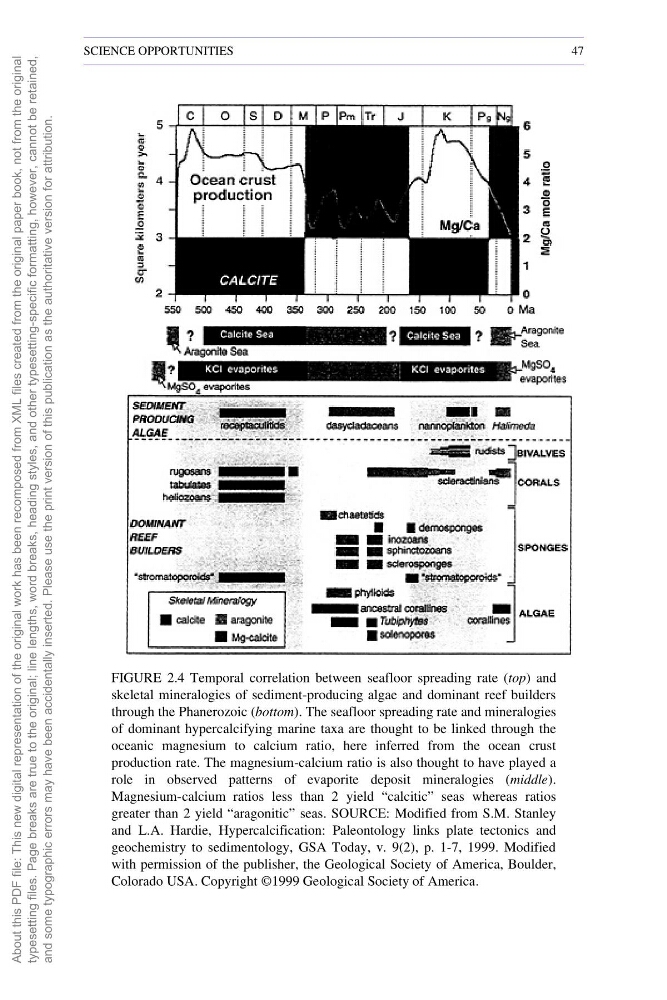
FIGURE 2.4 Temporal correlation between seafloor spreading rate (top) and
skeletal mineralogies of sediment-producing algae and dominant reef builders
through the Phanerozoic (bottom). The seafloor spreading rate and mineralogies
of dominant hypercalcifying marine taxa are thought to be linked through the
oceanic magnesium to calcium ratio, here inferred from the ocean crust
production rate. The magnesium-calcium ratio is also thought to have played a
role in observed patterns of evaporite deposit mineralogies (middle).
Magnesium-calcium ratios less than 2 yield “calcitic” seas whereas ratios
greater than 2 yield “aragonitic” seas. SOURCE: Modified from S.M. Stanley
and L.A. Hardie, Hypercalcification: Paleontology links plate tectonics and
geochemistry to sedimentology, GSA Today, v. 9(2), p. 1-7, 1999. Modified
with permission of the publisher, the Geological Society of America, Boulder,
Colorado USA. Copyright ©1999 Geological Society of America.
SCIENCE OPPORTUNITIES
47
About this PDF file: This new digital representation of the
original work has been recomposed from XML files created
from the original paper book, not from the original
typesetting files. Page breaks are true to the original; line lengths,
word breaks, heading styles, and other typesetting-specific
formatting, however, cannot be retained,
and some typographic errors may have been accidentally inserted.
Please use the print version of this publication as the authoritative
version for attribution.
skeletal mineralogies of sediment-producing algae and dominant reef builders
through the Phanerozoic (bottom). The seafloor spreading rate and mineralogies
of dominant hypercalcifying marine taxa are thought to be linked through the
oceanic magnesium to calcium ratio, here inferred from the ocean crust
production rate. The magnesium-calcium ratio is also thought to have played a
role in observed patterns of evaporite deposit mineralogies (middle).
Magnesium-calcium ratios less than 2 yield “calcitic” seas whereas ratios
greater than 2 yield “aragonitic” seas. SOURCE: Modified from S.M. Stanley
and L.A. Hardie, Hypercalcification: Paleontology links plate tectonics and
geochemistry to sedimentology, GSA Today, v. 9(2), p. 1-7, 1999. Modified
with permission of the publisher, the Geological Society of America, Boulder,
Colorado USA. Copyright ©1999 Geological Society of America.
SCIENCE OPPORTUNITIES
47
About this PDF file: This new digital representation of the
original work has been recomposed from XML files created
from the original paper book, not from the original
typesetting files. Page breaks are true to the original; line lengths,
word breaks, heading styles, and other typesetting-specific
formatting, however, cannot be retained,
and some typographic errors may have been accidentally inserted.
Please use the print version of this publication as the authoritative
version for attribution.