

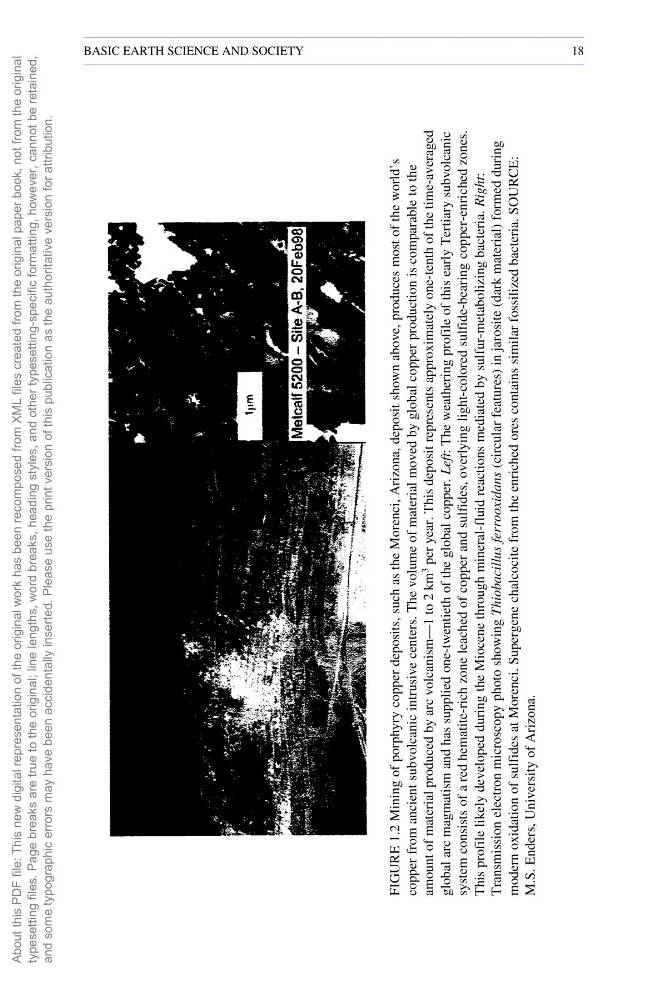
FIGURE 1.2 Mining of porphyry copper deposits, such as the Morenci,
Arizona, deposit shown above, produces most of the world’s
copper from ancient subvolcanic intrusive centers. The volume of material
moved by global copper production is comparable to the
amount of material produced by arc volcanism—1
to 2 km
3 per year. This deposit represents approximately one-tenth of the time-averaged
global arc magmatism and has supplied one-twentieth of the global
copper. Left:
The weathering profile of this early Tertiary subvolcanic
system consists of a red hematite-rich zone leached of copper and
sulfides, overlying light-colored sulfide-bearing copper-enriched
zones.
This profile likely developed during the Miocene through mineral-fluid
reactions mediated by sulfur-metabolizing bacteria.
Right:
Transmission electron microscopy photo showing
Thiobacillus ferrooxidans
(circular features) in jarosite (dark material) formed during
modern oxidation of sulfides at Morenci. Supergene chalcocite from the enriched
ores contains similar fossilized bacteria. SOURCE:
M.S. Enders, University of Arizona.
BASIC EARTH SCIENCE AND SOCIETY
18
About this PDF file: This new digital representation of the
original work has been recomposed from XML files created
from the original paper book, not from the original
typesetting files. Page breaks are true to the original; line lengths,
word breaks, heading styles, and other typesetting-specific
formatting, however, cannot be retained,
and some typographic errors may have been accidentally inserted.
Please use the print version of this publication as the authoritative
version for attribution.
Arizona, deposit shown above, produces most of the world’s
copper from ancient subvolcanic intrusive centers. The volume of material
moved by global copper production is comparable to the
amount of material produced by arc volcanism—1
to 2 km
3 per year. This deposit represents approximately one-tenth of the time-averaged
global arc magmatism and has supplied one-twentieth of the global
copper. Left:
The weathering profile of this early Tertiary subvolcanic
system consists of a red hematite-rich zone leached of copper and
sulfides, overlying light-colored sulfide-bearing copper-enriched
zones.
This profile likely developed during the Miocene through mineral-fluid
reactions mediated by sulfur-metabolizing bacteria.
Right:
Transmission electron microscopy photo showing
Thiobacillus ferrooxidans
(circular features) in jarosite (dark material) formed during
modern oxidation of sulfides at Morenci. Supergene chalcocite from the enriched
ores contains similar fossilized bacteria. SOURCE:
M.S. Enders, University of Arizona.
BASIC EARTH SCIENCE AND SOCIETY
18
About this PDF file: This new digital representation of the
original work has been recomposed from XML files created
from the original paper book, not from the original
typesetting files. Page breaks are true to the original; line lengths,
word breaks, heading styles, and other typesetting-specific
formatting, however, cannot be retained,
and some typographic errors may have been accidentally inserted.
Please use the print version of this publication as the authoritative
version for attribution.