

How Molecular Modelling Tools Can Help …
209
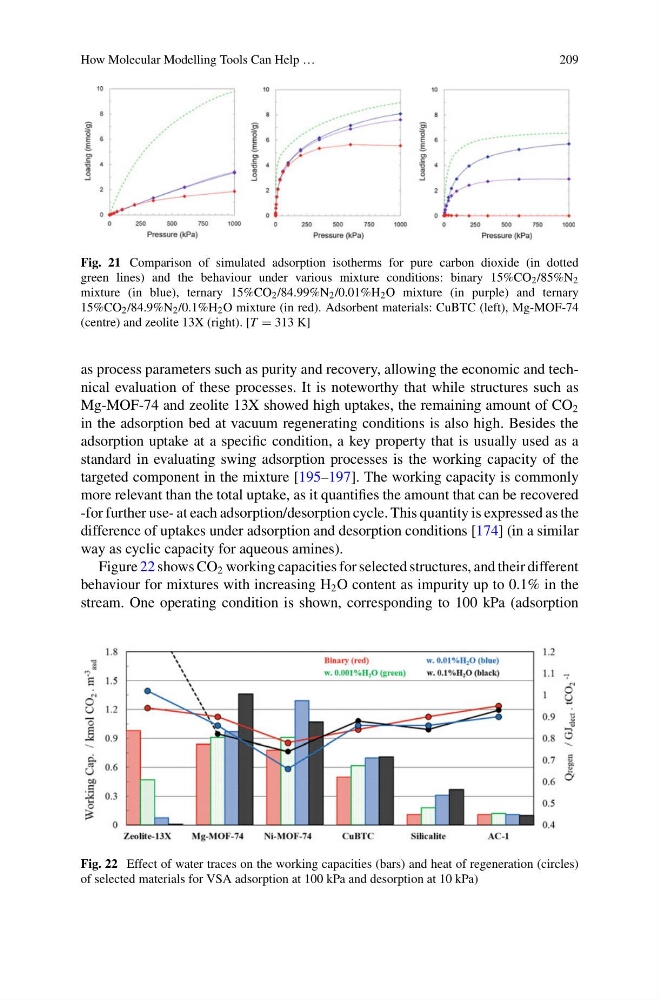
Fig. 21 Comparison of simulated adsorption isotherms for pure carbon dioxide (in dotted
green lines) and the behaviour under various mixture conditions: binary 15%CO 2 /85%N 2
mixture (in blue), ternary 15%CO 2 /84.99%N 2 /0.01%H 2 O mixture (in purple) and ternary
15%CO 2 /84.9%N 2 /0.1%H 2 O mixture (in red). Adsorbent materials: CuBTC (left), Mg-MOF-74
(centre) and zeolite 13X (right). [T = 313 K]
as process parameters such as purity and recovery, allowing the economic and technical evaluation of these processes. It is noteworthy that while structures such as
Mg-MOF-74 and zeolite 13X showed high uptakes, the remaining amount of CO 2
in the adsorption bed at vacuum regenerating conditions is also high. Besides the
adsorption uptake at a specific condition, a key property that is usually used as a
standard in evaluating swing adsorption processes is the working capacity of the
targeted component in the mixture [195–197]. The working capacity is commonly
more relevant than the total uptake, as it quantifies the amount that can be recovered
-for further use- at each adsorption/desorption cycle. This quantity is expressed as the
difference of uptakes under adsorption and desorption conditions [174] (in a similar
way as cyclic capacity for aqueous amines).
Figure 22 shows CO 2 working capacities for selected structures, and their different
behaviour for mixtures with increasing H 2 O content as impurity up to 0.1% in the
stream. One operating condition is shown, corresponding to 100 kPa (adsorption
Fig. 22 Effect of water traces on the working capacities (bars) and heat of regeneration (circles)
of selected materials for VSA adsorption at 100 kPa and desorption at 10 kPa)
209
Fig. 21 Comparison of simulated adsorption isotherms for pure carbon dioxide (in dotted
green lines) and the behaviour under various mixture conditions: binary 15%CO 2 /85%N 2
mixture (in blue), ternary 15%CO 2 /84.99%N 2 /0.01%H 2 O mixture (in purple) and ternary
15%CO 2 /84.9%N 2 /0.1%H 2 O mixture (in red). Adsorbent materials: CuBTC (left), Mg-MOF-74
(centre) and zeolite 13X (right). [T = 313 K]
as process parameters such as purity and recovery, allowing the economic and technical evaluation of these processes. It is noteworthy that while structures such as
Mg-MOF-74 and zeolite 13X showed high uptakes, the remaining amount of CO 2
in the adsorption bed at vacuum regenerating conditions is also high. Besides the
adsorption uptake at a specific condition, a key property that is usually used as a
standard in evaluating swing adsorption processes is the working capacity of the
targeted component in the mixture [195–197]. The working capacity is commonly
more relevant than the total uptake, as it quantifies the amount that can be recovered
-for further use- at each adsorption/desorption cycle. This quantity is expressed as the
difference of uptakes under adsorption and desorption conditions [174] (in a similar
way as cyclic capacity for aqueous amines).
Figure 22 shows CO 2 working capacities for selected structures, and their different
behaviour for mixtures with increasing H 2 O content as impurity up to 0.1% in the
stream. One operating condition is shown, corresponding to 100 kPa (adsorption
Fig. 22 Effect of water traces on the working capacities (bars) and heat of regeneration (circles)
of selected materials for VSA adsorption at 100 kPa and desorption at 10 kPa)