

10
E. K. Hamal and M. C. Toroker
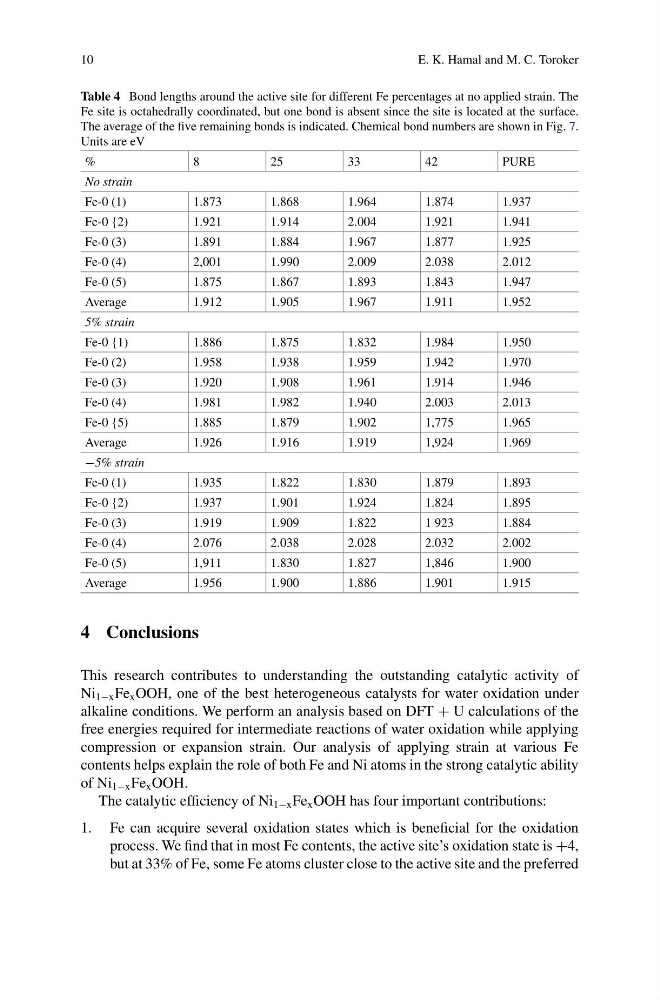
Table 4 Bond lengths around the active site for different Fe percentages at no applied strain. The
Fe site is octahedrally coordinated, but one bond is absent since the site is located at the surface.
The average of the five remaining bonds is indicated. Chemical bond numbers are shown in Fig. 7.
Units are eV
%
8
25
33
42
PURE
No strain
Fe-0 (1)
1.873
1.868
1.964
1.874
1.937
Fe-0 {2)
1.921
1.914
2.004
1.921
1.941
Fe-0 (3)
1.891
1.884
1.967
1.877
1.925
Fe-0 (4)
2,001
1.990
2.009
2.038
2.012
Fe-0 (5)
1.875
1.867
1.893
1.843
1.947
Average
1.912
1.905
1.967
1.911
1.952
5% strain
Fe-0 {1)
1.886
1.875
1.832
1.984
1.950
Fe-0 (2)
1.958
1.938
1.959
1.942
1.970
Fe-0 (3)
1.920
1.908
1.961
1.914
1.946
Fe-0 (4)
1.981
1.982
1.940
2.003
2.013
Fe-0 {5)
1.885
1.879
1.902
1,775
1.965
Average
1.926
1.916
1.919
1,924
1.969
−5% strain
Fe-0 (1)
1.935
1.822
1.830
1.879
1.893
Fe-0 {2)
1.937
1.901
1.924
1.824
1.895
Fe-0 (3)
1.919
1.909
1.822
1 923
1.884
Fe-0 (4)
2.076
2.038
2.028
2.032
2.002
Fe-0 (5)
1,911
1.830
1.827
1,846
1.900
Average
1.956
1.900
1.886
1.901
1.915
4 Conclusions
This research contributes to understanding the outstanding catalytic activity of
Ni 1−x Fe x OOH, one of the best heterogeneous catalysts for water oxidation under
alkaline conditions. We perform an analysis based on DFT + U calculations of the
free energies required for intermediate reactions of water oxidation while applying
compression or expansion strain. Our analysis of applying strain at various Fe
contents helps explain the role of both Fe and Ni atoms in the strong catalytic ability
of Ni 1−x Fe x OOH.
The catalytic efficiency of Ni 1−x Fe x OOH has four important contributions:
1. Fe can acquire several oxidation states which is beneficial for the oxidation
process. We find that in most Fe contents, the active site’s oxidation state is +4,
but at 33% of Fe, some Fe atoms cluster close to the active site and the preferred
E. K. Hamal and M. C. Toroker
Table 4 Bond lengths around the active site for different Fe percentages at no applied strain. The
Fe site is octahedrally coordinated, but one bond is absent since the site is located at the surface.
The average of the five remaining bonds is indicated. Chemical bond numbers are shown in Fig. 7.
Units are eV
%
8
25
33
42
PURE
No strain
Fe-0 (1)
1.873
1.868
1.964
1.874
1.937
Fe-0 {2)
1.921
1.914
2.004
1.921
1.941
Fe-0 (3)
1.891
1.884
1.967
1.877
1.925
Fe-0 (4)
2,001
1.990
2.009
2.038
2.012
Fe-0 (5)
1.875
1.867
1.893
1.843
1.947
Average
1.912
1.905
1.967
1.911
1.952
5% strain
Fe-0 {1)
1.886
1.875
1.832
1.984
1.950
Fe-0 (2)
1.958
1.938
1.959
1.942
1.970
Fe-0 (3)
1.920
1.908
1.961
1.914
1.946
Fe-0 (4)
1.981
1.982
1.940
2.003
2.013
Fe-0 {5)
1.885
1.879
1.902
1,775
1.965
Average
1.926
1.916
1.919
1,924
1.969
−5% strain
Fe-0 (1)
1.935
1.822
1.830
1.879
1.893
Fe-0 {2)
1.937
1.901
1.924
1.824
1.895
Fe-0 (3)
1.919
1.909
1.822
1 923
1.884
Fe-0 (4)
2.076
2.038
2.028
2.032
2.002
Fe-0 (5)
1,911
1.830
1.827
1,846
1.900
Average
1.956
1.900
1.886
1.901
1.915
4 Conclusions
This research contributes to understanding the outstanding catalytic activity of
Ni 1−x Fe x OOH, one of the best heterogeneous catalysts for water oxidation under
alkaline conditions. We perform an analysis based on DFT + U calculations of the
free energies required for intermediate reactions of water oxidation while applying
compression or expansion strain. Our analysis of applying strain at various Fe
contents helps explain the role of both Fe and Ni atoms in the strong catalytic ability
of Ni 1−x Fe x OOH.
The catalytic efficiency of Ni 1−x Fe x OOH has four important contributions:
1. Fe can acquire several oxidation states which is beneficial for the oxidation
process. We find that in most Fe contents, the active site’s oxidation state is +4,
but at 33% of Fe, some Fe atoms cluster close to the active site and the preferred