

14
1 Chemicals in the Food and Beverage Industry: An Introduction
0
20
40
60
80
100
120
140
160
180
200
0
2
4
6
8
1 0
1 2
1 4
1 6
Exposure (ppm or mg/m3)
Average exposure value
Exposure-15 minutes
Time (hours)
Exposure (ppm or mg/m3)
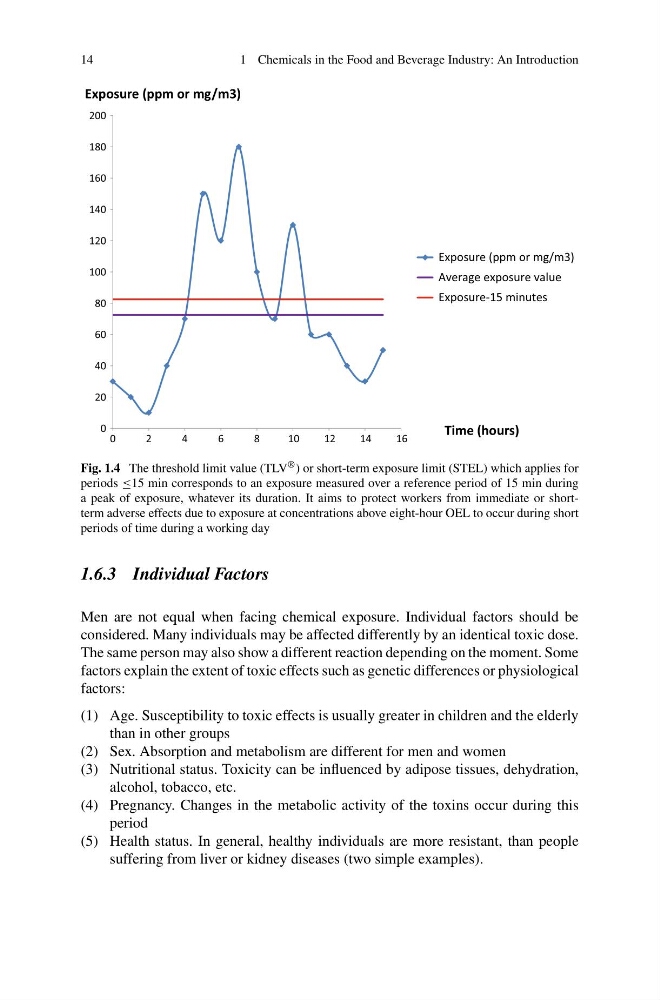
Fig. 1.4 The threshold limit value (TLV ® ) or short-term exposure limit (STEL) which applies for
periods ≤15 min corresponds to an exposure measured over a reference period of 15 min during
a peak of exposure, whatever its duration. It aims to protect workers from immediate or shortterm adverse effects due to exposure at concentrations above eight-hour OEL to occur during short
periods of time during a working day
1.6.3 Individual Factors
Men are not equal when facing chemical exposure. Individual factors should be
considered. Many individuals may be affected differently by an identical toxic dose.
The same person may also show a different reaction depending on the moment. Some
factors explain the extent of toxic effects such as genetic differences or physiological
factors:
(1) Age. Susceptibility to toxic effects is usually greater in children and the elderly
than in other groups
(2) Sex. Absorption and metabolism are different for men and women
(3) Nutritional status. Toxicity can be influenced by adipose tissues, dehydration,
alcohol, tobacco, etc.
(4) Pregnancy. Changes in the metabolic activity of the toxins occur during this
period
(5) Health status. In general, healthy individuals are more resistant, than people
suffering from liver or kidney diseases (two simple examples).
1 Chemicals in the Food and Beverage Industry: An Introduction
0
20
40
60
80
100
120
140
160
180
200
0
2
4
6
8
1 0
1 2
1 4
1 6
Exposure (ppm or mg/m3)
Average exposure value
Exposure-15 minutes
Time (hours)
Exposure (ppm or mg/m3)
Fig. 1.4 The threshold limit value (TLV ® ) or short-term exposure limit (STEL) which applies for
periods ≤15 min corresponds to an exposure measured over a reference period of 15 min during
a peak of exposure, whatever its duration. It aims to protect workers from immediate or shortterm adverse effects due to exposure at concentrations above eight-hour OEL to occur during short
periods of time during a working day
1.6.3 Individual Factors
Men are not equal when facing chemical exposure. Individual factors should be
considered. Many individuals may be affected differently by an identical toxic dose.
The same person may also show a different reaction depending on the moment. Some
factors explain the extent of toxic effects such as genetic differences or physiological
factors:
(1) Age. Susceptibility to toxic effects is usually greater in children and the elderly
than in other groups
(2) Sex. Absorption and metabolism are different for men and women
(3) Nutritional status. Toxicity can be influenced by adipose tissues, dehydration,
alcohol, tobacco, etc.
(4) Pregnancy. Changes in the metabolic activity of the toxins occur during this
period
(5) Health status. In general, healthy individuals are more resistant, than people
suffering from liver or kidney diseases (two simple examples).