

3 Phycobiliproteins in Microalgae: Occurrence …
51
NH
N
N
HN
O
O
O OH
α−Biliverdin IX
N
HN
HN
O
HO
O
O
OH
NH
O
Phycoerythrobilin
N
HN
NH
N
HO
O HO O
O
Phycocyanobilin
HN
HN
N
NH
Phycourobilin
HN
N
HN
HN
HO
O
O
OH
O
O
Phycoviobilin
Reductase
Isomerase
Isomerase
Isomerase
N
N
N
N
O
HO
Fe
Oxygenase
Protoheme
OH
O
O
O
HO
O
O
H
O
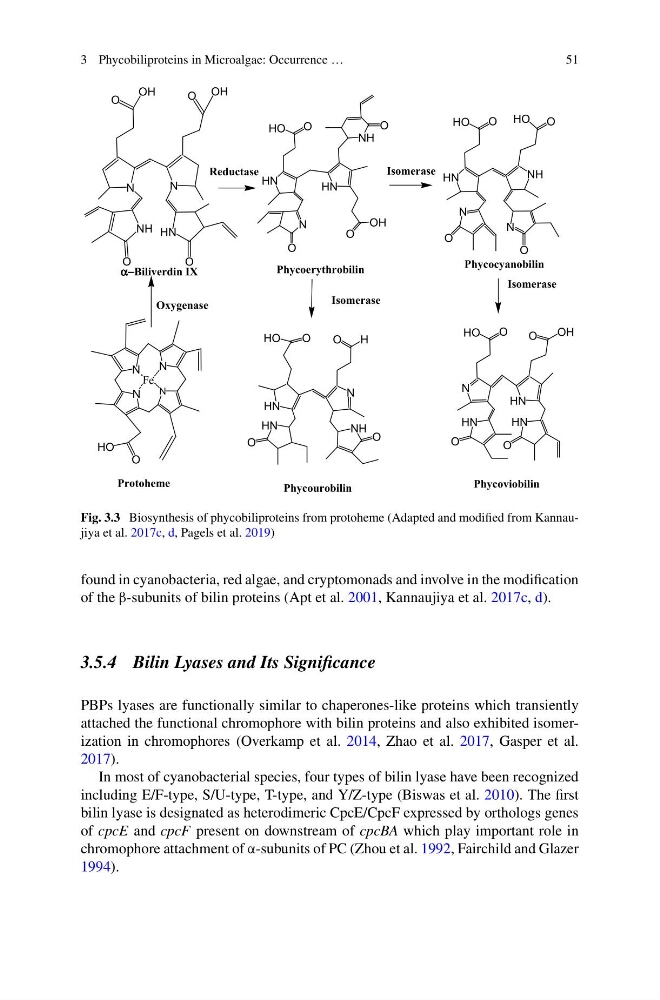
Fig. 3.3 Biosynthesis of phycobiliproteins from protoheme (Adapted and modified from Kannaujiya et al. 2017c, d, Pagels et al. 2019)
found in cyanobacteria, red algae, and cryptomonads and involve in the modification
of the β-subunits of bilin proteins (Apt et al. 2001, Kannaujiya et al. 2017c, d).
3.5.4 Bilin Lyases and Its Significance
PBPs lyases are functionally similar to chaperones-like proteins which transiently
attached the functional chromophore with bilin proteins and also exhibited isomerization in chromophores (Overkamp et al. 2014, Zhao et al. 2017, Gasper et al.
2017).
In most of cyanobacterial species, four types of bilin lyase have been recognized
including E/F-type, S/U-type, T-type, and Y/Z-type (Biswas et al. 2010). The first
bilin lyase is designated as heterodimeric CpcE/CpcF expressed by orthologs genes
of cpcE and cpcF present on downstream of cpcBA which play important role in
chromophore attachment of α-subunits of PC (Zhou et al. 1992, Fairchild and Glazer
1994).
51
NH
N
N
HN
O
O
O OH
α−Biliverdin IX
N
HN
HN
O
HO
O
O
OH
NH
O
Phycoerythrobilin
N
HN
NH
N
HO
O HO O
O
Phycocyanobilin
HN
HN
N
NH
Phycourobilin
HN
N
HN
HN
HO
O
O
OH
O
O
Phycoviobilin
Reductase
Isomerase
Isomerase
Isomerase
N
N
N
N
O
HO
Fe
Oxygenase
Protoheme
OH
O
O
O
HO
O
O
H
O
Fig. 3.3 Biosynthesis of phycobiliproteins from protoheme (Adapted and modified from Kannaujiya et al. 2017c, d, Pagels et al. 2019)
found in cyanobacteria, red algae, and cryptomonads and involve in the modification
of the β-subunits of bilin proteins (Apt et al. 2001, Kannaujiya et al. 2017c, d).
3.5.4 Bilin Lyases and Its Significance
PBPs lyases are functionally similar to chaperones-like proteins which transiently
attached the functional chromophore with bilin proteins and also exhibited isomerization in chromophores (Overkamp et al. 2014, Zhao et al. 2017, Gasper et al.
2017).
In most of cyanobacterial species, four types of bilin lyase have been recognized
including E/F-type, S/U-type, T-type, and Y/Z-type (Biswas et al. 2010). The first
bilin lyase is designated as heterodimeric CpcE/CpcF expressed by orthologs genes
of cpcE and cpcF present on downstream of cpcBA which play important role in
chromophore attachment of α-subunits of PC (Zhou et al. 1992, Fairchild and Glazer
1994).