

486
F. Md. Yusoff et al.
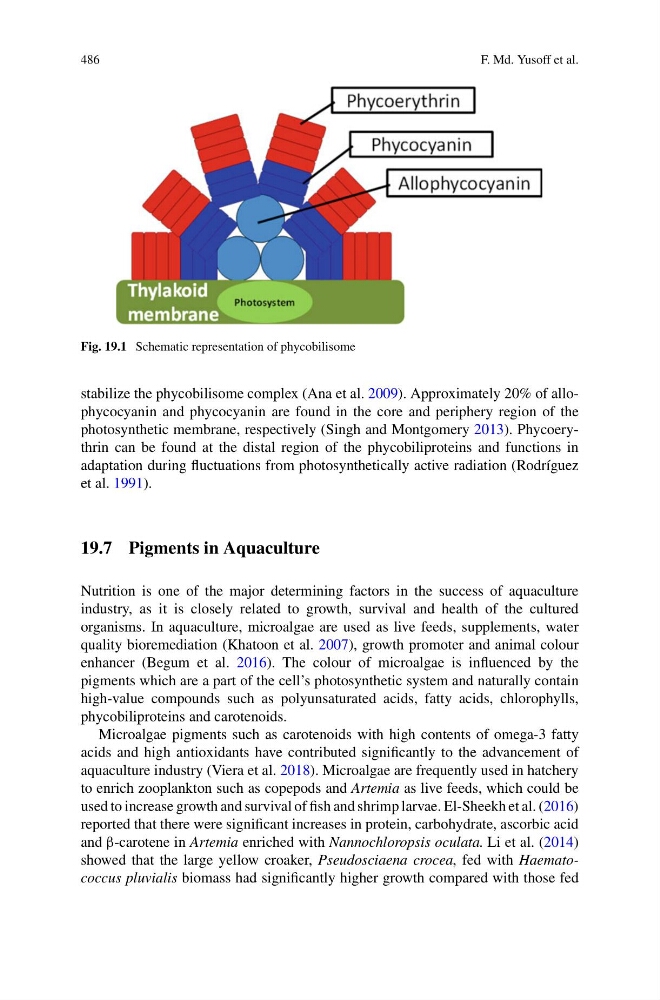
Fig. 19.1 Schematic representation of phycobilisome
stabilize the phycobilisome complex (Ana et al. 2009). Approximately 20% of allophycocyanin and phycocyanin are found in the core and periphery region of the
photosynthetic membrane, respectively (Singh and Montgomery 2013). Phycoerythrin can be found at the distal region of the phycobiliproteins and functions in
adaptation during fluctuations from photosynthetically active radiation (Rodríguez
et al. 1991).
19.7 Pigments in Aquaculture
Nutrition is one of the major determining factors in the success of aquaculture
industry, as it is closely related to growth, survival and health of the cultured
organisms. In aquaculture, microalgae are used as live feeds, supplements, water
quality bioremediation (Khatoon et al. 2007), growth promoter and animal colour
enhancer (Begum et al. 2016). The colour of microalgae is influenced by the
pigments which are a part of the cell’s photosynthetic system and naturally contain
high-value compounds such as polyunsaturated acids, fatty acids, chlorophylls,
phycobiliproteins and carotenoids.
Microalgae pigments such as carotenoids with high contents of omega-3 fatty
acids and high antioxidants have contributed significantly to the advancement of
aquaculture industry (Viera et al. 2018). Microalgae are frequently used in hatchery
to enrich zooplankton such as copepods and Artemia as live feeds, which could be
used to increase growth and survival of fish and shrimp larvae. El-Sheekh et al. (2016)
reported that there were significant increases in protein, carbohydrate, ascorbic acid
and β-carotene in Artemia enriched with Nannochloropsis oculata. Li et al. (2014)
showed that the large yellow croaker, Pseudosciaena crocea, fed with Haematococcus pluvialis biomass had significantly higher growth compared with those fed
F. Md. Yusoff et al.
Fig. 19.1 Schematic representation of phycobilisome
stabilize the phycobilisome complex (Ana et al. 2009). Approximately 20% of allophycocyanin and phycocyanin are found in the core and periphery region of the
photosynthetic membrane, respectively (Singh and Montgomery 2013). Phycoerythrin can be found at the distal region of the phycobiliproteins and functions in
adaptation during fluctuations from photosynthetically active radiation (Rodríguez
et al. 1991).
19.7 Pigments in Aquaculture
Nutrition is one of the major determining factors in the success of aquaculture
industry, as it is closely related to growth, survival and health of the cultured
organisms. In aquaculture, microalgae are used as live feeds, supplements, water
quality bioremediation (Khatoon et al. 2007), growth promoter and animal colour
enhancer (Begum et al. 2016). The colour of microalgae is influenced by the
pigments which are a part of the cell’s photosynthetic system and naturally contain
high-value compounds such as polyunsaturated acids, fatty acids, chlorophylls,
phycobiliproteins and carotenoids.
Microalgae pigments such as carotenoids with high contents of omega-3 fatty
acids and high antioxidants have contributed significantly to the advancement of
aquaculture industry (Viera et al. 2018). Microalgae are frequently used in hatchery
to enrich zooplankton such as copepods and Artemia as live feeds, which could be
used to increase growth and survival of fish and shrimp larvae. El-Sheekh et al. (2016)
reported that there were significant increases in protein, carbohydrate, ascorbic acid
and β-carotene in Artemia enriched with Nannochloropsis oculata. Li et al. (2014)
showed that the large yellow croaker, Pseudosciaena crocea, fed with Haematococcus pluvialis biomass had significantly higher growth compared with those fed