

404
A. S. Fernandes et al.
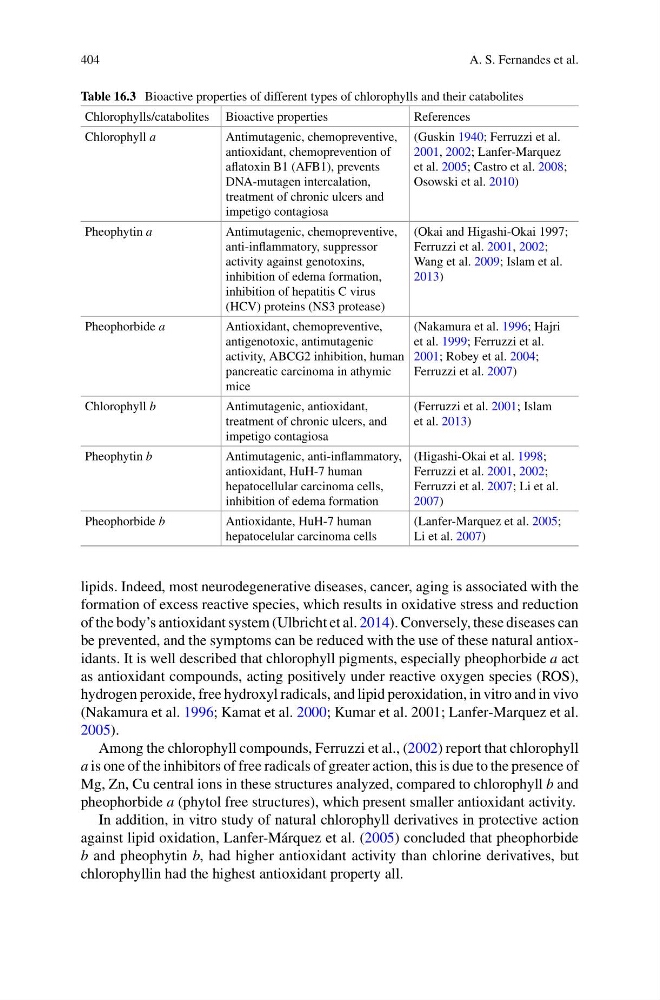
Table 16.3 Bioactive properties of different types of chlorophylls and their catabolites
Chlorophylls/catabolites Bioactive properties
References
Chlorophyll a
Antimutagenic, chemopreventive,
antioxidant, chemoprevention of
aflatoxin B1 (AFB1), prevents
DNA-mutagen intercalation,
treatment of chronic ulcers and
impetigo contagiosa
(Guskin 1940; Ferruzzi et al.
2001, 2002; Lanfer-Marquez
et al. 2005; Castro et al. 2008;
Osowski et al. 2010)
Pheophytin a
Antimutagenic, chemopreventive,
anti-inflammatory, suppressor
activity against genotoxins,
inhibition of edema formation,
inhibition of hepatitis C virus
(HCV) proteins (NS3 protease)
(Okai and Higashi-Okai 1997;
Ferruzzi et al. 2001, 2002;
Wang et al. 2009; Islam et al.
2013)
Pheophorbide a
Antioxidant, chemopreventive,
antigenotoxic, antimutagenic
activity, ABCG2 inhibition, human
pancreatic carcinoma in athymic
mice
(Nakamura et al. 1996; Hajri
et al. 1999; Ferruzzi et al.
2001; Robey et al. 2004;
Ferruzzi et al. 2007)
Chlorophyll b
Antimutagenic, antioxidant,
treatment of chronic ulcers, and
impetigo contagiosa
(Ferruzzi et al. 2001; Islam
et al. 2013)
Pheophytin b
Antimutagenic, anti-inflammatory,
antioxidant, HuH-7 human
hepatocellular carcinoma cells,
inhibition of edema formation
(Higashi-Okai et al. 1998;
Ferruzzi et al. 2001, 2002;
Ferruzzi et al. 2007; Li et al.
2007)
Pheophorbide b
Antioxidante, HuH-7 human
hepatocelular carcinoma cells
(Lanfer-Marquez et al. 2005;
Li et al. 2007)
lipids. Indeed, most neurodegenerative diseases, cancer, aging is associated with the
formation of excess reactive species, which results in oxidative stress and reduction
of the body’s antioxidant system (Ulbricht et al. 2014). Conversely, these diseases can
be prevented, and the symptoms can be reduced with the use of these natural antioxidants. It is well described that chlorophyll pigments, especially pheophorbide a act
as antioxidant compounds, acting positively under reactive oxygen species (ROS),
hydrogen peroxide, free hydroxyl radicals, and lipid peroxidation, in vitro and in vivo
(Nakamura et al. 1996; Kamat et al. 2000; Kumar et al. 2001; Lanfer-Marquez et al.
2005).
Among the chlorophyll compounds, Ferruzzi et al., (2002) report that chlorophyll
a is one of the inhibitors of free radicals of greater action, this is due to the presence of
Mg, Zn, Cu central ions in these structures analyzed, compared to chlorophyll b and
pheophorbide a (phytol free structures), which present smaller antioxidant activity.
In addition, in vitro study of natural chlorophyll derivatives in protective action
against lipid oxidation, Lanfer-Márquez et al. (2005) concluded that pheophorbide
b and pheophytin b, had higher antioxidant activity than chlorine derivatives, but
chlorophyllin had the highest antioxidant property all.
A. S. Fernandes et al.
Table 16.3 Bioactive properties of different types of chlorophylls and their catabolites
Chlorophylls/catabolites Bioactive properties
References
Chlorophyll a
Antimutagenic, chemopreventive,
antioxidant, chemoprevention of
aflatoxin B1 (AFB1), prevents
DNA-mutagen intercalation,
treatment of chronic ulcers and
impetigo contagiosa
(Guskin 1940; Ferruzzi et al.
2001, 2002; Lanfer-Marquez
et al. 2005; Castro et al. 2008;
Osowski et al. 2010)
Pheophytin a
Antimutagenic, chemopreventive,
anti-inflammatory, suppressor
activity against genotoxins,
inhibition of edema formation,
inhibition of hepatitis C virus
(HCV) proteins (NS3 protease)
(Okai and Higashi-Okai 1997;
Ferruzzi et al. 2001, 2002;
Wang et al. 2009; Islam et al.
2013)
Pheophorbide a
Antioxidant, chemopreventive,
antigenotoxic, antimutagenic
activity, ABCG2 inhibition, human
pancreatic carcinoma in athymic
mice
(Nakamura et al. 1996; Hajri
et al. 1999; Ferruzzi et al.
2001; Robey et al. 2004;
Ferruzzi et al. 2007)
Chlorophyll b
Antimutagenic, antioxidant,
treatment of chronic ulcers, and
impetigo contagiosa
(Ferruzzi et al. 2001; Islam
et al. 2013)
Pheophytin b
Antimutagenic, anti-inflammatory,
antioxidant, HuH-7 human
hepatocellular carcinoma cells,
inhibition of edema formation
(Higashi-Okai et al. 1998;
Ferruzzi et al. 2001, 2002;
Ferruzzi et al. 2007; Li et al.
2007)
Pheophorbide b
Antioxidante, HuH-7 human
hepatocelular carcinoma cells
(Lanfer-Marquez et al. 2005;
Li et al. 2007)
lipids. Indeed, most neurodegenerative diseases, cancer, aging is associated with the
formation of excess reactive species, which results in oxidative stress and reduction
of the body’s antioxidant system (Ulbricht et al. 2014). Conversely, these diseases can
be prevented, and the symptoms can be reduced with the use of these natural antioxidants. It is well described that chlorophyll pigments, especially pheophorbide a act
as antioxidant compounds, acting positively under reactive oxygen species (ROS),
hydrogen peroxide, free hydroxyl radicals, and lipid peroxidation, in vitro and in vivo
(Nakamura et al. 1996; Kamat et al. 2000; Kumar et al. 2001; Lanfer-Marquez et al.
2005).
Among the chlorophyll compounds, Ferruzzi et al., (2002) report that chlorophyll
a is one of the inhibitors of free radicals of greater action, this is due to the presence of
Mg, Zn, Cu central ions in these structures analyzed, compared to chlorophyll b and
pheophorbide a (phytol free structures), which present smaller antioxidant activity.
In addition, in vitro study of natural chlorophyll derivatives in protective action
against lipid oxidation, Lanfer-Márquez et al. (2005) concluded that pheophorbide
b and pheophytin b, had higher antioxidant activity than chlorine derivatives, but
chlorophyllin had the highest antioxidant property all.