

15 Sustainability Metrics in the Microalgae-Based …
371
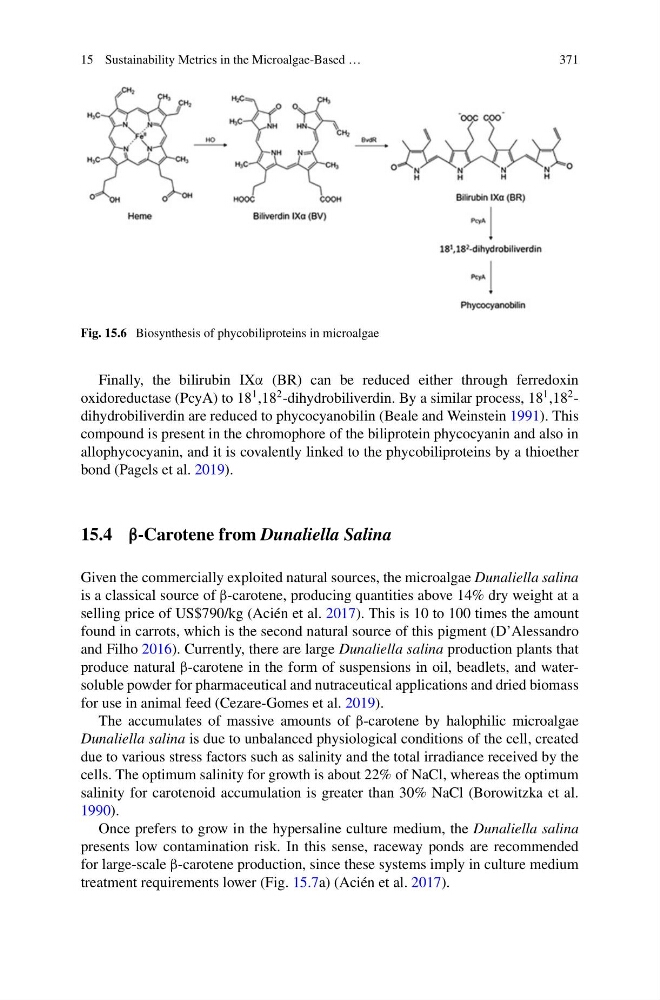
Fig. 15.6 Biosynthesis of phycobiliproteins in microalgae
Finally, the bilirubin IXα (BR) can be reduced either through ferredoxin
oxidoreductase (PcyA) to 18
1 ,18
2 -dihydrobiliverdin. By a similar process, 18
1 ,18
2 -
dihydrobiliverdin are reduced to phycocyanobilin (Beale and Weinstein 1991). This
compound is present in the chromophore of the biliprotein phycocyanin and also in
allophycocyanin, and it is covalently linked to the phycobiliproteins by a thioether
bond (Pagels et al. 2019).
15.4 β-Carotene from Dunaliella Salina
Given the commercially exploited natural sources, the microalgae Dunaliella salina
is a classical source of β-carotene, producing quantities above 14% dry weight at a
selling price of US$790/kg (Acién et al. 2017). This is 10 to 100 times the amount
found in carrots, which is the second natural source of this pigment (D’Alessandro
and Filho 2016). Currently, there are large Dunaliella salina production plants that
produce natural β-carotene in the form of suspensions in oil, beadlets, and watersoluble powder for pharmaceutical and nutraceutical applications and dried biomass
for use in animal feed (Cezare-Gomes et al. 2019).
The accumulates of massive amounts of β-carotene by halophilic microalgae
Dunaliella salina is due to unbalanced physiological conditions of the cell, created
due to various stress factors such as salinity and the total irradiance received by the
cells. The optimum salinity for growth is about 22% of NaCl, whereas the optimum
salinity for carotenoid accumulation is greater than 30% NaCl (Borowitzka et al.
1990).
Once prefers to grow in the hypersaline culture medium, the Dunaliella salina
presents low contamination risk. In this sense, raceway ponds are recommended
for large-scale β-carotene production, since these systems imply in culture medium
treatment requirements lower (Fig. 15.7a) (Acién et al. 2017).
371
Fig. 15.6 Biosynthesis of phycobiliproteins in microalgae
Finally, the bilirubin IXα (BR) can be reduced either through ferredoxin
oxidoreductase (PcyA) to 18
1 ,18
2 -dihydrobiliverdin. By a similar process, 18
1 ,18
2 -
dihydrobiliverdin are reduced to phycocyanobilin (Beale and Weinstein 1991). This
compound is present in the chromophore of the biliprotein phycocyanin and also in
allophycocyanin, and it is covalently linked to the phycobiliproteins by a thioether
bond (Pagels et al. 2019).
15.4 β-Carotene from Dunaliella Salina
Given the commercially exploited natural sources, the microalgae Dunaliella salina
is a classical source of β-carotene, producing quantities above 14% dry weight at a
selling price of US$790/kg (Acién et al. 2017). This is 10 to 100 times the amount
found in carrots, which is the second natural source of this pigment (D’Alessandro
and Filho 2016). Currently, there are large Dunaliella salina production plants that
produce natural β-carotene in the form of suspensions in oil, beadlets, and watersoluble powder for pharmaceutical and nutraceutical applications and dried biomass
for use in animal feed (Cezare-Gomes et al. 2019).
The accumulates of massive amounts of β-carotene by halophilic microalgae
Dunaliella salina is due to unbalanced physiological conditions of the cell, created
due to various stress factors such as salinity and the total irradiance received by the
cells. The optimum salinity for growth is about 22% of NaCl, whereas the optimum
salinity for carotenoid accumulation is greater than 30% NaCl (Borowitzka et al.
1990).
Once prefers to grow in the hypersaline culture medium, the Dunaliella salina
presents low contamination risk. In this sense, raceway ponds are recommended
for large-scale β-carotene production, since these systems imply in culture medium
treatment requirements lower (Fig. 15.7a) (Acién et al. 2017).