

320
P. R. Gogate and S. M. Joshi
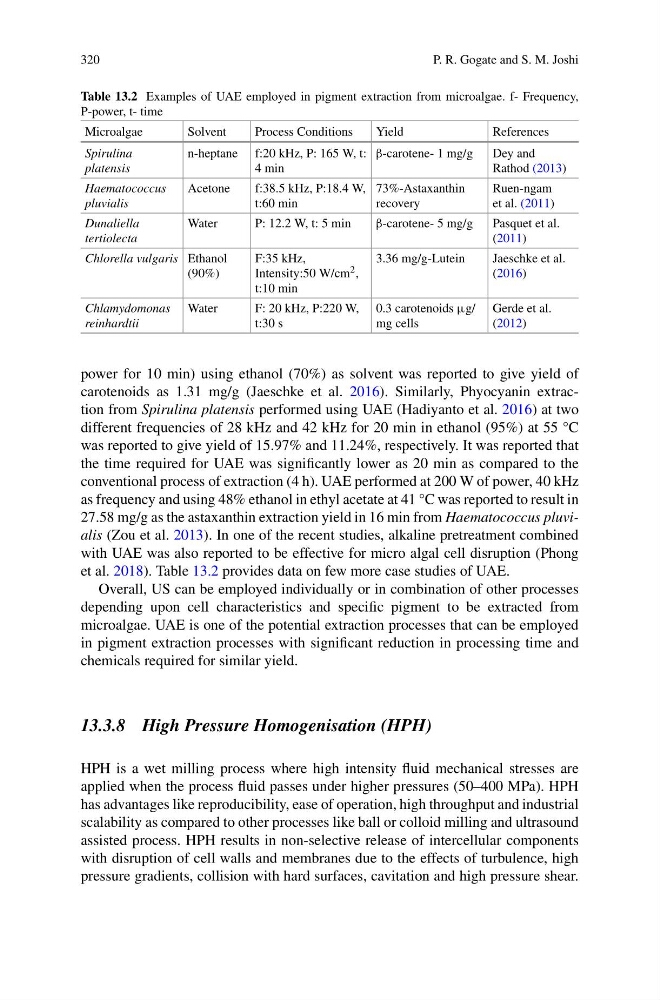
Table 13.2 Examples of UAE employed in pigment extraction from microalgae. f- Frequency,
P-power, t- time
Microalgae
Solvent
Process Conditions
Yield
References
Spirulina
platensis
n-heptane f:20 kHz, P: 165 W, t:
4 min
β-carotene- 1 mg/g
Dey and
Rathod (2013)
Haematococcus
pluvialis
Acetone
f:38.5 kHz, P:18.4 W,
t:60 min
73%-Astaxanthin
recovery
Ruen-ngam
et al. (2011)
Dunaliella
tertiolecta
Water
P: 12.2 W, t: 5 min
β-carotene- 5 mg/g
Pasquet et al.
(2011)
Chlorella vulgaris Ethanol
(90%)
F:35 kHz,
Intensity:50 W/cm 2 ,
t:10 min
3.36 mg/g-Lutein
Jaeschke et al.
(2016)
Chlamydomonas
reinhardtii
Water
F: 20 kHz, P:220 W,
t:30 s
0.3 carotenoids μg/
mg cells
Gerde et al.
(2012)
power for 10 min) using ethanol (70%) as solvent was reported to give yield of
carotenoids as 1.31 mg/g (Jaeschke et al. 2016). Similarly, Phyocyanin extraction from Spirulina platensis performed using UAE (Hadiyanto et al. 2016) at two
different frequencies of 28 kHz and 42 kHz for 20 min in ethanol (95%) at 55 °C
was reported to give yield of 15.97% and 11.24%, respectively. It was reported that
the time required for UAE was significantly lower as 20 min as compared to the
conventional process of extraction (4 h). UAE performed at 200 W of power, 40 kHz
as frequency and using 48% ethanol in ethyl acetate at 41 °C was reported to result in
27.58 mg/g as the astaxanthin extraction yield in 16 min from Haematococcus pluvialis (Zou et al. 2013). In one of the recent studies, alkaline pretreatment combined
with UAE was also reported to be effective for micro algal cell disruption (Phong
et al. 2018). Table 13.2 provides data on few more case studies of UAE.
Overall, US can be employed individually or in combination of other processes
depending upon cell characteristics and specific pigment to be extracted from
microalgae. UAE is one of the potential extraction processes that can be employed
in pigment extraction processes with significant reduction in processing time and
chemicals required for similar yield.
13.3.8 High Pressure Homogenisation (HPH)
HPH is a wet milling process where high intensity fluid mechanical stresses are
applied when the process fluid passes under higher pressures (50–400 MPa). HPH
has advantages like reproducibility, ease of operation, high throughput and industrial
scalability as compared to other processes like ball or colloid milling and ultrasound
assisted process. HPH results in non-selective release of intercellular components
with disruption of cell walls and membranes due to the effects of turbulence, high
pressure gradients, collision with hard surfaces, cavitation and high pressure shear.
P. R. Gogate and S. M. Joshi
Table 13.2 Examples of UAE employed in pigment extraction from microalgae. f- Frequency,
P-power, t- time
Microalgae
Solvent
Process Conditions
Yield
References
Spirulina
platensis
n-heptane f:20 kHz, P: 165 W, t:
4 min
β-carotene- 1 mg/g
Dey and
Rathod (2013)
Haematococcus
pluvialis
Acetone
f:38.5 kHz, P:18.4 W,
t:60 min
73%-Astaxanthin
recovery
Ruen-ngam
et al. (2011)
Dunaliella
tertiolecta
Water
P: 12.2 W, t: 5 min
β-carotene- 5 mg/g
Pasquet et al.
(2011)
Chlorella vulgaris Ethanol
(90%)
F:35 kHz,
Intensity:50 W/cm 2 ,
t:10 min
3.36 mg/g-Lutein
Jaeschke et al.
(2016)
Chlamydomonas
reinhardtii
Water
F: 20 kHz, P:220 W,
t:30 s
0.3 carotenoids μg/
mg cells
Gerde et al.
(2012)
power for 10 min) using ethanol (70%) as solvent was reported to give yield of
carotenoids as 1.31 mg/g (Jaeschke et al. 2016). Similarly, Phyocyanin extraction from Spirulina platensis performed using UAE (Hadiyanto et al. 2016) at two
different frequencies of 28 kHz and 42 kHz for 20 min in ethanol (95%) at 55 °C
was reported to give yield of 15.97% and 11.24%, respectively. It was reported that
the time required for UAE was significantly lower as 20 min as compared to the
conventional process of extraction (4 h). UAE performed at 200 W of power, 40 kHz
as frequency and using 48% ethanol in ethyl acetate at 41 °C was reported to result in
27.58 mg/g as the astaxanthin extraction yield in 16 min from Haematococcus pluvialis (Zou et al. 2013). In one of the recent studies, alkaline pretreatment combined
with UAE was also reported to be effective for micro algal cell disruption (Phong
et al. 2018). Table 13.2 provides data on few more case studies of UAE.
Overall, US can be employed individually or in combination of other processes
depending upon cell characteristics and specific pigment to be extracted from
microalgae. UAE is one of the potential extraction processes that can be employed
in pigment extraction processes with significant reduction in processing time and
chemicals required for similar yield.
13.3.8 High Pressure Homogenisation (HPH)
HPH is a wet milling process where high intensity fluid mechanical stresses are
applied when the process fluid passes under higher pressures (50–400 MPa). HPH
has advantages like reproducibility, ease of operation, high throughput and industrial
scalability as compared to other processes like ball or colloid milling and ultrasound
assisted process. HPH results in non-selective release of intercellular components
with disruption of cell walls and membranes due to the effects of turbulence, high
pressure gradients, collision with hard surfaces, cavitation and high pressure shear.