

312
P. R. Gogate and S. M. Joshi
Cultivation
Open Systems
(Raceaway Ponds)
Closed Systems
(Photo-bioreactors)
Harvesting
Coagulation
Flocculation
Centrifugation
Pretreatment
Ball Milling,
Homogenization
Cavitation
Extraction of
Pigments
Solvent extraction, Supercritical or Subcritical
solvent extraction
Ultrasound or Microwave assisted
Pulsed electric field assisted
Purification
of Pigments
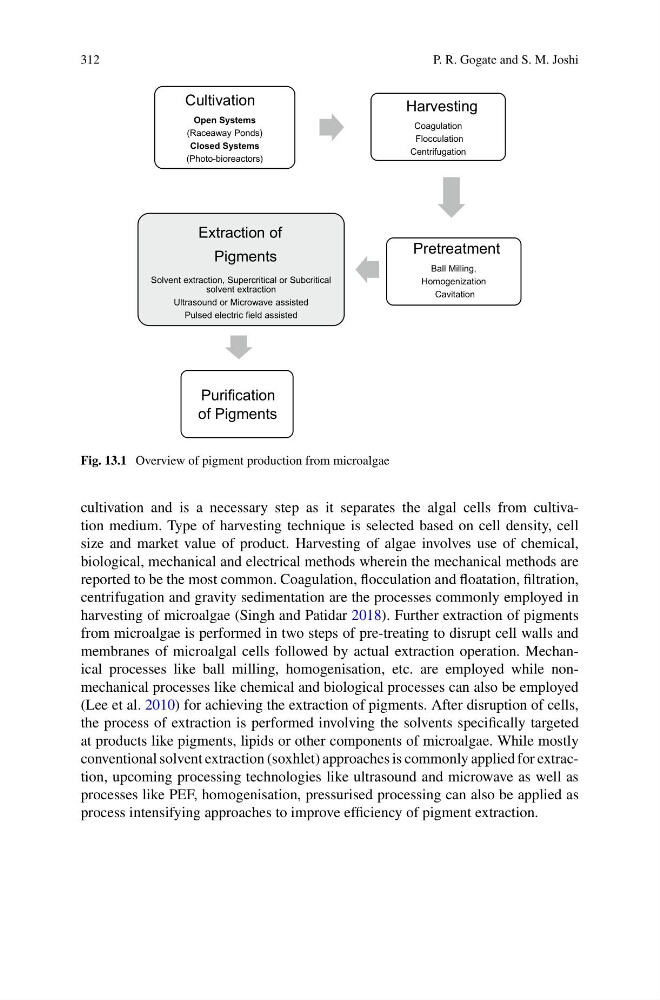
Fig. 13.1 Overview of pigment production from microalgae
cultivation and is a necessary step as it separates the algal cells from cultivation medium. Type of harvesting technique is selected based on cell density, cell
size and market value of product. Harvesting of algae involves use of chemical,
biological, mechanical and electrical methods wherein the mechanical methods are
reported to be the most common. Coagulation, flocculation and floatation, filtration,
centrifugation and gravity sedimentation are the processes commonly employed in
harvesting of microalgae (Singh and Patidar 2018). Further extraction of pigments
from microalgae is performed in two steps of pre-treating to disrupt cell walls and
membranes of microalgal cells followed by actual extraction operation. Mechanical processes like ball milling, homogenisation, etc. are employed while nonmechanical processes like chemical and biological processes can also be employed
(Lee et al. 2010) for achieving the extraction of pigments. After disruption of cells,
the process of extraction is performed involving the solvents specifically targeted
at products like pigments, lipids or other components of microalgae. While mostly
conventional solvent extraction (soxhlet) approaches is commonly applied for extraction, upcoming processing technologies like ultrasound and microwave as well as
processes like PEF, homogenisation, pressurised processing can also be applied as
process intensifying approaches to improve efficiency of pigment extraction.
P. R. Gogate and S. M. Joshi
Cultivation
Open Systems
(Raceaway Ponds)
Closed Systems
(Photo-bioreactors)
Harvesting
Coagulation
Flocculation
Centrifugation
Pretreatment
Ball Milling,
Homogenization
Cavitation
Extraction of
Pigments
Solvent extraction, Supercritical or Subcritical
solvent extraction
Ultrasound or Microwave assisted
Pulsed electric field assisted
Purification
of Pigments
Fig. 13.1 Overview of pigment production from microalgae
cultivation and is a necessary step as it separates the algal cells from cultivation medium. Type of harvesting technique is selected based on cell density, cell
size and market value of product. Harvesting of algae involves use of chemical,
biological, mechanical and electrical methods wherein the mechanical methods are
reported to be the most common. Coagulation, flocculation and floatation, filtration,
centrifugation and gravity sedimentation are the processes commonly employed in
harvesting of microalgae (Singh and Patidar 2018). Further extraction of pigments
from microalgae is performed in two steps of pre-treating to disrupt cell walls and
membranes of microalgal cells followed by actual extraction operation. Mechanical processes like ball milling, homogenisation, etc. are employed while nonmechanical processes like chemical and biological processes can also be employed
(Lee et al. 2010) for achieving the extraction of pigments. After disruption of cells,
the process of extraction is performed involving the solvents specifically targeted
at products like pigments, lipids or other components of microalgae. While mostly
conventional solvent extraction (soxhlet) approaches is commonly applied for extraction, upcoming processing technologies like ultrasound and microwave as well as
processes like PEF, homogenisation, pressurised processing can also be applied as
process intensifying approaches to improve efficiency of pigment extraction.