

11 Microalgae-Based Processes for Pigments Production
249
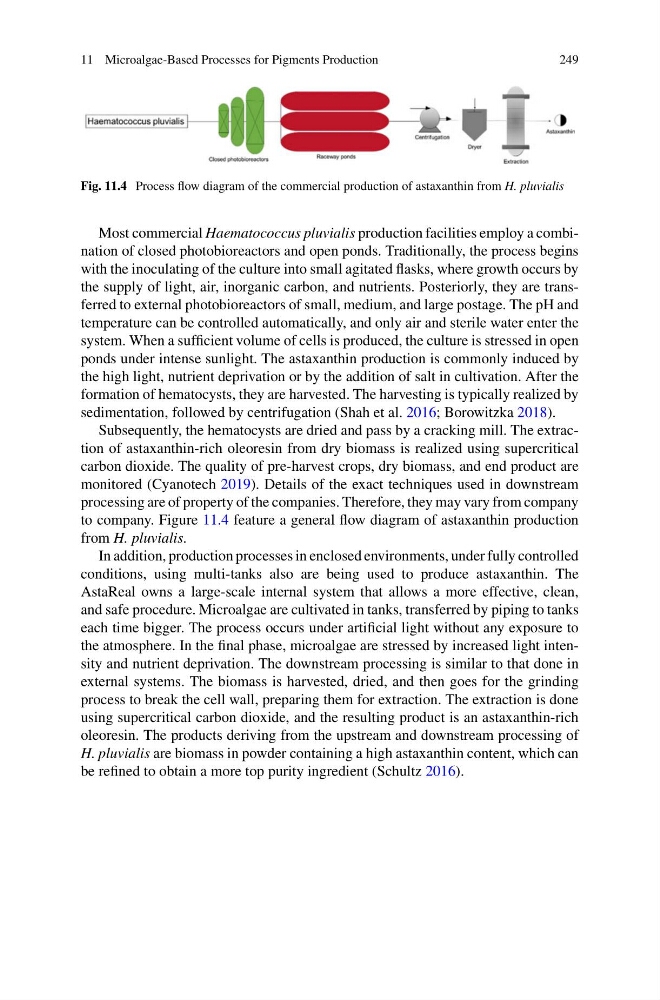
Fig. 11.4 Process flow diagram of the commercial production of astaxanthin from H. pluvialis
Most commercial Haematococcus pluvialis production facilities employ a combination of closed photobioreactors and open ponds. Traditionally, the process begins
with the inoculating of the culture into small agitated flasks, where growth occurs by
the supply of light, air, inorganic carbon, and nutrients. Posteriorly, they are transferred to external photobioreactors of small, medium, and large postage. The pH and
temperature can be controlled automatically, and only air and sterile water enter the
system. When a sufficient volume of cells is produced, the culture is stressed in open
ponds under intense sunlight. The astaxanthin production is commonly induced by
the high light, nutrient deprivation or by the addition of salt in cultivation. After the
formation of hematocysts, they are harvested. The harvesting is typically realized by
sedimentation, followed by centrifugation (Shah et al. 2016; Borowitzka 2018).
Subsequently, the hematocysts are dried and pass by a cracking mill. The extraction of astaxanthin-rich oleoresin from dry biomass is realized using supercritical
carbon dioxide. The quality of pre-harvest crops, dry biomass, and end product are
monitored (Cyanotech 2019). Details of the exact techniques used in downstream
processing are of property of the companies. Therefore, they may vary from company
to company. Figure 11.4 feature a general flow diagram of astaxanthin production
from H. pluvialis.
In addition, production processes in enclosed environments, under fully controlled
conditions, using multi-tanks also are being used to produce astaxanthin. The
AstaReal owns a large-scale internal system that allows a more effective, clean,
and safe procedure. Microalgae are cultivated in tanks, transferred by piping to tanks
each time bigger. The process occurs under artificial light without any exposure to
the atmosphere. In the final phase, microalgae are stressed by increased light intensity and nutrient deprivation. The downstream processing is similar to that done in
external systems. The biomass is harvested, dried, and then goes for the grinding
process to break the cell wall, preparing them for extraction. The extraction is done
using supercritical carbon dioxide, and the resulting product is an astaxanthin-rich
oleoresin. The products deriving from the upstream and downstream processing of
H. pluvialis are biomass in powder containing a high astaxanthin content, which can
be refined to obtain a more top purity ingredient (Schultz 2016).
249
Fig. 11.4 Process flow diagram of the commercial production of astaxanthin from H. pluvialis
Most commercial Haematococcus pluvialis production facilities employ a combination of closed photobioreactors and open ponds. Traditionally, the process begins
with the inoculating of the culture into small agitated flasks, where growth occurs by
the supply of light, air, inorganic carbon, and nutrients. Posteriorly, they are transferred to external photobioreactors of small, medium, and large postage. The pH and
temperature can be controlled automatically, and only air and sterile water enter the
system. When a sufficient volume of cells is produced, the culture is stressed in open
ponds under intense sunlight. The astaxanthin production is commonly induced by
the high light, nutrient deprivation or by the addition of salt in cultivation. After the
formation of hematocysts, they are harvested. The harvesting is typically realized by
sedimentation, followed by centrifugation (Shah et al. 2016; Borowitzka 2018).
Subsequently, the hematocysts are dried and pass by a cracking mill. The extraction of astaxanthin-rich oleoresin from dry biomass is realized using supercritical
carbon dioxide. The quality of pre-harvest crops, dry biomass, and end product are
monitored (Cyanotech 2019). Details of the exact techniques used in downstream
processing are of property of the companies. Therefore, they may vary from company
to company. Figure 11.4 feature a general flow diagram of astaxanthin production
from H. pluvialis.
In addition, production processes in enclosed environments, under fully controlled
conditions, using multi-tanks also are being used to produce astaxanthin. The
AstaReal owns a large-scale internal system that allows a more effective, clean,
and safe procedure. Microalgae are cultivated in tanks, transferred by piping to tanks
each time bigger. The process occurs under artificial light without any exposure to
the atmosphere. In the final phase, microalgae are stressed by increased light intensity and nutrient deprivation. The downstream processing is similar to that done in
external systems. The biomass is harvested, dried, and then goes for the grinding
process to break the cell wall, preparing them for extraction. The extraction is done
using supercritical carbon dioxide, and the resulting product is an astaxanthin-rich
oleoresin. The products deriving from the upstream and downstream processing of
H. pluvialis are biomass in powder containing a high astaxanthin content, which can
be refined to obtain a more top purity ingredient (Schultz 2016).