

8
J. C. da Silva and A. T. Lombardi
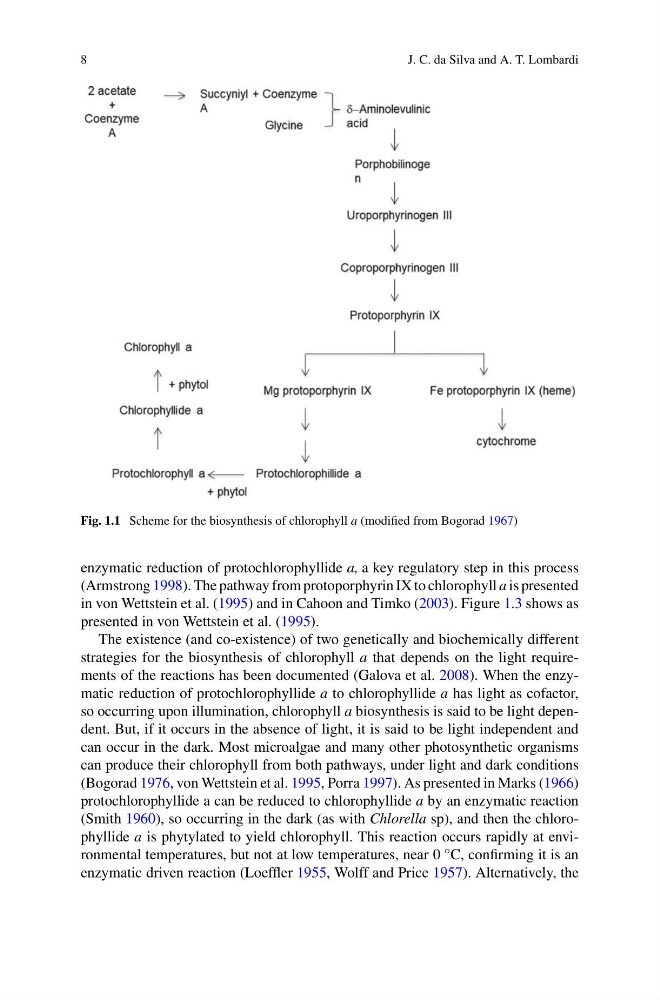
Fig. 1.1 Scheme for the biosynthesis of chlorophyll a (modified from Bogorad 1967)
enzymatic reduction of protochlorophyllide a, a key regulatory step in this process
(Armstrong 1998). The pathway from protoporphyrin IX to chlorophyll a is presented
in von Wettstein et al. (1995) and in Cahoon and Timko (2003). Figure 1.3 shows as
presented in von Wettstein et al. (1995).
The existence (and co-existence) of two genetically and biochemically different
strategies for the biosynthesis of chlorophyll a that depends on the light requirements of the reactions has been documented (Galova et al. 2008). When the enzymatic reduction of protochlorophyllide a to chlorophyllide a has light as cofactor,
so occurring upon illumination, chlorophyll a biosynthesis is said to be light dependent. But, if it occurs in the absence of light, it is said to be light independent and
can occur in the dark. Most microalgae and many other photosynthetic organisms
can produce their chlorophyll from both pathways, under light and dark conditions
(Bogorad 1976, von Wettstein et al. 1995, Porra 1997). As presented in Marks (1966)
protochlorophyllide a can be reduced to chlorophyllide a by an enzymatic reaction
(Smith 1960), so occurring in the dark (as with Chlorella sp), and then the chlorophyllide a is phytylated to yield chlorophyll. This reaction occurs rapidly at environmental temperatures, but not at low temperatures, near 0 °C, confirming it is an
enzymatic driven reaction (Loeffler 1955, Wolff and Price 1957). Alternatively, the
J. C. da Silva and A. T. Lombardi
Fig. 1.1 Scheme for the biosynthesis of chlorophyll a (modified from Bogorad 1967)
enzymatic reduction of protochlorophyllide a, a key regulatory step in this process
(Armstrong 1998). The pathway from protoporphyrin IX to chlorophyll a is presented
in von Wettstein et al. (1995) and in Cahoon and Timko (2003). Figure 1.3 shows as
presented in von Wettstein et al. (1995).
The existence (and co-existence) of two genetically and biochemically different
strategies for the biosynthesis of chlorophyll a that depends on the light requirements of the reactions has been documented (Galova et al. 2008). When the enzymatic reduction of protochlorophyllide a to chlorophyllide a has light as cofactor,
so occurring upon illumination, chlorophyll a biosynthesis is said to be light dependent. But, if it occurs in the absence of light, it is said to be light independent and
can occur in the dark. Most microalgae and many other photosynthetic organisms
can produce their chlorophyll from both pathways, under light and dark conditions
(Bogorad 1976, von Wettstein et al. 1995, Porra 1997). As presented in Marks (1966)
protochlorophyllide a can be reduced to chlorophyllide a by an enzymatic reaction
(Smith 1960), so occurring in the dark (as with Chlorella sp), and then the chlorophyllide a is phytylated to yield chlorophyll. This reaction occurs rapidly at environmental temperatures, but not at low temperatures, near 0 °C, confirming it is an
enzymatic driven reaction (Loeffler 1955, Wolff and Price 1957). Alternatively, the