

134
I. Viera and M. Roca
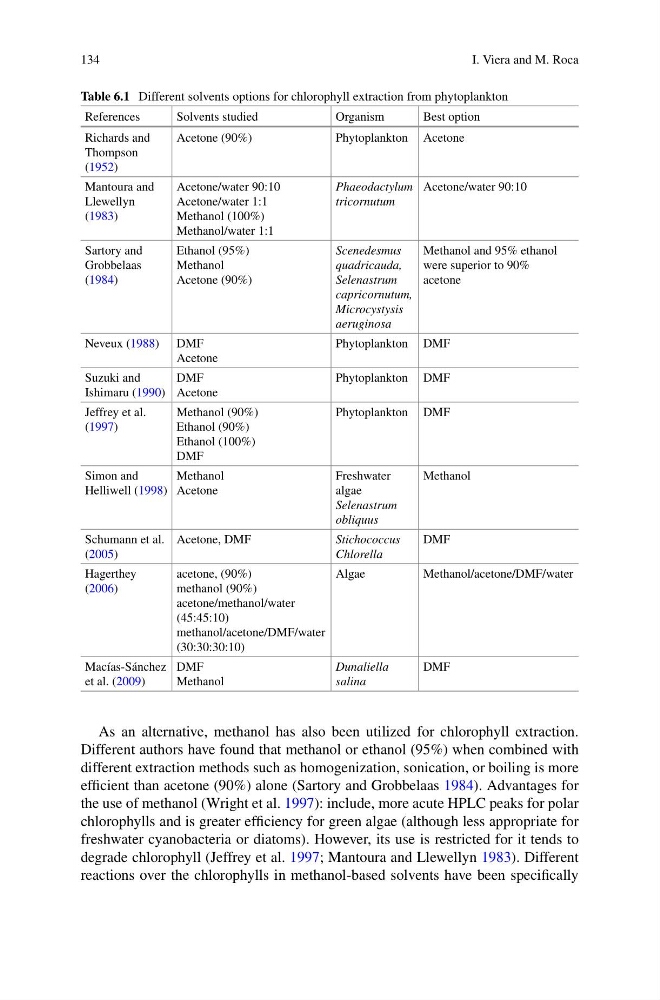
Table 6.1 Different solvents options for chlorophyll extraction from phytoplankton
References
Solvents studied
Organism
Best option
Richards and
Thompson
(1952)
Acetone (90%)
Phytoplankton Acetone
Mantoura and
Llewellyn
(1983)
Acetone/water 90:10
Acetone/water 1:1
Methanol (100%)
Methanol/water 1:1
Phaeodactylum
tricornutum
Acetone/water 90:10
Sartory and
Grobbelaas
(1984)
Ethanol (95%)
Methanol
Acetone (90%)
Scenedesmus
quadricauda,
Selenastrum
capricornutum,
Microcystysis
aeruginosa
Methanol and 95% ethanol
were superior to 90%
acetone
Neveux (1988) DMF
Acetone
Phytoplankton DMF
Suzuki and
Ishimaru (1990)
DMF
Acetone
Phytoplankton DMF
Jeffrey et al.
(1997)
Methanol (90%)
Ethanol (90%)
Ethanol (100%)
DMF
Phytoplankton DMF
Simon and
Helliwell (1998)
Methanol
Acetone
Freshwater
algae
Selenastrum
obliquus
Methanol
Schumann et al.
(2005)
Acetone, DMF
Stichococcus
Chlorella
DMF
Hagerthey
(2006)
acetone, (90%)
methanol (90%)
acetone/methanol/water
(45:45:10)
methanol/acetone/DMF/water
(30:30:30:10)
Algae
Methanol/acetone/DMF/water
Macías-Sánchez
et al. (2009)
DMF
Methanol
Dunaliella
salina
DMF
As an alternative, methanol has also been utilized for chlorophyll extraction.
Different authors have found that methanol or ethanol (95%) when combined with
different extraction methods such as homogenization, sonication, or boiling is more
efficient than acetone (90%) alone (Sartory and Grobbelaas 1984). Advantages for
the use of methanol (Wright et al. 1997): include, more acute HPLC peaks for polar
chlorophylls and is greater efficiency for green algae (although less appropriate for
freshwater cyanobacteria or diatoms). However, its use is restricted for it tends to
degrade chlorophyll (Jeffrey et al. 1997; Mantoura and Llewellyn 1983). Different
reactions over the chlorophylls in methanol-based solvents have been specifically
I. Viera and M. Roca
Table 6.1 Different solvents options for chlorophyll extraction from phytoplankton
References
Solvents studied
Organism
Best option
Richards and
Thompson
(1952)
Acetone (90%)
Phytoplankton Acetone
Mantoura and
Llewellyn
(1983)
Acetone/water 90:10
Acetone/water 1:1
Methanol (100%)
Methanol/water 1:1
Phaeodactylum
tricornutum
Acetone/water 90:10
Sartory and
Grobbelaas
(1984)
Ethanol (95%)
Methanol
Acetone (90%)
Scenedesmus
quadricauda,
Selenastrum
capricornutum,
Microcystysis
aeruginosa
Methanol and 95% ethanol
were superior to 90%
acetone
Neveux (1988) DMF
Acetone
Phytoplankton DMF
Suzuki and
Ishimaru (1990)
DMF
Acetone
Phytoplankton DMF
Jeffrey et al.
(1997)
Methanol (90%)
Ethanol (90%)
Ethanol (100%)
DMF
Phytoplankton DMF
Simon and
Helliwell (1998)
Methanol
Acetone
Freshwater
algae
Selenastrum
obliquus
Methanol
Schumann et al.
(2005)
Acetone, DMF
Stichococcus
Chlorella
DMF
Hagerthey
(2006)
acetone, (90%)
methanol (90%)
acetone/methanol/water
(45:45:10)
methanol/acetone/DMF/water
(30:30:30:10)
Algae
Methanol/acetone/DMF/water
Macías-Sánchez
et al. (2009)
DMF
Methanol
Dunaliella
salina
DMF
As an alternative, methanol has also been utilized for chlorophyll extraction.
Different authors have found that methanol or ethanol (95%) when combined with
different extraction methods such as homogenization, sonication, or boiling is more
efficient than acetone (90%) alone (Sartory and Grobbelaas 1984). Advantages for
the use of methanol (Wright et al. 1997): include, more acute HPLC peaks for polar
chlorophylls and is greater efficiency for green algae (although less appropriate for
freshwater cyanobacteria or diatoms). However, its use is restricted for it tends to
degrade chlorophyll (Jeffrey et al. 1997; Mantoura and Llewellyn 1983). Different
reactions over the chlorophylls in methanol-based solvents have been specifically