

32
3 Chitin
3.2 Occurrence in Nature
Chitin is a naturally occurring amino polysaccharide. It is a structural feature in the
exoskeletons of arthropods, shells of mollusks and the cell walls of fungi, forming an
integral part of the outer shells of crustaceans such as shrimps, crabs and lobsters and
mollusks such as snails and slugs. Some research studies have reported the presence
of chitin in the scales of certain species of fish (Rumengan et al. 2017). However,
the yield of chitin from fish scale is much lower than other sources. Yield of about
20% has been reported for Nile tilapia (Boarin-Alcalde and Graciano-Fonseca 2016).
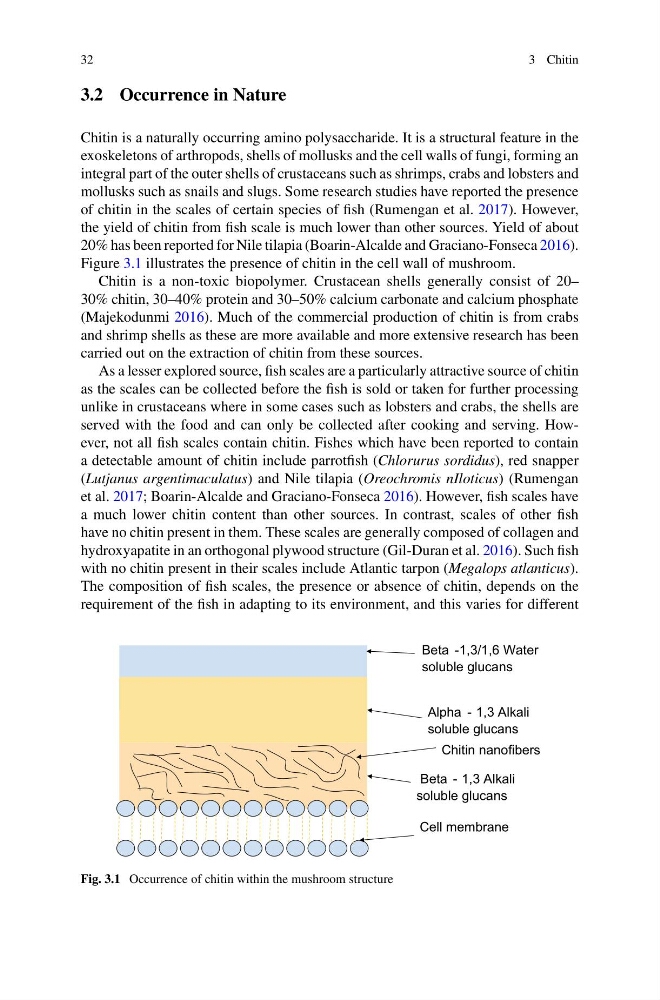
Figure 3.1 illustrates the presence of chitin in the cell wall of mushroom.
Chitin is a non-toxic biopolymer. Crustacean shells generally consist of 20–
30% chitin, 30–40% protein and 30–50% calcium carbonate and calcium phosphate
(Majekodunmi 2016). Much of the commercial production of chitin is from crabs
and shrimp shells as these are more available and more extensive research has been
carried out on the extraction of chitin from these sources.
As a lesser explored source, fish scales are a particularly attractive source of chitin
as the scales can be collected before the fish is sold or taken for further processing
unlike in crustaceans where in some cases such as lobsters and crabs, the shells are
served with the food and can only be collected after cooking and serving. However, not all fish scales contain chitin. Fishes which have been reported to contain
a detectable amount of chitin include parrotfish (Chlorurus sordidus), red snapper
(Lutjanus argentimaculatus) and Nile tilapia (Oreochromis nIloticus) (Rumengan
et al. 2017; Boarin-Alcalde and Graciano-Fonseca 2016). However, fish scales have
a much lower chitin content than other sources. In contrast, scales of other fish
have no chitin present in them. These scales are generally composed of collagen and
hydroxyapatite in an orthogonal plywood structure (Gil-Duran et al. 2016). Such fish
with no chitin present in their scales include Atlantic tarpon (Megalops atlanticus).
The composition of fish scales, the presence or absence of chitin, depends on the
requirement of the fish in adapting to its environment, and this varies for different
Cell membrane
Beta - 1,3 Alkali
soluble glucans
Alpha - 1,3 Alkali
soluble glucans
Beta -1,3/1,6 Water
soluble glucans
Chitin nanofibers
Fig. 3.1 Occurrence of chitin within the mushroom structure
3 Chitin
3.2 Occurrence in Nature
Chitin is a naturally occurring amino polysaccharide. It is a structural feature in the
exoskeletons of arthropods, shells of mollusks and the cell walls of fungi, forming an
integral part of the outer shells of crustaceans such as shrimps, crabs and lobsters and
mollusks such as snails and slugs. Some research studies have reported the presence
of chitin in the scales of certain species of fish (Rumengan et al. 2017). However,
the yield of chitin from fish scale is much lower than other sources. Yield of about
20% has been reported for Nile tilapia (Boarin-Alcalde and Graciano-Fonseca 2016).
Figure 3.1 illustrates the presence of chitin in the cell wall of mushroom.
Chitin is a non-toxic biopolymer. Crustacean shells generally consist of 20–
30% chitin, 30–40% protein and 30–50% calcium carbonate and calcium phosphate
(Majekodunmi 2016). Much of the commercial production of chitin is from crabs
and shrimp shells as these are more available and more extensive research has been
carried out on the extraction of chitin from these sources.
As a lesser explored source, fish scales are a particularly attractive source of chitin
as the scales can be collected before the fish is sold or taken for further processing
unlike in crustaceans where in some cases such as lobsters and crabs, the shells are
served with the food and can only be collected after cooking and serving. However, not all fish scales contain chitin. Fishes which have been reported to contain
a detectable amount of chitin include parrotfish (Chlorurus sordidus), red snapper
(Lutjanus argentimaculatus) and Nile tilapia (Oreochromis nIloticus) (Rumengan
et al. 2017; Boarin-Alcalde and Graciano-Fonseca 2016). However, fish scales have
a much lower chitin content than other sources. In contrast, scales of other fish
have no chitin present in them. These scales are generally composed of collagen and
hydroxyapatite in an orthogonal plywood structure (Gil-Duran et al. 2016). Such fish
with no chitin present in their scales include Atlantic tarpon (Megalops atlanticus).
The composition of fish scales, the presence or absence of chitin, depends on the
requirement of the fish in adapting to its environment, and this varies for different
Cell membrane
Beta - 1,3 Alkali
soluble glucans
Alpha - 1,3 Alkali
soluble glucans
Beta -1,3/1,6 Water
soluble glucans
Chitin nanofibers
Fig. 3.1 Occurrence of chitin within the mushroom structure