

2.3 Aquatic Organisms
19
Emergent
Floating
Submerged
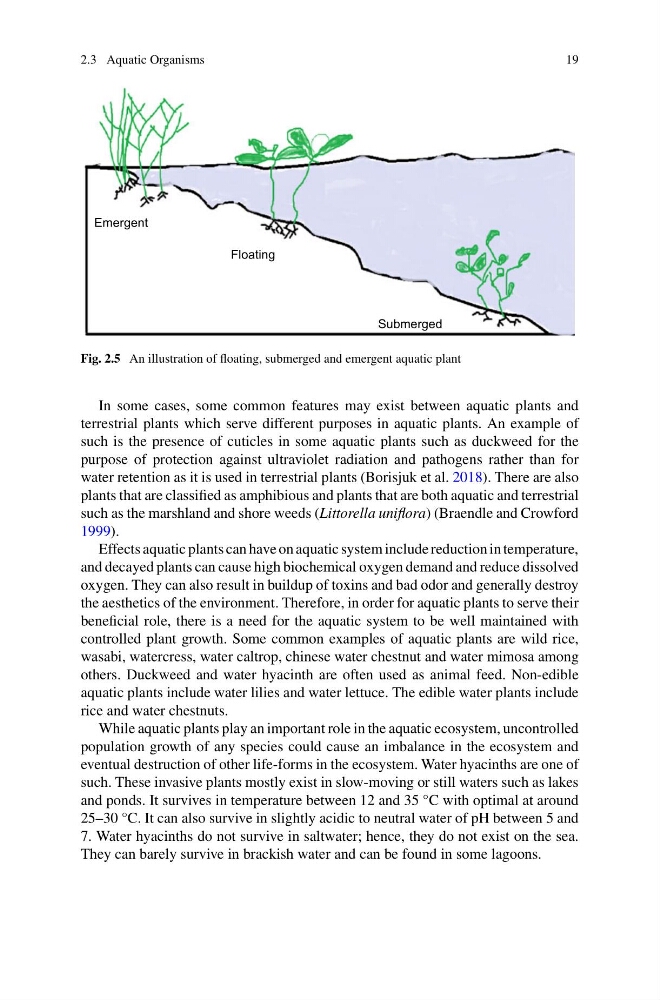
Fig. 2.5 An illustration of floating, submerged and emergent aquatic plant
In some cases, some common features may exist between aquatic plants and
terrestrial plants which serve different purposes in aquatic plants. An example of
such is the presence of cuticles in some aquatic plants such as duckweed for the
purpose of protection against ultraviolet radiation and pathogens rather than for
water retention as it is used in terrestrial plants (Borisjuk et al. 2018). There are also
plants that are classified as amphibious and plants that are both aquatic and terrestrial
such as the marshland and shore weeds (Littorella uniflora) (Braendle and Crowford
1999).
Effects aquatic plants can have on aquatic system include reduction in temperature,
and decayed plants can cause high biochemical oxygen demand and reduce dissolved
oxygen. They can also result in buildup of toxins and bad odor and generally destroy
the aesthetics of the environment. Therefore, in order for aquatic plants to serve their
beneficial role, there is a need for the aquatic system to be well maintained with
controlled plant growth. Some common examples of aquatic plants are wild rice,
wasabi, watercress, water caltrop, chinese water chestnut and water mimosa among
others. Duckweed and water hyacinth are often used as animal feed. Non-edible
aquatic plants include water lilies and water lettuce. The edible water plants include
rice and water chestnuts.
While aquatic plants play an important role in the aquatic ecosystem, uncontrolled
population growth of any species could cause an imbalance in the ecosystem and
eventual destruction of other life-forms in the ecosystem. Water hyacinths are one of
such. These invasive plants mostly exist in slow-moving or still waters such as lakes
and ponds. It survives in temperature between 12 and 35 °C with optimal at around
25–30 °C. It can also survive in slightly acidic to neutral water of pH between 5 and
7. Water hyacinths do not survive in saltwater; hence, they do not exist on the sea.
They can barely survive in brackish water and can be found in some lagoons.
19
Emergent
Floating
Submerged
Fig. 2.5 An illustration of floating, submerged and emergent aquatic plant
In some cases, some common features may exist between aquatic plants and
terrestrial plants which serve different purposes in aquatic plants. An example of
such is the presence of cuticles in some aquatic plants such as duckweed for the
purpose of protection against ultraviolet radiation and pathogens rather than for
water retention as it is used in terrestrial plants (Borisjuk et al. 2018). There are also
plants that are classified as amphibious and plants that are both aquatic and terrestrial
such as the marshland and shore weeds (Littorella uniflora) (Braendle and Crowford
1999).
Effects aquatic plants can have on aquatic system include reduction in temperature,
and decayed plants can cause high biochemical oxygen demand and reduce dissolved
oxygen. They can also result in buildup of toxins and bad odor and generally destroy
the aesthetics of the environment. Therefore, in order for aquatic plants to serve their
beneficial role, there is a need for the aquatic system to be well maintained with
controlled plant growth. Some common examples of aquatic plants are wild rice,
wasabi, watercress, water caltrop, chinese water chestnut and water mimosa among
others. Duckweed and water hyacinth are often used as animal feed. Non-edible
aquatic plants include water lilies and water lettuce. The edible water plants include
rice and water chestnuts.
While aquatic plants play an important role in the aquatic ecosystem, uncontrolled
population growth of any species could cause an imbalance in the ecosystem and
eventual destruction of other life-forms in the ecosystem. Water hyacinths are one of
such. These invasive plants mostly exist in slow-moving or still waters such as lakes
and ponds. It survives in temperature between 12 and 35 °C with optimal at around
25–30 °C. It can also survive in slightly acidic to neutral water of pH between 5 and
7. Water hyacinths do not survive in saltwater; hence, they do not exist on the sea.
They can barely survive in brackish water and can be found in some lagoons.