

192
9 Laminarins
(a)
(b)
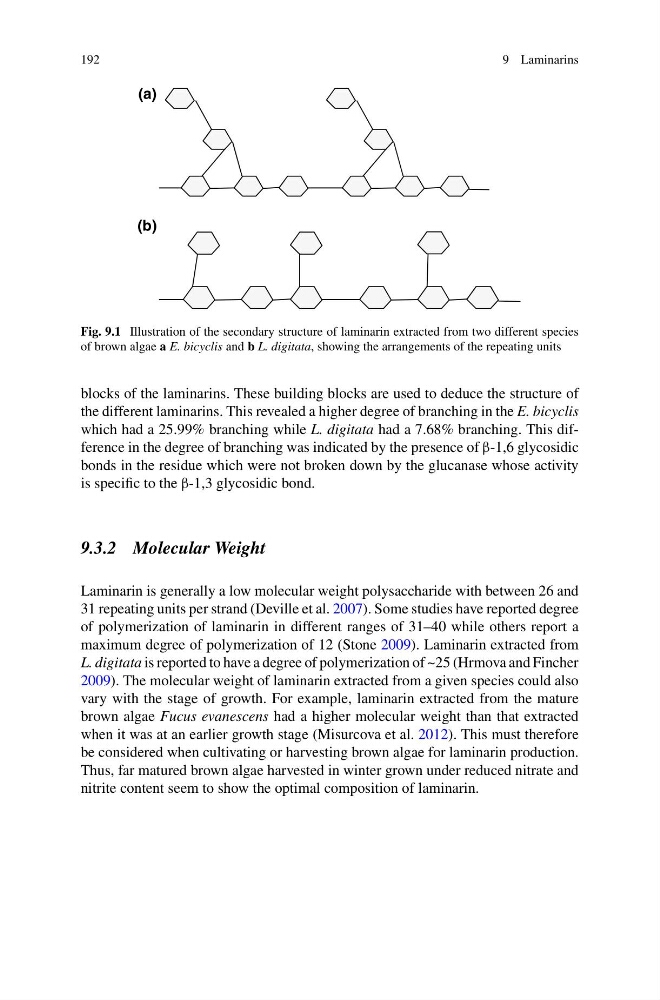
Fig. 9.1 Illustration of the secondary structure of laminarin extracted from two different species
of brown algae a E. bicyclis and b L. digitata, showing the arrangements of the repeating units
blocks of the laminarins. These building blocks are used to deduce the structure of
the different laminarins. This revealed a higher degree of branching in the E. bicyclis
which had a 25.99% branching while L. digitata had a 7.68% branching. This difference in the degree of branching was indicated by the presence of β-1,6 glycosidic
bonds in the residue which were not broken down by the glucanase whose activity
is specific to the β-1,3 glycosidic bond.
9.3.2 Molecular Weight
Laminarin is generally a low molecular weight polysaccharide with between 26 and
31 repeating units per strand (Deville et al. 2007). Some studies have reported degree
of polymerization of laminarin in different ranges of 31–40 while others report a
maximum degree of polymerization of 12 (Stone 2009). Laminarin extracted from
L. digitata is reported to have a degree of polymerization of ~25 (Hrmova and Fincher
2009). The molecular weight of laminarin extracted from a given species could also
vary with the stage of growth. For example, laminarin extracted from the mature
brown algae Fucus evanescens had a higher molecular weight than that extracted
when it was at an earlier growth stage (Misurcova et al. 2012). This must therefore
be considered when cultivating or harvesting brown algae for laminarin production.
Thus, far matured brown algae harvested in winter grown under reduced nitrate and
nitrite content seem to show the optimal composition of laminarin.
9 Laminarins
(a)
(b)
Fig. 9.1 Illustration of the secondary structure of laminarin extracted from two different species
of brown algae a E. bicyclis and b L. digitata, showing the arrangements of the repeating units
blocks of the laminarins. These building blocks are used to deduce the structure of
the different laminarins. This revealed a higher degree of branching in the E. bicyclis
which had a 25.99% branching while L. digitata had a 7.68% branching. This difference in the degree of branching was indicated by the presence of β-1,6 glycosidic
bonds in the residue which were not broken down by the glucanase whose activity
is specific to the β-1,3 glycosidic bond.
9.3.2 Molecular Weight
Laminarin is generally a low molecular weight polysaccharide with between 26 and
31 repeating units per strand (Deville et al. 2007). Some studies have reported degree
of polymerization of laminarin in different ranges of 31–40 while others report a
maximum degree of polymerization of 12 (Stone 2009). Laminarin extracted from
L. digitata is reported to have a degree of polymerization of ~25 (Hrmova and Fincher
2009). The molecular weight of laminarin extracted from a given species could also
vary with the stage of growth. For example, laminarin extracted from the mature
brown algae Fucus evanescens had a higher molecular weight than that extracted
when it was at an earlier growth stage (Misurcova et al. 2012). This must therefore
be considered when cultivating or harvesting brown algae for laminarin production.
Thus, far matured brown algae harvested in winter grown under reduced nitrate and
nitrite content seem to show the optimal composition of laminarin.