

154
7 Agar
Cultivation
Washing of
biomass
Alkali
pretreatment
Washing
Extraction
in hot
water
Separation
Precipitation
Gel
pressing
Purification
Drying
Milling
Packaging
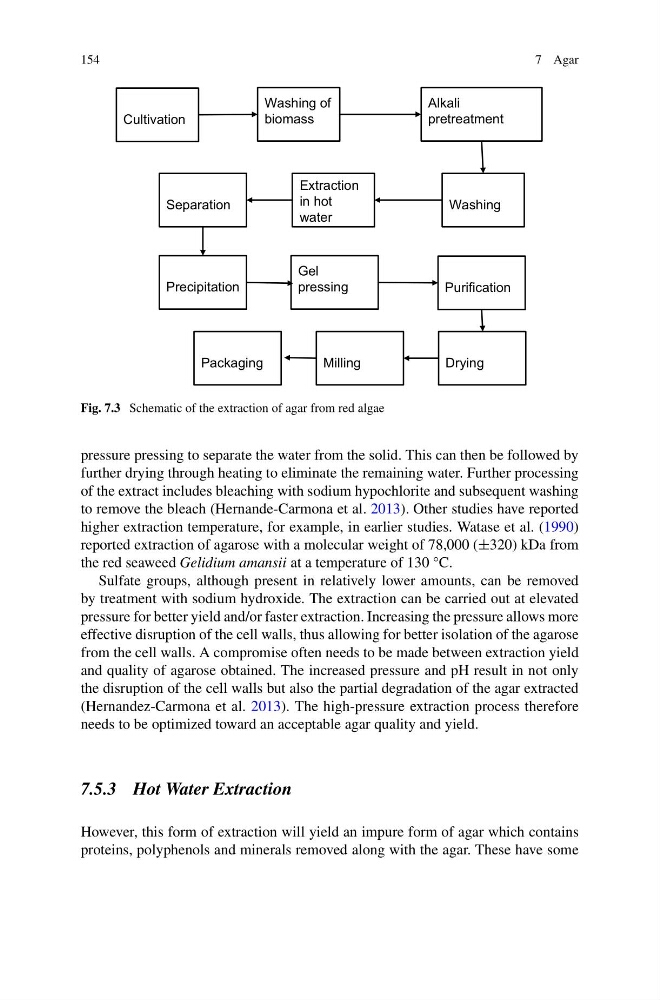
Fig. 7.3 Schematic of the extraction of agar from red algae
pressure pressing to separate the water from the solid. This can then be followed by
further drying through heating to eliminate the remaining water. Further processing
of the extract includes bleaching with sodium hypochlorite and subsequent washing
to remove the bleach (Hernande-Carmona et al. 2013). Other studies have reported
higher extraction temperature, for example, in earlier studies. Watase et al. (1990)
reported extraction of agarose with a molecular weight of 78,000 (±320) kDa from
the red seaweed Gelidium amansii at a temperature of 130 °C.
Sulfate groups, although present in relatively lower amounts, can be removed
by treatment with sodium hydroxide. The extraction can be carried out at elevated
pressure for better yield and/or faster extraction. Increasing the pressure allows more
effective disruption of the cell walls, thus allowing for better isolation of the agarose
from the cell walls. A compromise often needs to be made between extraction yield
and quality of agarose obtained. The increased pressure and pH result in not only
the disruption of the cell walls but also the partial degradation of the agar extracted
(Hernandez-Carmona et al. 2013). The high-pressure extraction process therefore
needs to be optimized toward an acceptable agar quality and yield.
7.5.3 Hot Water Extraction
However, this form of extraction will yield an impure form of agar which contains
proteins, polyphenols and minerals removed along with the agar. These have some
7 Agar
Cultivation
Washing of
biomass
Alkali
pretreatment
Washing
Extraction
in hot
water
Separation
Precipitation
Gel
pressing
Purification
Drying
Milling
Packaging
Fig. 7.3 Schematic of the extraction of agar from red algae
pressure pressing to separate the water from the solid. This can then be followed by
further drying through heating to eliminate the remaining water. Further processing
of the extract includes bleaching with sodium hypochlorite and subsequent washing
to remove the bleach (Hernande-Carmona et al. 2013). Other studies have reported
higher extraction temperature, for example, in earlier studies. Watase et al. (1990)
reported extraction of agarose with a molecular weight of 78,000 (±320) kDa from
the red seaweed Gelidium amansii at a temperature of 130 °C.
Sulfate groups, although present in relatively lower amounts, can be removed
by treatment with sodium hydroxide. The extraction can be carried out at elevated
pressure for better yield and/or faster extraction. Increasing the pressure allows more
effective disruption of the cell walls, thus allowing for better isolation of the agarose
from the cell walls. A compromise often needs to be made between extraction yield
and quality of agarose obtained. The increased pressure and pH result in not only
the disruption of the cell walls but also the partial degradation of the agar extracted
(Hernandez-Carmona et al. 2013). The high-pressure extraction process therefore
needs to be optimized toward an acceptable agar quality and yield.
7.5.3 Hot Water Extraction
However, this form of extraction will yield an impure form of agar which contains
proteins, polyphenols and minerals removed along with the agar. These have some