

132
6 Carrageenans
processes which ensures a clean sterile product containing carrageenan and cellulose,
it can be sold as carrageenan suitable for human consumption (McHugh 2003).
The hardening of the carrageenan gel only occurs in kappa and to a lesser extent
in iota carrageenan; therefore, the gel formation-based extraction can only be used
for seaweeds containing these forms of carrageenan. The other main form of carrageenan, lambda carrageenan, does not form gels and therefore can only be precipitated using alcohol (McHugh 2003). The end use of the carrageenan must therefore
be considered prior to determining a suitable extraction method.
6.6 Environmental Implications
Carrageenan extraction is dependent on elevated temperature in aqueous alkaline
conditions. In the main extraction process of the crude carrageenan, the concerns
here are energy consumption, water usage and use of alkali. Other factors to consider
include land use changes, additional energy used in separation, milling, drying and
purification as well as other components such as use of salts for precipitation and
alcohol for washing and drying.
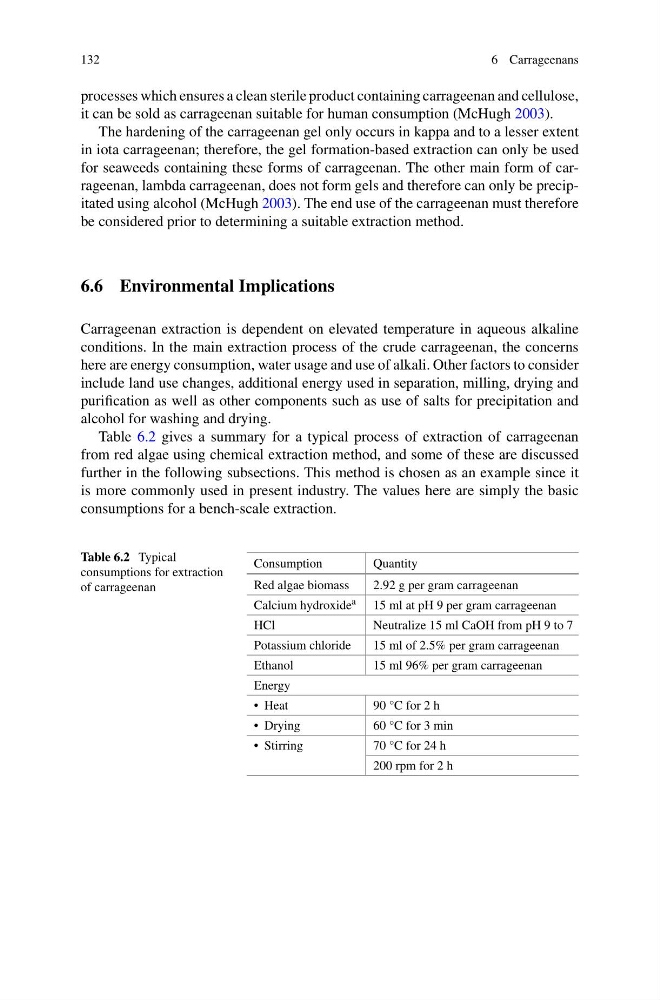
Table 6.2 gives a summary for a typical process of extraction of carrageenan
from red algae using chemical extraction method, and some of these are discussed
further in the following subsections. This method is chosen as an example since it
is more commonly used in present industry. The values here are simply the basic
consumptions for a bench-scale extraction.
Table 6.2 Typical
consumptions for extraction
of carrageenan
Consumption
Quantity
Red algae biomass
2.92 g per gram carrageenan
Calcium hydroxide a 15 ml at pH 9 per gram carrageenan
HCl
Neutralize 15 ml CaOH from pH 9 to 7
Potassium chloride
15 ml of 2.5% per gram carrageenan
Ethanol
15 ml 96% per gram carrageenan
Energy
• Heat
90 °C for 2 h
• Drying
60 °C for 3 min
• Stirring
70 °C for 24 h
200 rpm for 2 h
6 Carrageenans
processes which ensures a clean sterile product containing carrageenan and cellulose,
it can be sold as carrageenan suitable for human consumption (McHugh 2003).
The hardening of the carrageenan gel only occurs in kappa and to a lesser extent
in iota carrageenan; therefore, the gel formation-based extraction can only be used
for seaweeds containing these forms of carrageenan. The other main form of carrageenan, lambda carrageenan, does not form gels and therefore can only be precipitated using alcohol (McHugh 2003). The end use of the carrageenan must therefore
be considered prior to determining a suitable extraction method.
6.6 Environmental Implications
Carrageenan extraction is dependent on elevated temperature in aqueous alkaline
conditions. In the main extraction process of the crude carrageenan, the concerns
here are energy consumption, water usage and use of alkali. Other factors to consider
include land use changes, additional energy used in separation, milling, drying and
purification as well as other components such as use of salts for precipitation and
alcohol for washing and drying.
Table 6.2 gives a summary for a typical process of extraction of carrageenan
from red algae using chemical extraction method, and some of these are discussed
further in the following subsections. This method is chosen as an example since it
is more commonly used in present industry. The values here are simply the basic
consumptions for a bench-scale extraction.
Table 6.2 Typical
consumptions for extraction
of carrageenan
Consumption
Quantity
Red algae biomass
2.92 g per gram carrageenan
Calcium hydroxide a 15 ml at pH 9 per gram carrageenan
HCl
Neutralize 15 ml CaOH from pH 9 to 7
Potassium chloride
15 ml of 2.5% per gram carrageenan
Ethanol
15 ml 96% per gram carrageenan
Energy
• Heat
90 °C for 2 h
• Drying
60 °C for 3 min
• Stirring
70 °C for 24 h
200 rpm for 2 h