

organization and basement membrane or extracellular matrix
degradation. None of the extracellular signals or the effectors
are specific for the EMT program, and this is why it can be
misleading when considered EMT markers. The EMT-TFs are
more specific, but nevertheless, the EMT is better defined in
terms of cell morphology and behavior than by gene expression. In any case, it is not appropriate to consider EMT-TFs and
effector molecules as equivalent readouts of the EMT, as the
former are regulators that can implement the whole program
through the activation of multiple target (effector) genes.
4. The pure E and M phenotypes. One important misleading message is conveyed by the standard illustrations of the EMT. In
the text book image that we all have in mind, often there is a
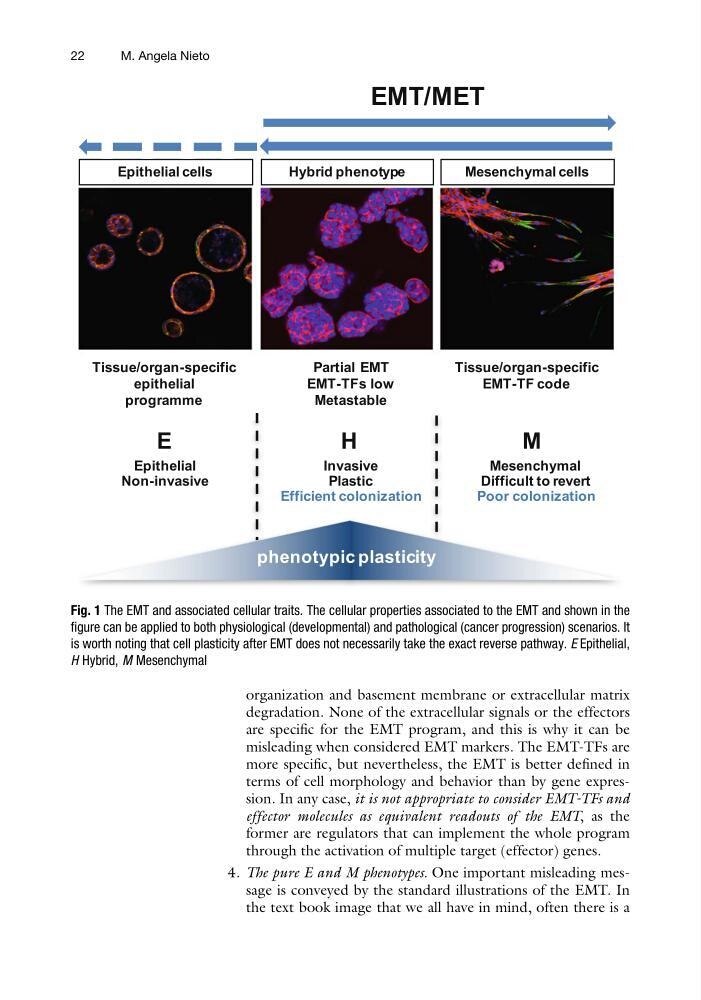
Fig. 1 The EMT and associated cellular traits. The cellular properties associated to the EMT and shown in the
figure can be applied to both physiological (developmental) and pathological (cancer progression) scenarios. It
is worth noting that cell plasticity after EMT does not necessarily take the exact reverse pathway. E Epithelial,
H Hybrid, M Mesenchymal
22
M. Angela Nieto
degradation. None of the extracellular signals or the effectors
are specific for the EMT program, and this is why it can be
misleading when considered EMT markers. The EMT-TFs are
more specific, but nevertheless, the EMT is better defined in
terms of cell morphology and behavior than by gene expression. In any case, it is not appropriate to consider EMT-TFs and
effector molecules as equivalent readouts of the EMT, as the
former are regulators that can implement the whole program
through the activation of multiple target (effector) genes.
4. The pure E and M phenotypes. One important misleading message is conveyed by the standard illustrations of the EMT. In
the text book image that we all have in mind, often there is a
Fig. 1 The EMT and associated cellular traits. The cellular properties associated to the EMT and shown in the
figure can be applied to both physiological (developmental) and pathological (cancer progression) scenarios. It
is worth noting that cell plasticity after EMT does not necessarily take the exact reverse pathway. E Epithelial,
H Hybrid, M Mesenchymal
22
M. Angela Nieto