

5. These cell numbers are based on epithelial cell lines for a
96-well plate. We have found these to be approximately one
third of the number of cells required for XFe24 well plates.
6. Once the probe plate is rehydrated, it is recommended to use
plate within 72 h.
7. Be cautious not to remove all media and not to touch the
bottom of the wells in order to protect the integrity of the
cells. After the last wash, add 160 μL of assay media to the
20 μL of remaining media in wells (final volume 180 μL/well)
and keep the plate at 37
C in a non-CO 2 incubator until ready
to load onto the machine.
8. A loading guide, provided with the probe plate, can be used to
align to the ports for ease of dispensing. The temperature
correction well should be loaded with injection
compounds too.
0.0
500.0
1000.0
1500.0
2000.0
2500.0
0
2 0
4 0
6 0
8 0
OCR (pmol/min/Cells)
Time (min)
Mitochondrial RespiraƟon
PMC42-ET
PMC42-LA
0.0
100.0
200.0
300.0
400.0
500.0
0
2 0
4 0
6 0
8 0
ECAR (mpH/min/Cells)
Time (min)
Extracellular AcidificaƟon Rate
PMC42-ET
PMC42-LA
A
C
B
D
oligo
FCCP
AA/Rot
oligo
FCCP
AA/Rot
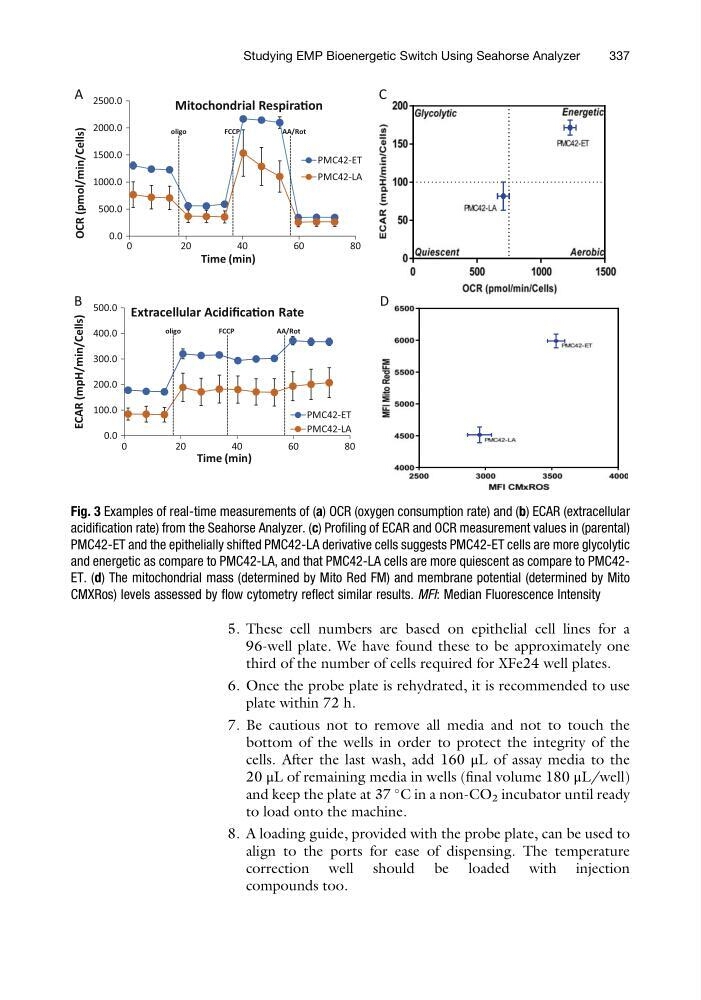
Fig. 3 Examples of real-time measurements of (a) OCR (oxygen consumption rate) and (b) ECAR (extracellular
acidification rate) from the Seahorse Analyzer. (c) Profiling of ECAR and OCR measurement values in (parental)
PMC42-ET and the epithelially shifted PMC42-LA derivative cells suggests PMC42-ET cells are more glycolytic
and energetic as compare to PMC42-LA, and that PMC42-LA cells are more quiescent as compare to PMC42ET. (d) The mitochondrial mass (determined by Mito Red FM) and membrane potential (determined by Mito
CMXRos) levels assessed by flow cytometry reflect similar results. MFI: Median Fluorescence Intensity
Studying EMP Bioenergetic Switch Using Seahorse Analyzer
337
96-well plate. We have found these to be approximately one
third of the number of cells required for XFe24 well plates.
6. Once the probe plate is rehydrated, it is recommended to use
plate within 72 h.
7. Be cautious not to remove all media and not to touch the
bottom of the wells in order to protect the integrity of the
cells. After the last wash, add 160 μL of assay media to the
20 μL of remaining media in wells (final volume 180 μL/well)
and keep the plate at 37
C in a non-CO 2 incubator until ready
to load onto the machine.
8. A loading guide, provided with the probe plate, can be used to
align to the ports for ease of dispensing. The temperature
correction well should be loaded with injection
compounds too.
0.0
500.0
1000.0
1500.0
2000.0
2500.0
0
2 0
4 0
6 0
8 0
OCR (pmol/min/Cells)
Time (min)
Mitochondrial RespiraƟon
PMC42-ET
PMC42-LA
0.0
100.0
200.0
300.0
400.0
500.0
0
2 0
4 0
6 0
8 0
ECAR (mpH/min/Cells)
Time (min)
Extracellular AcidificaƟon Rate
PMC42-ET
PMC42-LA
A
C
B
D
oligo
FCCP
AA/Rot
oligo
FCCP
AA/Rot
Fig. 3 Examples of real-time measurements of (a) OCR (oxygen consumption rate) and (b) ECAR (extracellular
acidification rate) from the Seahorse Analyzer. (c) Profiling of ECAR and OCR measurement values in (parental)
PMC42-ET and the epithelially shifted PMC42-LA derivative cells suggests PMC42-ET cells are more glycolytic
and energetic as compare to PMC42-LA, and that PMC42-LA cells are more quiescent as compare to PMC42ET. (d) The mitochondrial mass (determined by Mito Red FM) and membrane potential (determined by Mito
CMXRos) levels assessed by flow cytometry reflect similar results. MFI: Median Fluorescence Intensity
Studying EMP Bioenergetic Switch Using Seahorse Analyzer
337