

5 Retinoic Acid Signaling and Heart Development
133
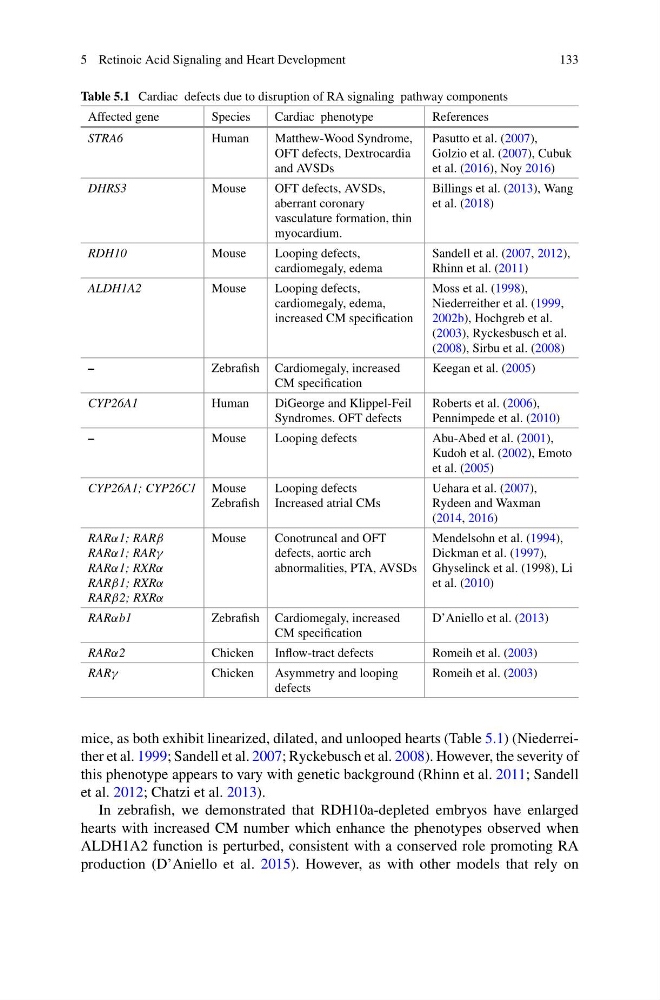
Table 5.1 Cardiac defects due to disruption of RA signaling pathway components
Affected gene
Species
Cardiac phenotype
References
STRA6
Human
Matthew-Wood Syndrome,
OFT defects, Dextrocardia
and AVSDs
Pasutto et al. (2007),
Golzio et al. (2007), Cubuk
et al. (2016), Noy 2016)
DHRS3
Mouse
OFT defects, AVSDs,
aberrant coronary
vasculature formation, thin
myocardium.
Billings et al. (2013), Wang
et al. (2018)
RDH10
Mouse
Looping defects,
cardiomegaly, edema
Sandell et al. (2007, 2012),
Rhinn et al. (2011)
ALDH1A2
Mouse
Looping defects,
cardiomegaly, edema,
increased CM specification
Moss et al. (1998),
Niederreither et al. (1999,
2002b), Hochgreb et al.
(2003), Ryckesbusch et al.
(2008), Sirbu et al. (2008)
–
Zebrafish Cardiomegaly, increased
CM specification
Keegan et al. (2005)
CYP26A1
Human
DiGeorge and Klippel-Feil
Syndromes. OFT defects
Roberts et al. (2006),
Pennimpede et al. (2010)
–
Mouse
Looping defects
Abu-Abed et al. (2001),
Kudoh et al. (2002), Emoto
et al. (2005)
CYP26A1; CYP26C1 Mouse
Zebrafish
Looping defects
Increased atrial CMs
Uehara et al. (2007),
Rydeen and Waxman
(2014, 2016)
RARα1; RARβ
RARα1; RARγ
RARα1; RXRα
RARβ1; RXRα
RARβ2; RXRα
Mouse
Conotruncal and OFT
defects, aortic arch
abnormalities, PTA, AVSDs
Mendelsohn et al. (1994),
Dickman et al. (1997),
Ghyselinck et al. (1998), Li
et al. (2010)
RARαb1
Zebrafish Cardiomegaly, increased
CM specification
D’Aniello et al. (2013)
RARα2
Chicken
Inflow-tract defects
Romeih et al. (2003)
RARγ
Chicken
Asymmetry and looping
defects
Romeih et al. (2003)
mice, as both exhibit linearized, dilated, and unlooped hearts (Table 5.1) (Niederreither et al. 1999; Sandell et al. 2007; Ryckebusch et al. 2008). However, the severity of
this phenotype appears to vary with genetic background (Rhinn et al. 2011; Sandell
et al. 2012; Chatzi et al. 2013).
In zebrafish, we demonstrated that RDH10a-depleted embryos have enlarged
hearts with increased CM number which enhance the phenotypes observed when
ALDH1A2 function is perturbed, consistent with a conserved role promoting RA
production (D’Aniello et al. 2015). However, as with other models that rely on
133
Table 5.1 Cardiac defects due to disruption of RA signaling pathway components
Affected gene
Species
Cardiac phenotype
References
STRA6
Human
Matthew-Wood Syndrome,
OFT defects, Dextrocardia
and AVSDs
Pasutto et al. (2007),
Golzio et al. (2007), Cubuk
et al. (2016), Noy 2016)
DHRS3
Mouse
OFT defects, AVSDs,
aberrant coronary
vasculature formation, thin
myocardium.
Billings et al. (2013), Wang
et al. (2018)
RDH10
Mouse
Looping defects,
cardiomegaly, edema
Sandell et al. (2007, 2012),
Rhinn et al. (2011)
ALDH1A2
Mouse
Looping defects,
cardiomegaly, edema,
increased CM specification
Moss et al. (1998),
Niederreither et al. (1999,
2002b), Hochgreb et al.
(2003), Ryckesbusch et al.
(2008), Sirbu et al. (2008)
–
Zebrafish Cardiomegaly, increased
CM specification
Keegan et al. (2005)
CYP26A1
Human
DiGeorge and Klippel-Feil
Syndromes. OFT defects
Roberts et al. (2006),
Pennimpede et al. (2010)
–
Mouse
Looping defects
Abu-Abed et al. (2001),
Kudoh et al. (2002), Emoto
et al. (2005)
CYP26A1; CYP26C1 Mouse
Zebrafish
Looping defects
Increased atrial CMs
Uehara et al. (2007),
Rydeen and Waxman
(2014, 2016)
RARα1; RARβ
RARα1; RARγ
RARα1; RXRα
RARβ1; RXRα
RARβ2; RXRα
Mouse
Conotruncal and OFT
defects, aortic arch
abnormalities, PTA, AVSDs
Mendelsohn et al. (1994),
Dickman et al. (1997),
Ghyselinck et al. (1998), Li
et al. (2010)
RARαb1
Zebrafish Cardiomegaly, increased
CM specification
D’Aniello et al. (2013)
RARα2
Chicken
Inflow-tract defects
Romeih et al. (2003)
RARγ
Chicken
Asymmetry and looping
defects
Romeih et al. (2003)
mice, as both exhibit linearized, dilated, and unlooped hearts (Table 5.1) (Niederreither et al. 1999; Sandell et al. 2007; Ryckebusch et al. 2008). However, the severity of
this phenotype appears to vary with genetic background (Rhinn et al. 2011; Sandell
et al. 2012; Chatzi et al. 2013).
In zebrafish, we demonstrated that RDH10a-depleted embryos have enlarged
hearts with increased CM number which enhance the phenotypes observed when
ALDH1A2 function is perturbed, consistent with a conserved role promoting RA
production (D’Aniello et al. 2015). However, as with other models that rely on