

3 Catalysts via Atomic Layer Deposition
81
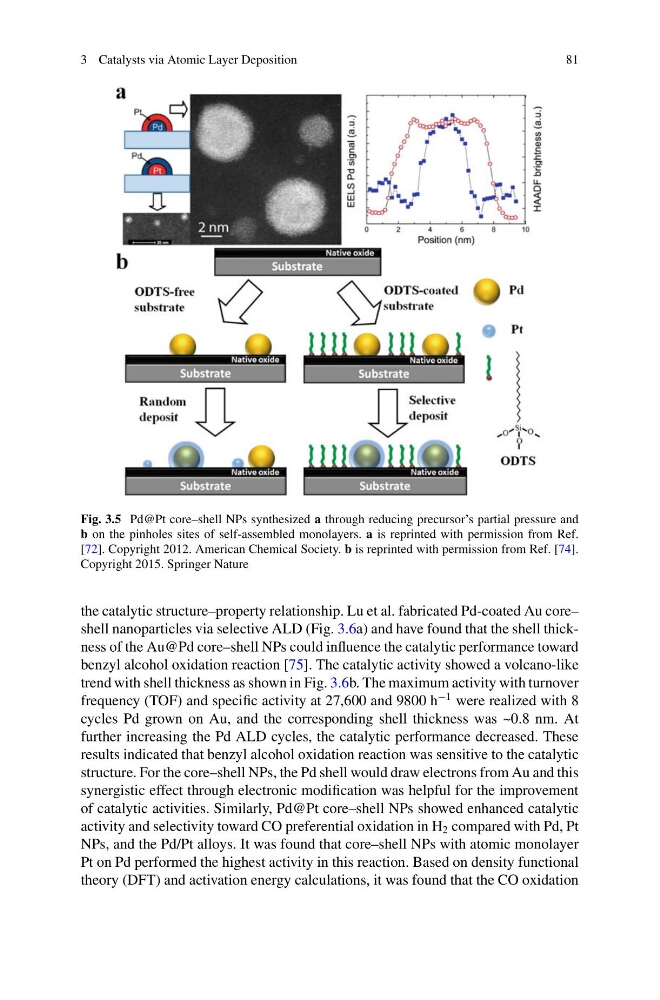
Fig. 3.5 Pd@Pt core–shell NPs synthesized a through reducing precursor’s partial pressure and
b on the pinholes sites of self-assembled monolayers. a is reprinted with permission from Ref.
[72]. Copyright 2012. American Chemical Society. b is reprinted with permission from Ref. [74].
Copyright 2015. Springer Nature
the catalytic structure–property relationship. Lu et al. fabricated Pd-coated Au core–
shell nanoparticles via selective ALD (Fig. 3.6a) and have found that the shell thickness of the Au@Pd core–shell NPs could influence the catalytic performance toward
benzyl alcohol oxidation reaction [75]. The catalytic activity showed a volcano-like
trend with shell thickness as shown in Fig. 3.6b. The maximum activity with turnover
frequency (TOF) and specific activity at 27,600 and 9800 h
−1 were realized with 8
cycles Pd grown on Au, and the corresponding shell thickness was ~0.8 nm. At
further increasing the Pd ALD cycles, the catalytic performance decreased. These
results indicated that benzyl alcohol oxidation reaction was sensitive to the catalytic
structure. For the core–shell NPs, the Pd shell would draw electrons from Au and this
synergistic effect through electronic modification was helpful for the improvement
of catalytic activities. Similarly, Pd@Pt core–shell NPs showed enhanced catalytic
activity and selectivity toward CO preferential oxidation in H 2 compared with Pd, Pt
NPs, and the Pd/Pt alloys. It was found that core–shell NPs with atomic monolayer
Pt on Pd performed the highest activity in this reaction. Based on density functional
theory (DFT) and activation energy calculations, it was found that the CO oxidation
81
Fig. 3.5 Pd@Pt core–shell NPs synthesized a through reducing precursor’s partial pressure and
b on the pinholes sites of self-assembled monolayers. a is reprinted with permission from Ref.
[72]. Copyright 2012. American Chemical Society. b is reprinted with permission from Ref. [74].
Copyright 2015. Springer Nature
the catalytic structure–property relationship. Lu et al. fabricated Pd-coated Au core–
shell nanoparticles via selective ALD (Fig. 3.6a) and have found that the shell thickness of the Au@Pd core–shell NPs could influence the catalytic performance toward
benzyl alcohol oxidation reaction [75]. The catalytic activity showed a volcano-like
trend with shell thickness as shown in Fig. 3.6b. The maximum activity with turnover
frequency (TOF) and specific activity at 27,600 and 9800 h
−1 were realized with 8
cycles Pd grown on Au, and the corresponding shell thickness was ~0.8 nm. At
further increasing the Pd ALD cycles, the catalytic performance decreased. These
results indicated that benzyl alcohol oxidation reaction was sensitive to the catalytic
structure. For the core–shell NPs, the Pd shell would draw electrons from Au and this
synergistic effect through electronic modification was helpful for the improvement
of catalytic activities. Similarly, Pd@Pt core–shell NPs showed enhanced catalytic
activity and selectivity toward CO preferential oxidation in H 2 compared with Pd, Pt
NPs, and the Pd/Pt alloys. It was found that core–shell NPs with atomic monolayer
Pt on Pd performed the highest activity in this reaction. Based on density functional
theory (DFT) and activation energy calculations, it was found that the CO oxidation