

10 Progress in the Selective Semi-hydrogenation of Alkynes …
333
1
2
3
Alloying
Doping
Stabilizer
Additives
Cavities
M-ensembles
Encapsulation
Size constrains
Metal-oxide interfase
Electron transfer
Lattice strain
SMSI
Solid support
Oxides
Zeolites
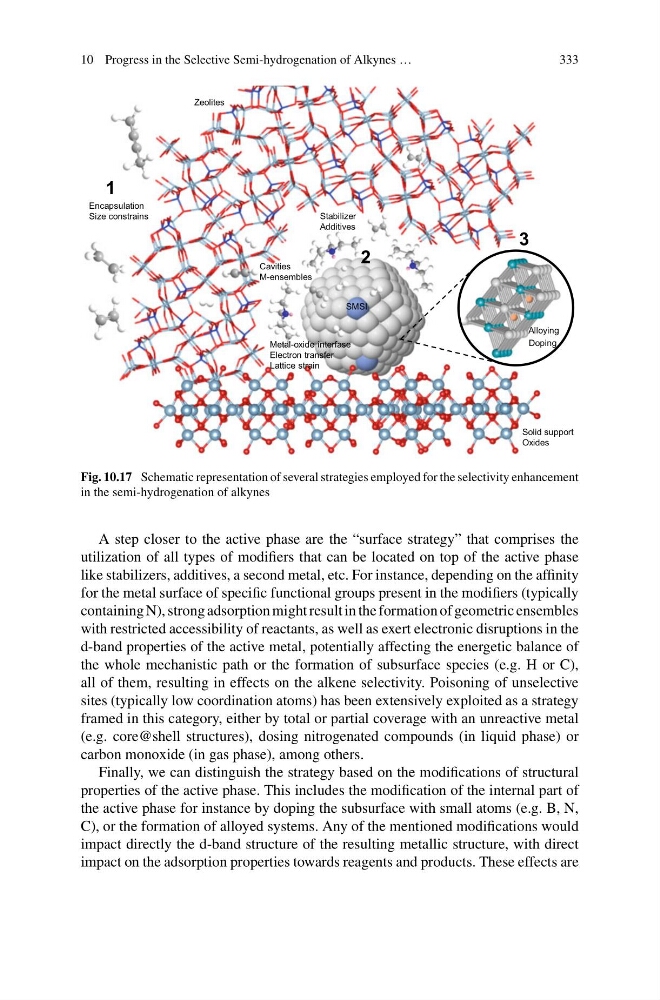
Fig. 10.17 Schematic representation of several strategies employed for the selectivity enhancement
in the semi-hydrogenation of alkynes
A step closer to the active phase are the “surface strategy” that comprises the
utilization of all types of modifiers that can be located on top of the active phase
like stabilizers, additives, a second metal, etc. For instance, depending on the affinity
for the metal surface of specific functional groups present in the modifiers (typically
containing N), strong adsorption might result in the formation of geometric ensembles
with restricted accessibility of reactants, as well as exert electronic disruptions in the
d-band properties of the active metal, potentially affecting the energetic balance of
the whole mechanistic path or the formation of subsurface species (e.g. H or C),
all of them, resulting in effects on the alkene selectivity. Poisoning of unselective
sites (typically low coordination atoms) has been extensively exploited as a strategy
framed in this category, either by total or partial coverage with an unreactive metal
(e.g. core@shell structures), dosing nitrogenated compounds (in liquid phase) or
carbon monoxide (in gas phase), among others.
Finally, we can distinguish the strategy based on the modifications of structural
properties of the active phase. This includes the modification of the internal part of
the active phase for instance by doping the subsurface with small atoms (e.g. B, N,
C), or the formation of alloyed systems. Any of the mentioned modifications would
impact directly the d-band structure of the resulting metallic structure, with direct
impact on the adsorption properties towards reagents and products. These effects are
333
1
2
3
Alloying
Doping
Stabilizer
Additives
Cavities
M-ensembles
Encapsulation
Size constrains
Metal-oxide interfase
Electron transfer
Lattice strain
SMSI
Solid support
Oxides
Zeolites
Fig. 10.17 Schematic representation of several strategies employed for the selectivity enhancement
in the semi-hydrogenation of alkynes
A step closer to the active phase are the “surface strategy” that comprises the
utilization of all types of modifiers that can be located on top of the active phase
like stabilizers, additives, a second metal, etc. For instance, depending on the affinity
for the metal surface of specific functional groups present in the modifiers (typically
containing N), strong adsorption might result in the formation of geometric ensembles
with restricted accessibility of reactants, as well as exert electronic disruptions in the
d-band properties of the active metal, potentially affecting the energetic balance of
the whole mechanistic path or the formation of subsurface species (e.g. H or C),
all of them, resulting in effects on the alkene selectivity. Poisoning of unselective
sites (typically low coordination atoms) has been extensively exploited as a strategy
framed in this category, either by total or partial coverage with an unreactive metal
(e.g. core@shell structures), dosing nitrogenated compounds (in liquid phase) or
carbon monoxide (in gas phase), among others.
Finally, we can distinguish the strategy based on the modifications of structural
properties of the active phase. This includes the modification of the internal part of
the active phase for instance by doping the subsurface with small atoms (e.g. B, N,
C), or the formation of alloyed systems. Any of the mentioned modifications would
impact directly the d-band structure of the resulting metallic structure, with direct
impact on the adsorption properties towards reagents and products. These effects are