

1 Ligand-Free Sub-Nanometer Metal Clusters in Catalysis
19
(R= Alkyl, Aryl,
also heterocoupling)
AuPR 3
AuPR 3
X
I
III
Y
(X,Y= F or BF 4 , n=0-3)
R
Au
III
PR 3
R
R
Y
R
R
R
Reductive elimination
step, extremely f ast
(<1 min at -78 ºC)
H
H
7
H
H
9
Approaching step fo
transmetallation
Distal size selective
n
H
R
if R>C 10
AuPPh 3 NTf 2 (5 mol%), Selectfluor (1.5 eq.)
Na 2 CO 3 (2 eq.), CH 3 CN, rt, 24 h
CH 3 (CH 2 ) 7 , a
77
19 (65)
63
CH 3 (CH 2 ) 9 , b
4
22 (59)
82
terc-Bu, c
91
11 (27)
34
Cyclohexyl, d
37
26 (46)
53
R
Gold catalysis:
Copper-mediated Glaser coupling:
Cu(OAc) 2 (10 eq.), MeOH/Pyridine, rt, 24 h
with gold
with copper
a
Isolated yield (%)
H
R
R
R
a-d
a Between brackects, yields after 4 days
N
N
Cl
F
·2BF 4
-
selectfluor:
CuCl (5 mol%), TMEDA (10 mol%)
O 2 (balloon),
i PrOH, 65 ºC, 24 h
Copper-catalysed Hay coupling:
Glaser
Hay
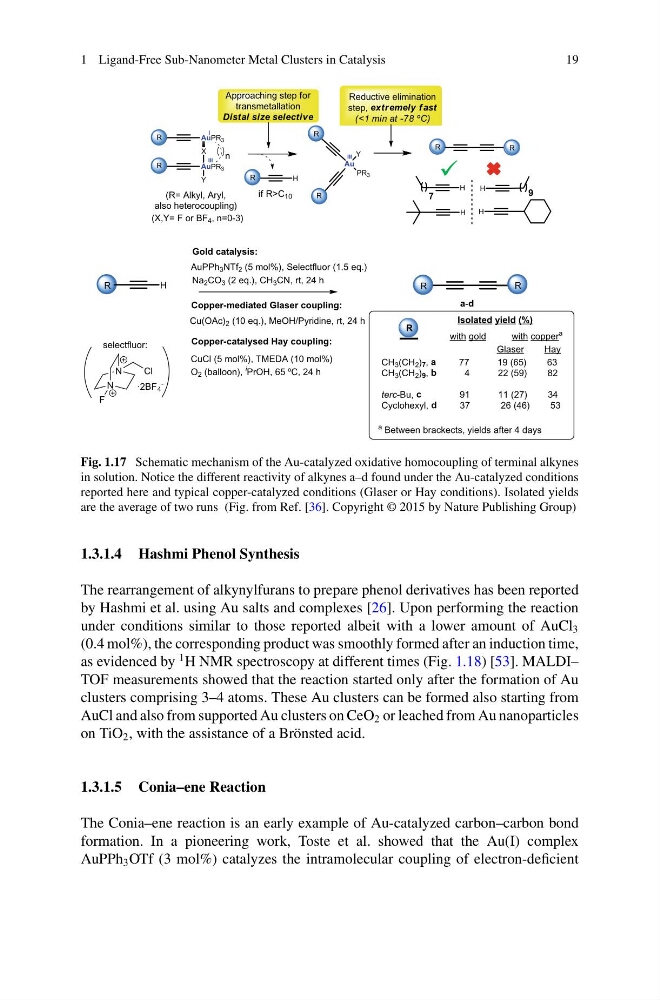
Fig. 1.17 Schematic mechanism of the Au-catalyzed oxidative homocoupling of terminal alkynes
in solution. Notice the different reactivity of alkynes a–d found under the Au-catalyzed conditions
reported here and typical copper-catalyzed conditions (Glaser or Hay conditions). Isolated yields
are the average of two runs (Fig. from Ref. [36]. Copyright © 2015 by Nature Publishing Group)
1.3.1.4 Hashmi Phenol Synthesis
The rearrangement of alkynylfurans to prepare phenol derivatives has been reported
by Hashmi et al. using Au salts and complexes [26]. Upon performing the reaction
under conditions similar to those reported albeit with a lower amount of AuCl 3
(0.4 mol%), the corresponding product was smoothly formed after an induction time,
as evidenced by
1 H NMR spectroscopy at different times (Fig. 1.18) [53]. MALDI–
TOF measurements showed that the reaction started only after the formation of Au
clusters comprising 3–4 atoms. These Au clusters can be formed also starting from
AuCl and also from supported Au clusters on CeO 2 or leached from Au nanoparticles
on TiO 2 , with the assistance of a Brönsted acid.
1.3.1.5 Conia–ene Reaction
The Conia–ene reaction is an early example of Au-catalyzed carbon–carbon bond
formation. In a pioneering work, Toste et al. showed that the Au(I) complex
AuPPh 3 OTf (3 mol%) catalyzes the intramolecular coupling of electron-deficient
19
(R= Alkyl, Aryl,
also heterocoupling)
AuPR 3
AuPR 3
X
I
III
Y
(X,Y= F or BF 4 , n=0-3)
R
Au
III
PR 3
R
R
Y
R
R
R
Reductive elimination
step, extremely f ast
(<1 min at -78 ºC)
H
H
7
H
H
9
Approaching step fo
transmetallation
Distal size selective
n
H
R
if R>C 10
AuPPh 3 NTf 2 (5 mol%), Selectfluor (1.5 eq.)
Na 2 CO 3 (2 eq.), CH 3 CN, rt, 24 h
CH 3 (CH 2 ) 7 , a
77
19 (65)
63
CH 3 (CH 2 ) 9 , b
4
22 (59)
82
terc-Bu, c
91
11 (27)
34
Cyclohexyl, d
37
26 (46)
53
R
Gold catalysis:
Copper-mediated Glaser coupling:
Cu(OAc) 2 (10 eq.), MeOH/Pyridine, rt, 24 h
with gold
with copper
a
Isolated yield (%)
H
R
R
R
a-d
a Between brackects, yields after 4 days
N
N
Cl
F
·2BF 4
-
selectfluor:
CuCl (5 mol%), TMEDA (10 mol%)
O 2 (balloon),
i PrOH, 65 ºC, 24 h
Copper-catalysed Hay coupling:
Glaser
Hay
Fig. 1.17 Schematic mechanism of the Au-catalyzed oxidative homocoupling of terminal alkynes
in solution. Notice the different reactivity of alkynes a–d found under the Au-catalyzed conditions
reported here and typical copper-catalyzed conditions (Glaser or Hay conditions). Isolated yields
are the average of two runs (Fig. from Ref. [36]. Copyright © 2015 by Nature Publishing Group)
1.3.1.4 Hashmi Phenol Synthesis
The rearrangement of alkynylfurans to prepare phenol derivatives has been reported
by Hashmi et al. using Au salts and complexes [26]. Upon performing the reaction
under conditions similar to those reported albeit with a lower amount of AuCl 3
(0.4 mol%), the corresponding product was smoothly formed after an induction time,
as evidenced by
1 H NMR spectroscopy at different times (Fig. 1.18) [53]. MALDI–
TOF measurements showed that the reaction started only after the formation of Au
clusters comprising 3–4 atoms. These Au clusters can be formed also starting from
AuCl and also from supported Au clusters on CeO 2 or leached from Au nanoparticles
on TiO 2 , with the assistance of a Brönsted acid.
1.3.1.5 Conia–ene Reaction
The Conia–ene reaction is an early example of Au-catalyzed carbon–carbon bond
formation. In a pioneering work, Toste et al. showed that the Au(I) complex
AuPPh 3 OTf (3 mol%) catalyzes the intramolecular coupling of electron-deficient