

286
A. Palazzolo et al.
Cl
O
O
NO 2
iPr 2 NEt, toluene,
N
F
O
O
O
O
O
O 2 N
1. aq NaOH,
dioxane, 70
2. HCl, Et 2 O
N
H
F
O
O
O
HCl
20% over 5 steps
N
F
OH
CH 3 SO 2 Cl
DCE, rt
N
F
O
Ms
HCl
O
O
HO
(nOct)4NBr, NaOH
toluene, 90 C
N
F
O
O
O
80
[99%]
[99%]
[99%]
[99%]
Deuterium labeling position
[X] Isotopic enrichment
°
C
°
C
°
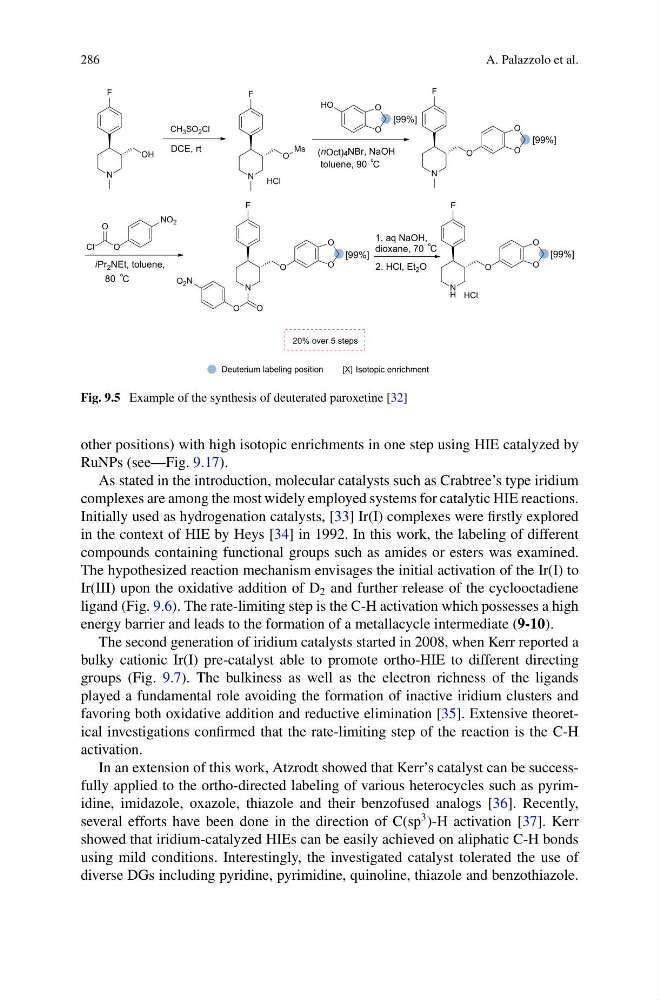
Fig. 9.5 Example of the synthesis of deuterated paroxetine [32]
other positions) with high isotopic enrichments in one step using HIE catalyzed by
RuNPs (see—Fig. 9.17).
As stated in the introduction, molecular catalysts such as Crabtree’s type iridium
complexes are among the most widely employed systems for catalytic HIE reactions.
Initially used as hydrogenation catalysts, [33] Ir(I) complexes were firstly explored
in the context of HIE by Heys [34] in 1992. In this work, the labeling of different
compounds containing functional groups such as amides or esters was examined.
The hypothesized reaction mechanism envisages the initial activation of the Ir(I) to
Ir(III) upon the oxidative addition of D 2 and further release of the cyclooctadiene
ligand (Fig. 9.6). The rate-limiting step is the C-H activation which possesses a high
energy barrier and leads to the formation of a metallacycle intermediate (9-10).
The second generation of iridium catalysts started in 2008, when Kerr reported a
bulky cationic Ir(I) pre-catalyst able to promote ortho-HIE to different directing
groups (Fig. 9.7). The bulkiness as well as the electron richness of the ligands
played a fundamental role avoiding the formation of inactive iridium clusters and
favoring both oxidative addition and reductive elimination [35]. Extensive theoretical investigations confirmed that the rate-limiting step of the reaction is the C-H
activation.
In an extension of this work, Atzrodt showed that Kerr’s catalyst can be successfully applied to the ortho-directed labeling of various heterocycles such as pyrimidine, imidazole, oxazole, thiazole and their benzofused analogs [36]. Recently,
several efforts have been done in the direction of C(sp
3 )-H activation [37]. Kerr
showed that iridium-catalyzed HIEs can be easily achieved on aliphatic C-H bonds
using mild conditions. Interestingly, the investigated catalyst tolerated the use of
diverse DGs including pyridine, pyrimidine, quinoline, thiazole and benzothiazole.
A. Palazzolo et al.
Cl
O
O
NO 2
iPr 2 NEt, toluene,
N
F
O
O
O
O
O
O 2 N
1. aq NaOH,
dioxane, 70
2. HCl, Et 2 O
N
H
F
O
O
O
HCl
20% over 5 steps
N
F
OH
CH 3 SO 2 Cl
DCE, rt
N
F
O
Ms
HCl
O
O
HO
(nOct)4NBr, NaOH
toluene, 90 C
N
F
O
O
O
80
[99%]
[99%]
[99%]
[99%]
Deuterium labeling position
[X] Isotopic enrichment
°
C
°
C
°
Fig. 9.5 Example of the synthesis of deuterated paroxetine [32]
other positions) with high isotopic enrichments in one step using HIE catalyzed by
RuNPs (see—Fig. 9.17).
As stated in the introduction, molecular catalysts such as Crabtree’s type iridium
complexes are among the most widely employed systems for catalytic HIE reactions.
Initially used as hydrogenation catalysts, [33] Ir(I) complexes were firstly explored
in the context of HIE by Heys [34] in 1992. In this work, the labeling of different
compounds containing functional groups such as amides or esters was examined.
The hypothesized reaction mechanism envisages the initial activation of the Ir(I) to
Ir(III) upon the oxidative addition of D 2 and further release of the cyclooctadiene
ligand (Fig. 9.6). The rate-limiting step is the C-H activation which possesses a high
energy barrier and leads to the formation of a metallacycle intermediate (9-10).
The second generation of iridium catalysts started in 2008, when Kerr reported a
bulky cationic Ir(I) pre-catalyst able to promote ortho-HIE to different directing
groups (Fig. 9.7). The bulkiness as well as the electron richness of the ligands
played a fundamental role avoiding the formation of inactive iridium clusters and
favoring both oxidative addition and reductive elimination [35]. Extensive theoretical investigations confirmed that the rate-limiting step of the reaction is the C-H
activation.
In an extension of this work, Atzrodt showed that Kerr’s catalyst can be successfully applied to the ortho-directed labeling of various heterocycles such as pyrimidine, imidazole, oxazole, thiazole and their benzofused analogs [36]. Recently,
several efforts have been done in the direction of C(sp
3 )-H activation [37]. Kerr
showed that iridium-catalyzed HIEs can be easily achieved on aliphatic C-H bonds
using mild conditions. Interestingly, the investigated catalyst tolerated the use of
diverse DGs including pyridine, pyrimidine, quinoline, thiazole and benzothiazole.