

204
R. V. Jagadeesh
NH 2
R
N
O
H
N
R
N
Ligand
synthesis
In situ
Fe-N complex
Fe(OAc) 2
Adsorbed onto
carbon
FeLx
n+
Pyrolysis
Fe 2 O 3 nanoparticles
surrounded by N-doped carbon
R= H, CN, OMe, NH 2
N
N
N
N
Optimal ligand used to produce most active catalyst
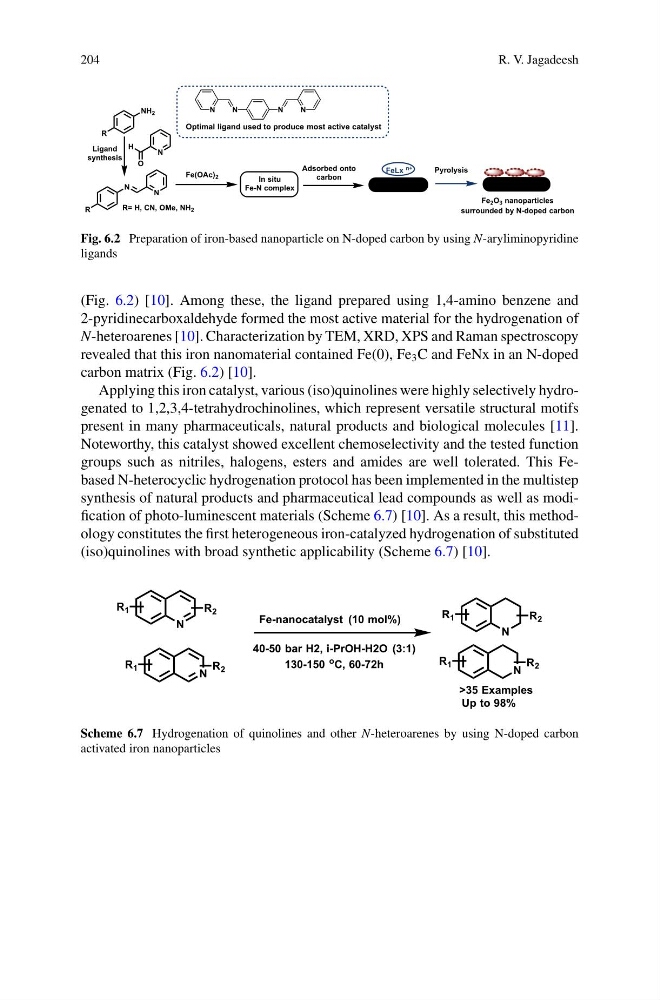
Fig. 6.2 Preparation of iron-based nanoparticle on N-doped carbon by using N-aryliminopyridine
ligands
(Fig. 6.2) [10]. Among these, the ligand prepared using 1,4-amino benzene and
2-pyridinecarboxaldehyde formed the most active material for the hydrogenation of
N-heteroarenes [10]. Characterization by TEM, XRD, XPS and Raman spectroscopy
revealed that this iron nanomaterial contained Fe(0), Fe 3 C and FeNx in an N-doped
carbon matrix (Fig. 6.2) [10].
Applying this iron catalyst, various (iso)quinolines were highly selectively hydrogenated to 1,2,3,4-tetrahydrochinolines, which represent versatile structural motifs
present in many pharmaceuticals, natural products and biological molecules [11].
Noteworthy, this catalyst showed excellent chemoselectivity and the tested function
groups such as nitriles, halogens, esters and amides are well tolerated. This Febased N-heterocyclic hydrogenation protocol has been implemented in the multistep
synthesis of natural products and pharmaceutical lead compounds as well as modification of photo-luminescent materials (Scheme 6.7) [10]. As a result, this methodology constitutes the first heterogeneous iron-catalyzed hydrogenation of substituted
(iso)quinolines with broad synthetic applicability (Scheme 6.7) [10].
R 1
N
R 2
Fe-nanocatalyst (10 mol%)
40-50 bar H2, i-PrOH-H2O (3:1)
130-150
o C, 60-72h
R 1
N
R 2
R 1
N
R 2
R 1
N
R 2
Up to 98%
>35 Examples
Scheme 6.7 Hydrogenation of quinolines and other N-heteroarenes by using N-doped carbon
activated iron nanoparticles
R. V. Jagadeesh
NH 2
R
N
O
H
N
R
N
Ligand
synthesis
In situ
Fe-N complex
Fe(OAc) 2
Adsorbed onto
carbon
FeLx
n+
Pyrolysis
Fe 2 O 3 nanoparticles
surrounded by N-doped carbon
R= H, CN, OMe, NH 2
N
N
N
N
Optimal ligand used to produce most active catalyst
Fig. 6.2 Preparation of iron-based nanoparticle on N-doped carbon by using N-aryliminopyridine
ligands
(Fig. 6.2) [10]. Among these, the ligand prepared using 1,4-amino benzene and
2-pyridinecarboxaldehyde formed the most active material for the hydrogenation of
N-heteroarenes [10]. Characterization by TEM, XRD, XPS and Raman spectroscopy
revealed that this iron nanomaterial contained Fe(0), Fe 3 C and FeNx in an N-doped
carbon matrix (Fig. 6.2) [10].
Applying this iron catalyst, various (iso)quinolines were highly selectively hydrogenated to 1,2,3,4-tetrahydrochinolines, which represent versatile structural motifs
present in many pharmaceuticals, natural products and biological molecules [11].
Noteworthy, this catalyst showed excellent chemoselectivity and the tested function
groups such as nitriles, halogens, esters and amides are well tolerated. This Febased N-heterocyclic hydrogenation protocol has been implemented in the multistep
synthesis of natural products and pharmaceutical lead compounds as well as modification of photo-luminescent materials (Scheme 6.7) [10]. As a result, this methodology constitutes the first heterogeneous iron-catalyzed hydrogenation of substituted
(iso)quinolines with broad synthetic applicability (Scheme 6.7) [10].
R 1
N
R 2
Fe-nanocatalyst (10 mol%)
40-50 bar H2, i-PrOH-H2O (3:1)
130-150
o C, 60-72h
R 1
N
R 2
R 1
N
R 2
R 1
N
R 2
Up to 98%
>35 Examples
Scheme 6.7 Hydrogenation of quinolines and other N-heteroarenes by using N-doped carbon
activated iron nanoparticles