

5 Covalent Assemblies of Metal Nanoparticles—Strategies …
153
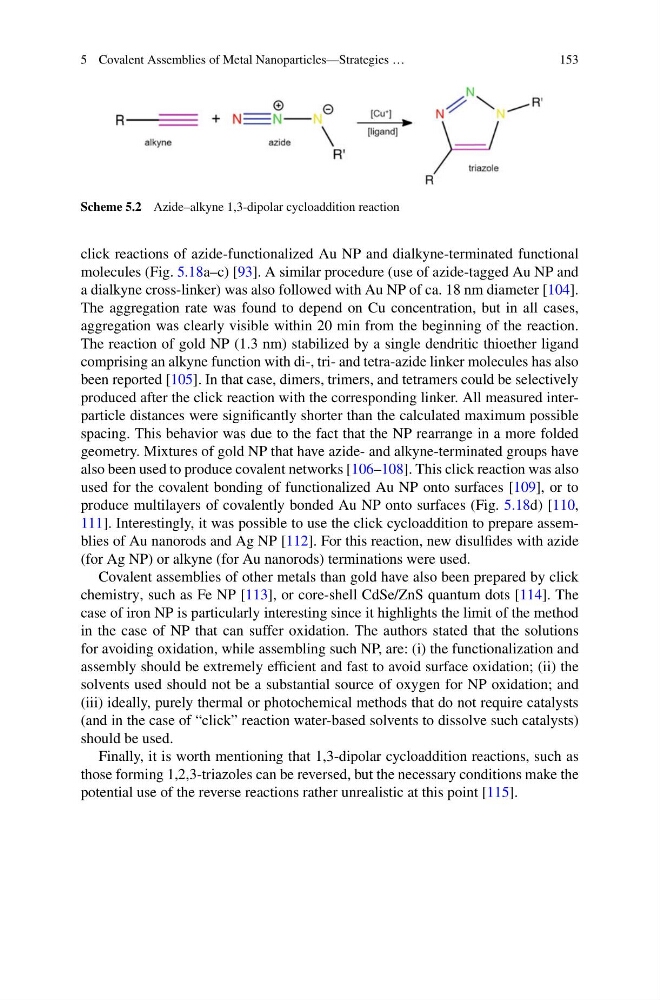
Scheme 5.2 Azide–alkyne 1,3-dipolar cycloaddition reaction
click reactions of azide-functionalized Au NP and dialkyne-terminated functional
molecules (Fig. 5.18a–c) [93]. A similar procedure (use of azide-tagged Au NP and
a dialkyne cross-linker) was also followed with Au NP of ca. 18 nm diameter [104].
The aggregation rate was found to depend on Cu concentration, but in all cases,
aggregation was clearly visible within 20 min from the beginning of the reaction.
The reaction of gold NP (1.3 nm) stabilized by a single dendritic thioether ligand
comprising an alkyne function with di-, tri- and tetra-azide linker molecules has also
been reported [105]. In that case, dimers, trimers, and tetramers could be selectively
produced after the click reaction with the corresponding linker. All measured interparticle distances were significantly shorter than the calculated maximum possible
spacing. This behavior was due to the fact that the NP rearrange in a more folded
geometry. Mixtures of gold NP that have azide- and alkyne-terminated groups have
also been used to produce covalent networks [106–108]. This click reaction was also
used for the covalent bonding of functionalized Au NP onto surfaces [109], or to
produce multilayers of covalently bonded Au NP onto surfaces (Fig. 5.18d) [110,
111]. Interestingly, it was possible to use the click cycloaddition to prepare assemblies of Au nanorods and Ag NP [112]. For this reaction, new disulfides with azide
(for Ag NP) or alkyne (for Au nanorods) terminations were used.
Covalent assemblies of other metals than gold have also been prepared by click
chemistry, such as Fe NP [113], or core-shell CdSe/ZnS quantum dots [114]. The
case of iron NP is particularly interesting since it highlights the limit of the method
in the case of NP that can suffer oxidation. The authors stated that the solutions
for avoiding oxidation, while assembling such NP, are: (i) the functionalization and
assembly should be extremely efficient and fast to avoid surface oxidation; (ii) the
solvents used should not be a substantial source of oxygen for NP oxidation; and
(iii) ideally, purely thermal or photochemical methods that do not require catalysts
(and in the case of “click” reaction water-based solvents to dissolve such catalysts)
should be used.
Finally, it is worth mentioning that 1,3-dipolar cycloaddition reactions, such as
those forming 1,2,3-triazoles can be reversed, but the necessary conditions make the
potential use of the reverse reactions rather unrealistic at this point [115].
153
Scheme 5.2 Azide–alkyne 1,3-dipolar cycloaddition reaction
click reactions of azide-functionalized Au NP and dialkyne-terminated functional
molecules (Fig. 5.18a–c) [93]. A similar procedure (use of azide-tagged Au NP and
a dialkyne cross-linker) was also followed with Au NP of ca. 18 nm diameter [104].
The aggregation rate was found to depend on Cu concentration, but in all cases,
aggregation was clearly visible within 20 min from the beginning of the reaction.
The reaction of gold NP (1.3 nm) stabilized by a single dendritic thioether ligand
comprising an alkyne function with di-, tri- and tetra-azide linker molecules has also
been reported [105]. In that case, dimers, trimers, and tetramers could be selectively
produced after the click reaction with the corresponding linker. All measured interparticle distances were significantly shorter than the calculated maximum possible
spacing. This behavior was due to the fact that the NP rearrange in a more folded
geometry. Mixtures of gold NP that have azide- and alkyne-terminated groups have
also been used to produce covalent networks [106–108]. This click reaction was also
used for the covalent bonding of functionalized Au NP onto surfaces [109], or to
produce multilayers of covalently bonded Au NP onto surfaces (Fig. 5.18d) [110,
111]. Interestingly, it was possible to use the click cycloaddition to prepare assemblies of Au nanorods and Ag NP [112]. For this reaction, new disulfides with azide
(for Ag NP) or alkyne (for Au nanorods) terminations were used.
Covalent assemblies of other metals than gold have also been prepared by click
chemistry, such as Fe NP [113], or core-shell CdSe/ZnS quantum dots [114]. The
case of iron NP is particularly interesting since it highlights the limit of the method
in the case of NP that can suffer oxidation. The authors stated that the solutions
for avoiding oxidation, while assembling such NP, are: (i) the functionalization and
assembly should be extremely efficient and fast to avoid surface oxidation; (ii) the
solvents used should not be a substantial source of oxygen for NP oxidation; and
(iii) ideally, purely thermal or photochemical methods that do not require catalysts
(and in the case of “click” reaction water-based solvents to dissolve such catalysts)
should be used.
Finally, it is worth mentioning that 1,3-dipolar cycloaddition reactions, such as
those forming 1,2,3-triazoles can be reversed, but the necessary conditions make the
potential use of the reverse reactions rather unrealistic at this point [115].