

4 MNP Catalysis in Ionic Liquids
115
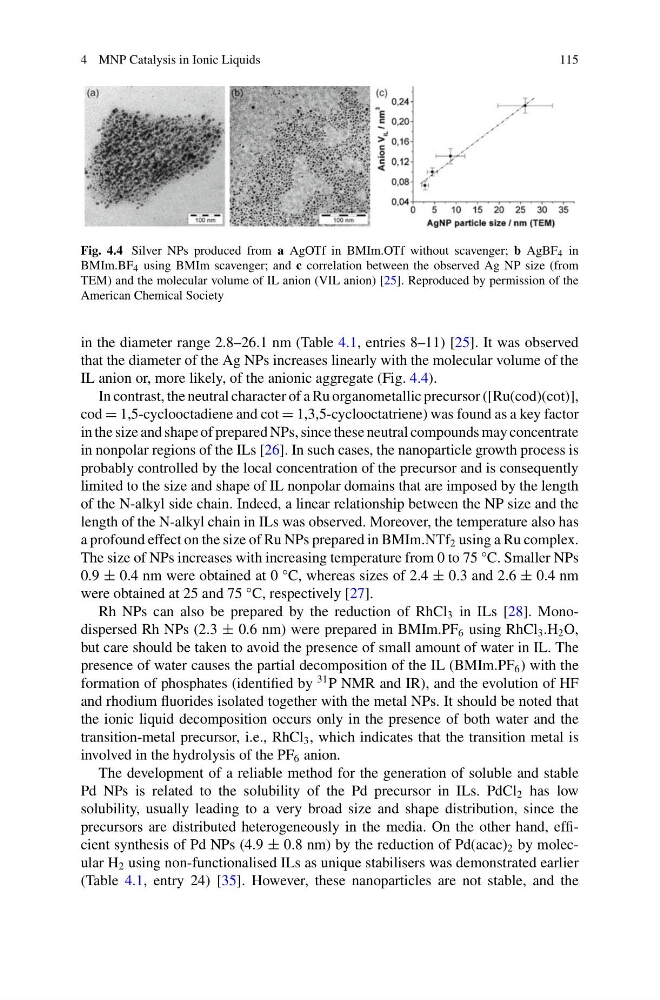
Fig. 4.4 Silver NPs produced from a AgOTf in BMIm.OTf without scavenger; b AgBF 4 in
BMIm.BF 4 using BMIm scavenger; and c correlation between the observed Ag NP size (from
TEM) and the molecular volume of IL anion (VIL anion) [25]. Reproduced by permission of the
American Chemical Society
in the diameter range 2.8–26.1 nm (Table 4.1, entries 8–11) [25]. It was observed
that the diameter of the Ag NPs increases linearly with the molecular volume of the
IL anion or, more likely, of the anionic aggregate (Fig. 4.4).
In contrast, the neutral character of a Ru organometallic precursor ([Ru(cod)(cot)],
cod = 1,5-cyclooctadiene and cot = 1,3,5-cyclooctatriene) was found as a key factor
in the size and shape of prepared NPs, since these neutral compounds may concentrate
in nonpolar regions of the ILs [26]. In such cases, the nanoparticle growth process is
probably controlled by the local concentration of the precursor and is consequently
limited to the size and shape of IL nonpolar domains that are imposed by the length
of the N-alkyl side chain. Indeed, a linear relationship between the NP size and the
length of the N-alkyl chain in ILs was observed. Moreover, the temperature also has
a profound effect on the size of Ru NPs prepared in BMIm.NTf 2 using a Ru complex.
The size of NPs increases with increasing temperature from 0 to 75 °C. Smaller NPs
0.9 ± 0.4 nm were obtained at 0 °C, whereas sizes of 2.4 ± 0.3 and 2.6 ± 0.4 nm
were obtained at 25 and 75 °C, respectively [27].
Rh NPs can also be prepared by the reduction of RhCl 3 in ILs [28]. Monodispersed Rh NPs (2.3 ± 0.6 nm) were prepared in BMIm.PF 6 using RhCl 3 .H 2 O,
but care should be taken to avoid the presence of small amount of water in IL. The
presence of water causes the partial decomposition of the IL (BMIm.PF 6 ) with the
formation of phosphates (identified by
31 P NMR and IR), and the evolution of HF
and rhodium fluorides isolated together with the metal NPs. It should be noted that
the ionic liquid decomposition occurs only in the presence of both water and the
transition-metal precursor, i.e., RhCl 3 , which indicates that the transition metal is
involved in the hydrolysis of the PF 6 anion.
The development of a reliable method for the generation of soluble and stable
Pd NPs is related to the solubility of the Pd precursor in ILs. PdCl 2 has low
solubility, usually leading to a very broad size and shape distribution, since the
precursors are distributed heterogeneously in the media. On the other hand, efficient synthesis of Pd NPs (4.9 ± 0.8 nm) by the reduction of Pd(acac) 2 by molecular H 2 using non-functionalised ILs as unique stabilisers was demonstrated earlier
(Table 4.1, entry 24) [35]. However, these nanoparticles are not stable, and the
115
Fig. 4.4 Silver NPs produced from a AgOTf in BMIm.OTf without scavenger; b AgBF 4 in
BMIm.BF 4 using BMIm scavenger; and c correlation between the observed Ag NP size (from
TEM) and the molecular volume of IL anion (VIL anion) [25]. Reproduced by permission of the
American Chemical Society
in the diameter range 2.8–26.1 nm (Table 4.1, entries 8–11) [25]. It was observed
that the diameter of the Ag NPs increases linearly with the molecular volume of the
IL anion or, more likely, of the anionic aggregate (Fig. 4.4).
In contrast, the neutral character of a Ru organometallic precursor ([Ru(cod)(cot)],
cod = 1,5-cyclooctadiene and cot = 1,3,5-cyclooctatriene) was found as a key factor
in the size and shape of prepared NPs, since these neutral compounds may concentrate
in nonpolar regions of the ILs [26]. In such cases, the nanoparticle growth process is
probably controlled by the local concentration of the precursor and is consequently
limited to the size and shape of IL nonpolar domains that are imposed by the length
of the N-alkyl side chain. Indeed, a linear relationship between the NP size and the
length of the N-alkyl chain in ILs was observed. Moreover, the temperature also has
a profound effect on the size of Ru NPs prepared in BMIm.NTf 2 using a Ru complex.
The size of NPs increases with increasing temperature from 0 to 75 °C. Smaller NPs
0.9 ± 0.4 nm were obtained at 0 °C, whereas sizes of 2.4 ± 0.3 and 2.6 ± 0.4 nm
were obtained at 25 and 75 °C, respectively [27].
Rh NPs can also be prepared by the reduction of RhCl 3 in ILs [28]. Monodispersed Rh NPs (2.3 ± 0.6 nm) were prepared in BMIm.PF 6 using RhCl 3 .H 2 O,
but care should be taken to avoid the presence of small amount of water in IL. The
presence of water causes the partial decomposition of the IL (BMIm.PF 6 ) with the
formation of phosphates (identified by
31 P NMR and IR), and the evolution of HF
and rhodium fluorides isolated together with the metal NPs. It should be noted that
the ionic liquid decomposition occurs only in the presence of both water and the
transition-metal precursor, i.e., RhCl 3 , which indicates that the transition metal is
involved in the hydrolysis of the PF 6 anion.
The development of a reliable method for the generation of soluble and stable
Pd NPs is related to the solubility of the Pd precursor in ILs. PdCl 2 has low
solubility, usually leading to a very broad size and shape distribution, since the
precursors are distributed heterogeneously in the media. On the other hand, efficient synthesis of Pd NPs (4.9 ± 0.8 nm) by the reduction of Pd(acac) 2 by molecular H 2 using non-functionalised ILs as unique stabilisers was demonstrated earlier
(Table 4.1, entry 24) [35]. However, these nanoparticles are not stable, and the