

83
cellulose fibers with various lignin contents. The presence of lignin not only
improved the thermo-oxidation stability of the PP matrix but also improved fiber/
matrix adhesion (Gadioli et al. 2014).
On the other hand, due to the large amounts of unsaturated double bonds in its
molecular structure, natural rubber (NR) is very susceptible to oxidation. For this
reason, the addition of lignin as a filler can effectively protect the thermal-oxidative
degradation of NR. Barana et al. (2016) indicated that the solubility and diffusion of
lignin into NR can affect its antioxidant effect. The higher Mw lignin also had a
lower diffusion rate in the NR, which led to lower thermal stability. In the case of a
good dispersion, a linear correlation between the thermooxidative stability and the
ratio of phenolic OH to peak Mw was observed. In addition, the increase in lignin
concentration did not always improve the thermal resistance in the lignin/NR mixture. At low concentrations, the protection time has a linear relationship with the
concentration of lignin, while at high concentrations, the linear relationship was
stabilized, thus indicating saturation (Barana et al. 2016).
5.6 Challenges of Integrating Lignin into Polymers
The antioxidant, physical and mechanical characteristics of the polymers can be
improved by the addition of lignin. However, the heterogeneous and complex structures of lignin do not lead to their interaction with the polymer matrix (Sadeghifar
and Argyropoulos 2016). This problem compromises certain mechanical properties
and the thermal stability of the copolymers. Two methods can be used to overcome
O
O
O
O
R 1
R 2
N
O
OH
R 1
R 2
OH
R 1
R 2
O
N
H
N
O
dioxane
fast
dioxane
slow
OH
O
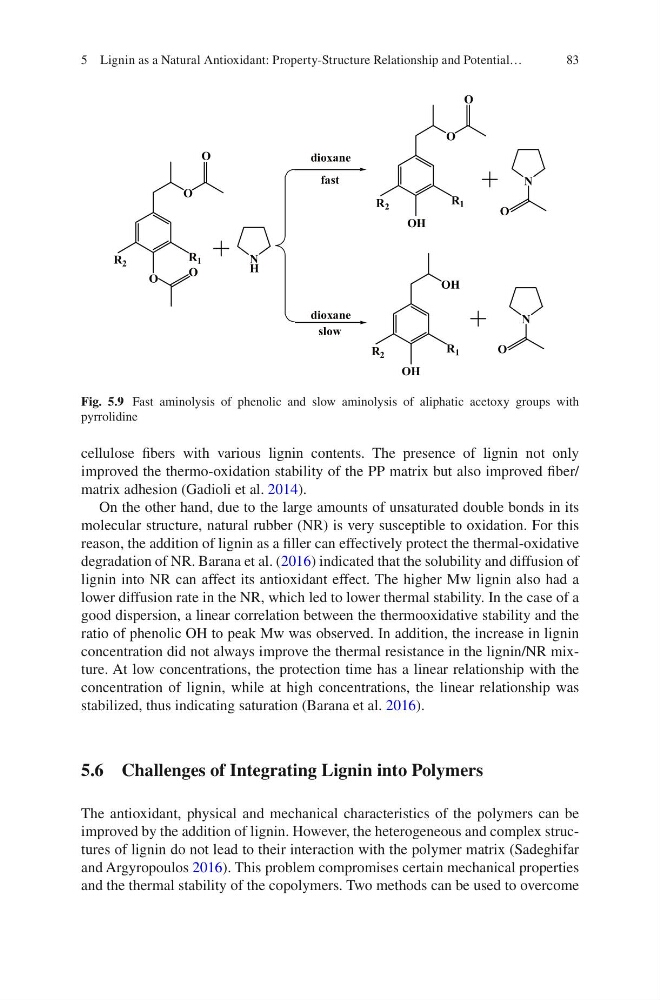
Fig. 5.9 Fast aminolysis of phenolic and slow aminolysis of aliphatic acetoxy groups with
pyrrolidine
5 Lignin as a Natural Antioxidant: Property-Structure Relationship and Potential…
cellulose fibers with various lignin contents. The presence of lignin not only
improved the thermo-oxidation stability of the PP matrix but also improved fiber/
matrix adhesion (Gadioli et al. 2014).
On the other hand, due to the large amounts of unsaturated double bonds in its
molecular structure, natural rubber (NR) is very susceptible to oxidation. For this
reason, the addition of lignin as a filler can effectively protect the thermal-oxidative
degradation of NR. Barana et al. (2016) indicated that the solubility and diffusion of
lignin into NR can affect its antioxidant effect. The higher Mw lignin also had a
lower diffusion rate in the NR, which led to lower thermal stability. In the case of a
good dispersion, a linear correlation between the thermooxidative stability and the
ratio of phenolic OH to peak Mw was observed. In addition, the increase in lignin
concentration did not always improve the thermal resistance in the lignin/NR mixture. At low concentrations, the protection time has a linear relationship with the
concentration of lignin, while at high concentrations, the linear relationship was
stabilized, thus indicating saturation (Barana et al. 2016).
5.6 Challenges of Integrating Lignin into Polymers
The antioxidant, physical and mechanical characteristics of the polymers can be
improved by the addition of lignin. However, the heterogeneous and complex structures of lignin do not lead to their interaction with the polymer matrix (Sadeghifar
and Argyropoulos 2016). This problem compromises certain mechanical properties
and the thermal stability of the copolymers. Two methods can be used to overcome
O
O
O
O
R 1
R 2
N
O
OH
R 1
R 2
OH
R 1
R 2
O
N
H
N
O
dioxane
fast
dioxane
slow
OH
O
Fig. 5.9 Fast aminolysis of phenolic and slow aminolysis of aliphatic acetoxy groups with
pyrrolidine
5 Lignin as a Natural Antioxidant: Property-Structure Relationship and Potential…