

threshold effects are closely linked and may occur simultaneously. At this point
management recommendations for ecological restoration are complex and experiments in the field may be required to determine the optimal combination of restoration treatments required, the interaction effects among treatments (e.g. use of fire,
herbicides, seeding and planting) and the optimal timing of these interventions
(Waller et al. 2016). However, if the duration of invasion can be reduced by timely
alien control, changes to ecological functions may be avoided and an abiotic
threshold may not have been reached. This research is useful to guide local ecological restoration projects while advancing our ecological knowledge of the system
being restored, including seed ecology, community dynamics, ecosystem-level
changes and mutualisms, to name a few.
Control of plant invaders can create bare ground that can be re-invaded by the
same alien species or by secondary plant invader species (Pearson et al. 2016). This
effect can be amplified if both biotic and abiotic thresholds have been crossed, as the
altered conditions may favour competitive, weedy species. An example of secondary
invasion is the colonisation by weedy herbaceous species in areas cleared of N-fixing
alien acacia trees (Richardson et al. 2000; Yelenik et al. 2004; Nsikani et al. 2017).
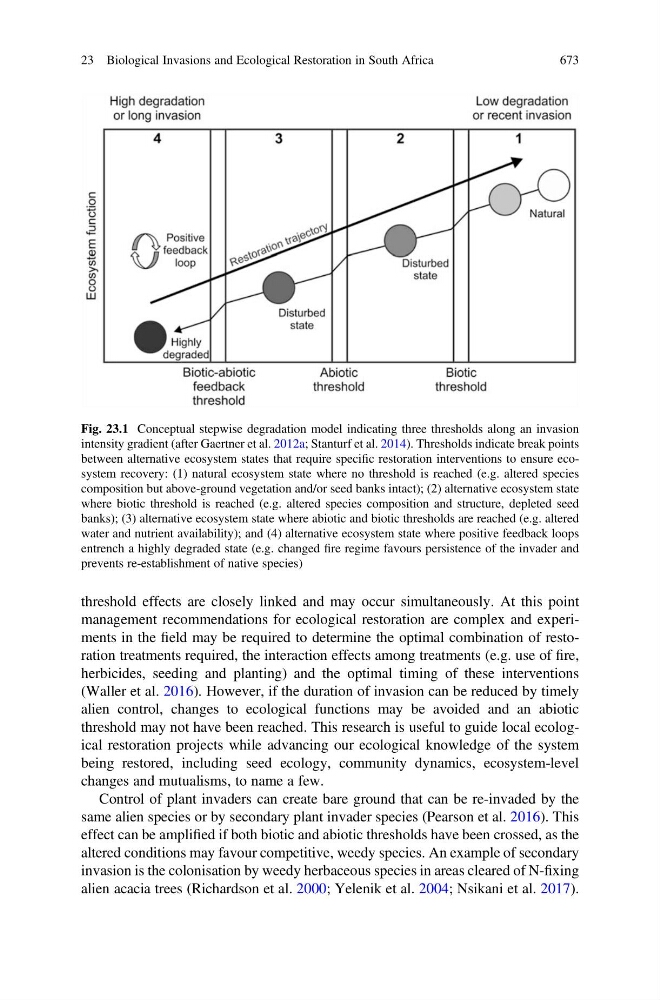
Fig. 23.1 Conceptual stepwise degradation model indicating three thresholds along an invasion
intensity gradient (after Gaertner et al. 2012a; Stanturf et al. 2014). Thresholds indicate break points
between alternative ecosystem states that require specific restoration interventions to ensure ecosystem recovery: (1) natural ecosystem state where no threshold is reached (e.g. altered species
composition but above-ground vegetation and/or seed banks intact); (2) alternative ecosystem state
where biotic threshold is reached (e.g. altered species composition and structure, depleted seed
banks); (3) alternative ecosystem state where abiotic and biotic thresholds are reached (e.g. altered
water and nutrient availability); and (4) alternative ecosystem state where positive feedback loops
entrench a highly degraded state (e.g. changed fire regime favours persistence of the invader and
prevents re-establishment of native species)
23 Biological Invasions and Ecological Restoration in South Africa
673