

both of which are currently being suppressed, over a wide area, to very low
levels by biological control (Zimmermann 2017) (see Fig. 19.3).
Box 19.4 Myriophyllum aquaticum (Haloragaceae) (Parrot’s Feather)
Myriophyllum aquaticum (Parrot’s Feather) was regarded as one of
South Africa’s worst aquatic weeds, found in every province, where it caused
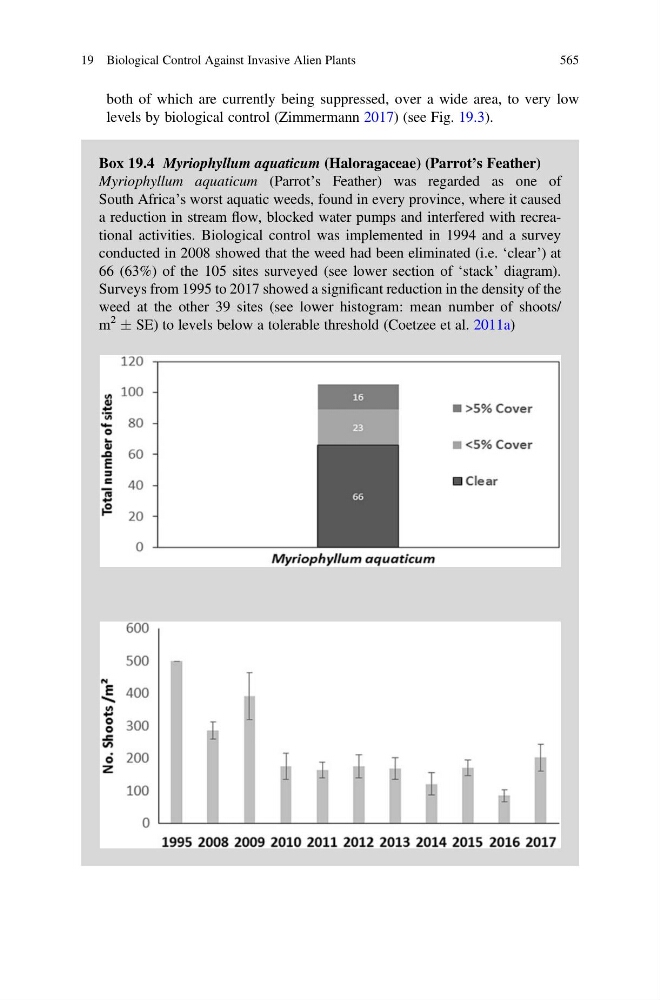
a reduction in stream flow, blocked water pumps and interfered with recreational activities. Biological control was implemented in 1994 and a survey
conducted in 2008 showed that the weed had been eliminated (i.e. ‘clear’) at
66 (63%) of the 105 sites surveyed (see lower section of ‘stack’ diagram).
Surveys from 1995 to 2017 showed a significant reduction in the density of the
weed at the other 39 sites (see lower histogram: mean number of shoots/
m
2
Æ SE) to levels below a tolerable threshold (Coetzee et al. 2011a)
19 Biological Control Against Invasive Alien Plants
565