

Other than justice considerations, enforceability, capacity and political will all
impact on the effectiveness of enforcement, where enforceability refers to the extent
to which a law may be efficiently and effectively enforced using available resources;
capacity refers to structures, financial and technical resources, systems, strategies,
skills, incentives and networks required for efficient and effective enforcement; and
political will refers to the motivation, willingness, enthusiasm and political support
for efficient and effective enforcement.
Although a full analysis of these considerations is beyond the scope of this
Chapter, it is likely that all of the above factors have an impact on how useful the
current legal regime is in managing biological invasions.
This notwithstanding, and despite the apparent challenges associated with the
‘identify and direct’ approach to biological invasion law that were recognised as far
back as 1874, this approach still appears to be the core of our legislation.
18.8.3 The Future
It seems clear from the recent report on the status of biological invasions in
South Africa (van Wilgen and Wilson 2018) that, despite relatively large public
investments in dealing with the biological invasion problem, we appear to be losing
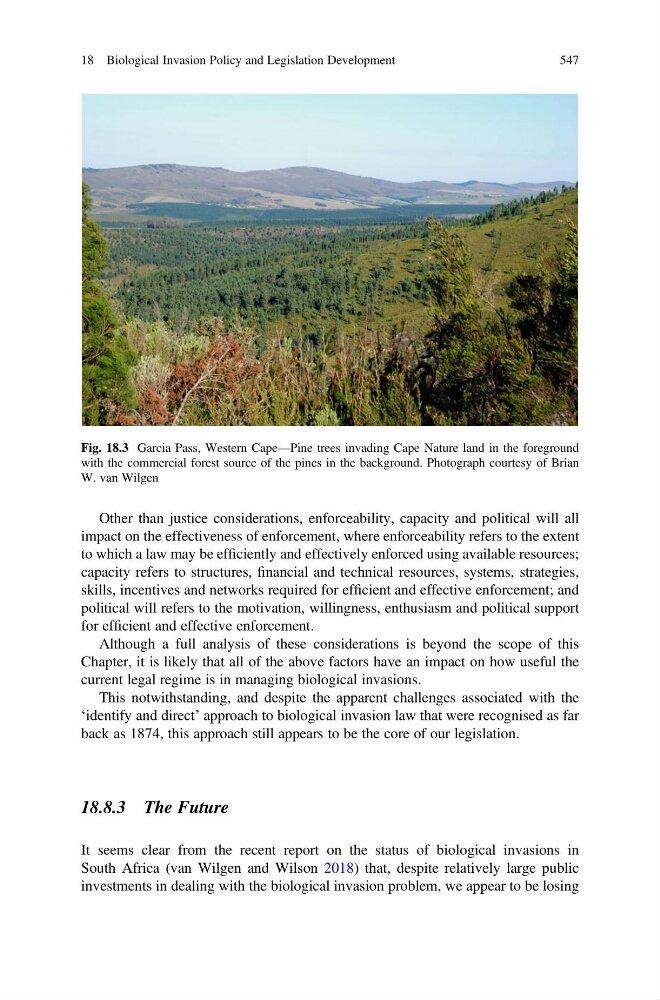
Fig. 18.3 Garcia Pass, Western Cape—Pine trees invading Cape Nature land in the foreground
with the commercial forest source of the pines in the background. Photograph courtesy of Brian
W. van Wilgen
18 Biological Invasion Policy and Legislation Development
547