

of their increase between 2000 and 2016 (Henderson and Wilson 2017). Affected
biomes and habitats (riparian or dryland) were determined from the literature
(e.g. Henderson 2001). We separated riparian from other habitats, as riparian areas
are usually critical for large mammalian herbivores because they provide key forage
resources during seasonal bottlenecks.
Of the 773 species listed in the Southern African Plant Invader Atlas data base
(Henderson and Wilson 2017), 71 species were identified as being of especial
importance for rangelands (i.e., are widespread, or have severe local impacts, or
are rapidly increasing in extent). These included 11 tall trees, 15 medium-height
trees, 1 short tree, 13 shrubs, 2 low shrubs, 5 woody climbers, 10 succulent shrubs,
1 succulent tree, 1 herbaceous climber, 3 perennial and 5 annual herbaceous species,
1 annual herbaceous shrub, and 3 perennial grasses (Table 16.2). The greatest
number of important species were found within the biomes receiving higher mean
annual rainfall, specifically the Grassland and Savanna Biomes and the Indian Ocean
Coastal Belt, whereas the three more arid biomes (Albany Thicket, Nama-Karoo,
Succulent Karoo) each contained about a half to a third of the average number of
species recorded for a moist biome (Fig. 16.2). Based on a climate-envelope
modelling exercise of the potential of 71 invasive species to invade further, Rouget
et al. (2004) determined that the rank order (in terms of susceptibility to invasion)
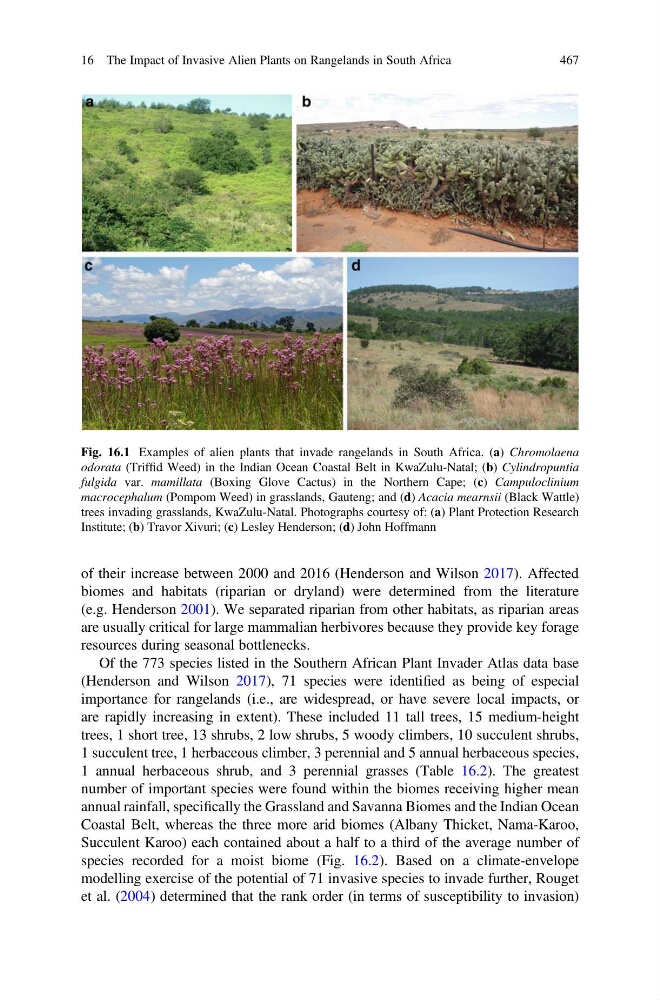
Fig. 16.1 Examples of alien plants that invade rangelands in South Africa. (a) Chromolaena
odorata (Triffid Weed) in the Indian Ocean Coastal Belt in KwaZulu-Natal; (b) Cylindropuntia
fulgida var. mamillata (Boxing Glove Cactus) in the Northern Cape; (c) Campuloclinium
macrocephalum (Pompom Weed) in grasslands, Gauteng; and (d) Acacia mearnsii (Black Wattle)
trees invading grasslands, KwaZulu-Natal. Photographs courtesy of: (a) Plant Protection Research
Institute; (b) Travor Xivuri; (c) Lesley Henderson; (d) John Hoffmann
16 The Impact of Invasive Alien Plants on Rangelands in South Africa
467
biomes and habitats (riparian or dryland) were determined from the literature
(e.g. Henderson 2001). We separated riparian from other habitats, as riparian areas
are usually critical for large mammalian herbivores because they provide key forage
resources during seasonal bottlenecks.
Of the 773 species listed in the Southern African Plant Invader Atlas data base
(Henderson and Wilson 2017), 71 species were identified as being of especial
importance for rangelands (i.e., are widespread, or have severe local impacts, or
are rapidly increasing in extent). These included 11 tall trees, 15 medium-height
trees, 1 short tree, 13 shrubs, 2 low shrubs, 5 woody climbers, 10 succulent shrubs,
1 succulent tree, 1 herbaceous climber, 3 perennial and 5 annual herbaceous species,
1 annual herbaceous shrub, and 3 perennial grasses (Table 16.2). The greatest
number of important species were found within the biomes receiving higher mean
annual rainfall, specifically the Grassland and Savanna Biomes and the Indian Ocean
Coastal Belt, whereas the three more arid biomes (Albany Thicket, Nama-Karoo,
Succulent Karoo) each contained about a half to a third of the average number of
species recorded for a moist biome (Fig. 16.2). Based on a climate-envelope
modelling exercise of the potential of 71 invasive species to invade further, Rouget
et al. (2004) determined that the rank order (in terms of susceptibility to invasion)
Fig. 16.1 Examples of alien plants that invade rangelands in South Africa. (a) Chromolaena
odorata (Triffid Weed) in the Indian Ocean Coastal Belt in KwaZulu-Natal; (b) Cylindropuntia
fulgida var. mamillata (Boxing Glove Cactus) in the Northern Cape; (c) Campuloclinium
macrocephalum (Pompom Weed) in grasslands, Gauteng; and (d) Acacia mearnsii (Black Wattle)
trees invading grasslands, KwaZulu-Natal. Photographs courtesy of: (a) Plant Protection Research
Institute; (b) Travor Xivuri; (c) Lesley Henderson; (d) John Hoffmann
16 The Impact of Invasive Alien Plants on Rangelands in South Africa
467