

pathways of introduction. For example, particularly short-lived taxa began to be
transported accidentally to South Africa by hitchhiking on aeroplanes. These taxa
include the blow-fly Calliphora vicina (European Bluebottle), which was first
reported in the country in 1965 near what is now OR Tambo International Airport
in Johannesburg (Picker and Griffiths 2011).
During this period, the pathways of introduction were also influenced by other,
shifting socio-economic factors. Changing human interests probably caused the
importance of some pathways to decline and others to increase. For example,
introductions to ‘improve’ the local fauna and flora stopped due to a shift in societal
norms (Seebens et al. 2017), but introductions for the pet trade increased (see Box
12.4). An increasing awareness of the impacts of biological invasions also affected
the pathways of introduction (see Box 12.5). The desire to control alien taxa
perceived as pests led to the intentional import and release of beneficial alien taxa
as biological control agents. The first biological control agent introduced against an
alien plant in South Africa (Dactylopius ceylonicus) was released in 1913 to control
the spread of Opuntia monacantha (Drooping Prickly Pear) (Moran et al. 2013;
Janion-Scheepers and Griffiths 2020, Chap. 7; Hill et al. 2020, Chap. 19). Following
this very successful programme, the rate at which alien taxa were introduced for
biological control increased until the 1980s, after which there was a decline (see
Appendix 2 in van Wilgen and Wilson 2018). The decline in the release of agents to
control invasive plants was due to improved release standards combined with
regulatory and bureaucratic complications (Klein 2011; Klein et al. 2011). Increased
research efforts to understand the ecology and hosts of agents led to a decline in the
number of agents released to control insect pests (Cock et al. 2016). During the
1900s, international agreements (for an example see Box 12.5) and national legislation [e.g. Conservation of Agricultural Resources Act (Act No. 43 of 1983),
Agricultural Pests Act (Act No. 36 of 1983), and Animal Diseases Act (Act
No. 35 of 1984)] related to the movement and introduction of harmful alien taxa
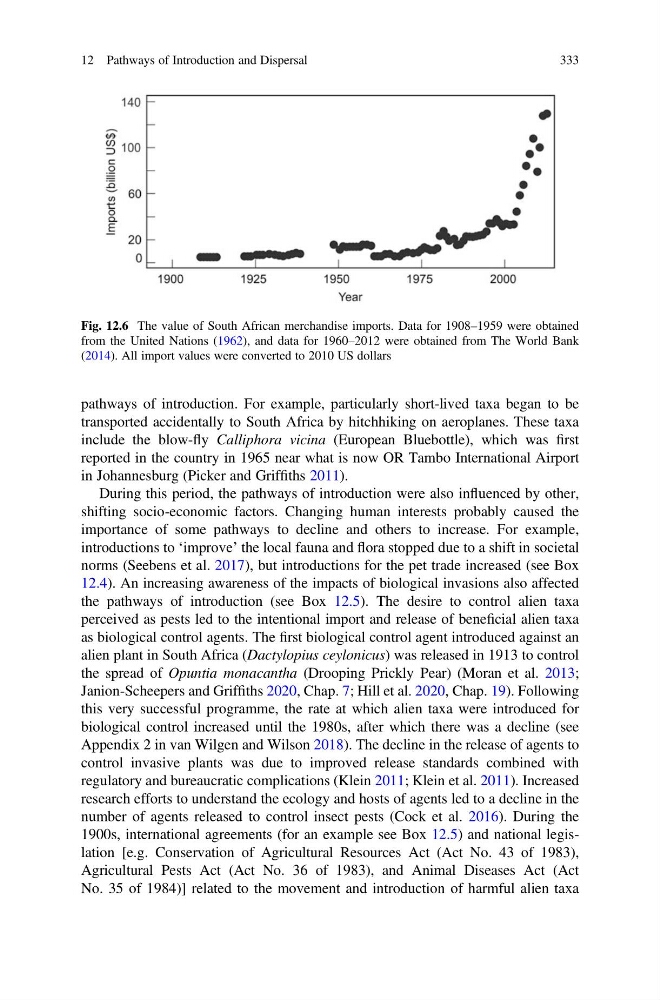
Fig. 12.6 The value of South African merchandise imports. Data for 1908–1959 were obtained
from the United Nations (1962), and data for 1960–2012 were obtained from The World Bank
(2014). All import values were converted to 2010 US dollars
12 Pathways of Introduction and Dispersal
333
transported accidentally to South Africa by hitchhiking on aeroplanes. These taxa
include the blow-fly Calliphora vicina (European Bluebottle), which was first
reported in the country in 1965 near what is now OR Tambo International Airport
in Johannesburg (Picker and Griffiths 2011).
During this period, the pathways of introduction were also influenced by other,
shifting socio-economic factors. Changing human interests probably caused the
importance of some pathways to decline and others to increase. For example,
introductions to ‘improve’ the local fauna and flora stopped due to a shift in societal
norms (Seebens et al. 2017), but introductions for the pet trade increased (see Box
12.4). An increasing awareness of the impacts of biological invasions also affected
the pathways of introduction (see Box 12.5). The desire to control alien taxa
perceived as pests led to the intentional import and release of beneficial alien taxa
as biological control agents. The first biological control agent introduced against an
alien plant in South Africa (Dactylopius ceylonicus) was released in 1913 to control
the spread of Opuntia monacantha (Drooping Prickly Pear) (Moran et al. 2013;
Janion-Scheepers and Griffiths 2020, Chap. 7; Hill et al. 2020, Chap. 19). Following
this very successful programme, the rate at which alien taxa were introduced for
biological control increased until the 1980s, after which there was a decline (see
Appendix 2 in van Wilgen and Wilson 2018). The decline in the release of agents to
control invasive plants was due to improved release standards combined with
regulatory and bureaucratic complications (Klein 2011; Klein et al. 2011). Increased
research efforts to understand the ecology and hosts of agents led to a decline in the
number of agents released to control insect pests (Cock et al. 2016). During the
1900s, international agreements (for an example see Box 12.5) and national legislation [e.g. Conservation of Agricultural Resources Act (Act No. 43 of 1983),
Agricultural Pests Act (Act No. 36 of 1983), and Animal Diseases Act (Act
No. 35 of 1984)] related to the movement and introduction of harmful alien taxa
Fig. 12.6 The value of South African merchandise imports. Data for 1908–1959 were obtained
from the United Nations (1962), and data for 1960–2012 were obtained from The World Bank
(2014). All import values were converted to 2010 US dollars
12 Pathways of Introduction and Dispersal
333