

2011; Measey et al. 2020, Chap. 5, Sect. 5.3.1), and new genetic material introduced
with more recent introductions could have increased the species’ invasiveness
(Richardson et al. 2003; Wilson et al. 2009; Garnas et al. 2016).
Box 12.2 Human Built Corridors That Connect River Basins
South Africa is arid, with many areas receiving less than 500 mm of rainfall
each year. For this reason there are few permanent rivers and the Orange River,
which drains an area of almost 1 million km
2 , accounts for 85 % of the fresh
water flow. To stabilise water supply for human and agricultural use in arid
areas, 26 major inter-basin water transfer schemes have been constructed in
South Africa (Slabbert 2007). These schemes connect previously isolated
catchments and create continuous dispersal opportunities for many aquatic
organisms (Rahel 2007). For example, the Orange-Fish-Sundays inter-basin
water transfer scheme (figure below), which was completed in 1978, has
resulted in the dispersal of Orange River fishes, including Labeobarbus aeneus
(Smallmouth Yellowfish), Clarias gariepinus (African Sharptooth Catfish) and
Labeo capensis (Orange River Mudfish), into the Great Fish and Sundays
Rivers. Known impacts of these introductions include competition with and
predation on native biota (Ellender and Weyl 2014; Weyl et al. 2016) and
hybridisation between the Orange River Labeo and Eastern Cape populations
of the closely related Moggel L. umbratus (Ramoejane et al. 2019).
(continued)
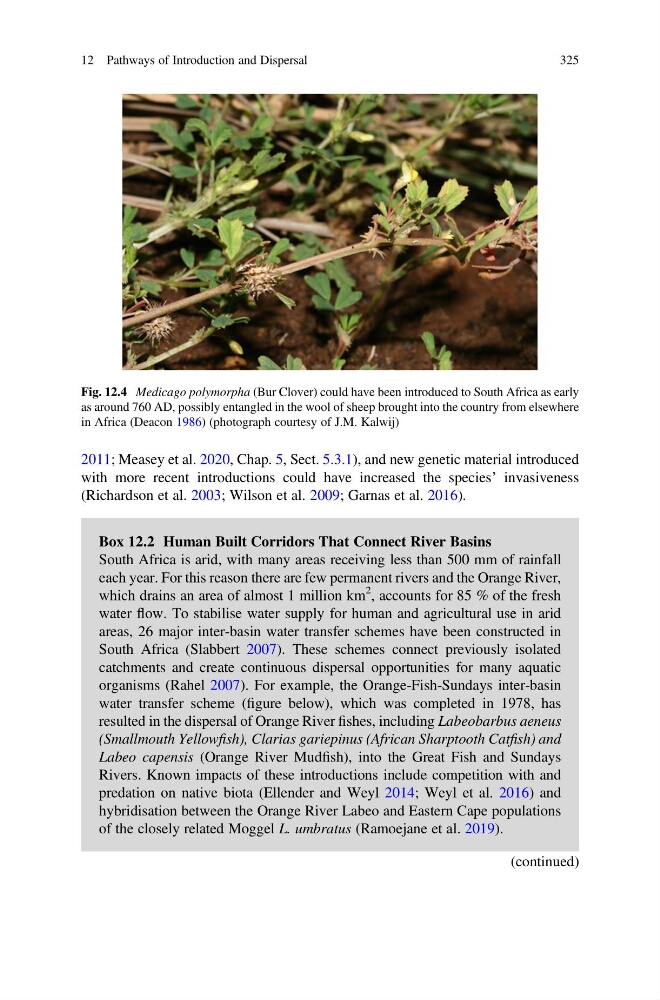
Fig. 12.4 Medicago polymorpha (Bur Clover) could have been introduced to South Africa as early
as around 760 AD, possibly entangled in the wool of sheep brought into the country from elsewhere
in Africa (Deacon 1986) (photograph courtesy of J.M. Kalwij)
12 Pathways of Introduction and Dispersal
325
with more recent introductions could have increased the species’ invasiveness
(Richardson et al. 2003; Wilson et al. 2009; Garnas et al. 2016).
Box 12.2 Human Built Corridors That Connect River Basins
South Africa is arid, with many areas receiving less than 500 mm of rainfall
each year. For this reason there are few permanent rivers and the Orange River,
which drains an area of almost 1 million km
2 , accounts for 85 % of the fresh
water flow. To stabilise water supply for human and agricultural use in arid
areas, 26 major inter-basin water transfer schemes have been constructed in
South Africa (Slabbert 2007). These schemes connect previously isolated
catchments and create continuous dispersal opportunities for many aquatic
organisms (Rahel 2007). For example, the Orange-Fish-Sundays inter-basin
water transfer scheme (figure below), which was completed in 1978, has
resulted in the dispersal of Orange River fishes, including Labeobarbus aeneus
(Smallmouth Yellowfish), Clarias gariepinus (African Sharptooth Catfish) and
Labeo capensis (Orange River Mudfish), into the Great Fish and Sundays
Rivers. Known impacts of these introductions include competition with and
predation on native biota (Ellender and Weyl 2014; Weyl et al. 2016) and
hybridisation between the Orange River Labeo and Eastern Cape populations
of the closely related Moggel L. umbratus (Ramoejane et al. 2019).
(continued)
Fig. 12.4 Medicago polymorpha (Bur Clover) could have been introduced to South Africa as early
as around 760 AD, possibly entangled in the wool of sheep brought into the country from elsewhere
in Africa (Deacon 1986) (photograph courtesy of J.M. Kalwij)
12 Pathways of Introduction and Dispersal
325