

To address the problems of old and new or emerging disease, research and
development is needed to produce good diagnostics and vaccines for multiple
species. Such diagnostics must be of high sensitivity and specificity. It is essential
that policies are developed to interpret diagnostic results from surveillance as a
function of sensitivity and specificity of diagnostic tests, since interpretation can be
different in high or low-incidence areas. Restricting the movement of animals to
control disease has been used for over a century or more and can be highly effective
in some cases, such as limiting the range expansion of foot and mouth disease in
bovids, and restricting expansion of African horse sickness in the Western Cape.
Movement control is unfortunately not always possible: for example, it is likely to be
impossible to deal easily with disease carried by bats or migratory birds, but in many
cases, control in the case of short distance dispersal is possible.
Where possible, vaccination can be highly effective, as it was in the successful
eradication of smallpox and rinderpest, for example. However, vaccination can
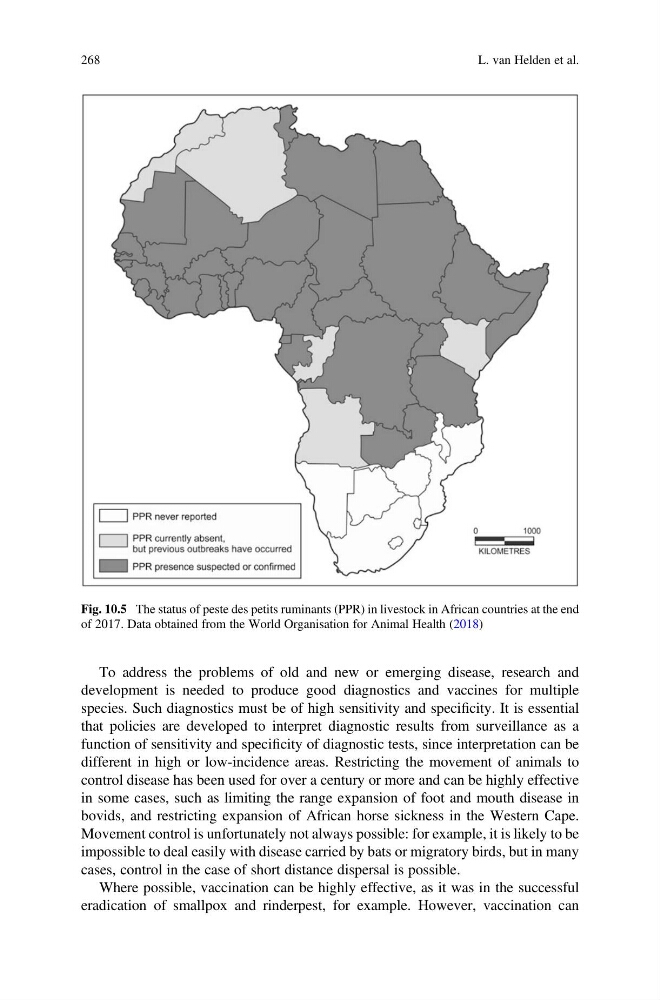
Fig. 10.5 The status of peste des petits ruminants (PPR) in livestock in African countries at the end
of 2017. Data obtained from the World Organisation for Animal Health (2018)
268
L. van Helden et al.
development is needed to produce good diagnostics and vaccines for multiple
species. Such diagnostics must be of high sensitivity and specificity. It is essential
that policies are developed to interpret diagnostic results from surveillance as a
function of sensitivity and specificity of diagnostic tests, since interpretation can be
different in high or low-incidence areas. Restricting the movement of animals to
control disease has been used for over a century or more and can be highly effective
in some cases, such as limiting the range expansion of foot and mouth disease in
bovids, and restricting expansion of African horse sickness in the Western Cape.
Movement control is unfortunately not always possible: for example, it is likely to be
impossible to deal easily with disease carried by bats or migratory birds, but in many
cases, control in the case of short distance dispersal is possible.
Where possible, vaccination can be highly effective, as it was in the successful
eradication of smallpox and rinderpest, for example. However, vaccination can
Fig. 10.5 The status of peste des petits ruminants (PPR) in livestock in African countries at the end
of 2017. Data obtained from the World Organisation for Animal Health (2018)
268
L. van Helden et al.