

a vector that has been linked to introductions elsewhere (Hayes et al. 2002;
Holmberg et al. 2015; Faulkner et al 2020, Chap. 12; Measey et al 2020, Chap.
27). Although the risk posed by this vector has not been quantified, the active trading
of aquarium species online and through aquarium shops highlights the potential for
introductions via this mechanism.
While the above section has highlighted primary vectors responsible for the
introduction of biota into South African waters, the role of vectors in intra-regional
spread is equally important. Although shipping can also be responsible for secondary
spread, the pathway takes on a slightly different nature at a regional scale, as large
commercial vessels become less important, and small and recreational vessels become
more important (Clarke-Murray et al. 2011). In South Africa, fouling on recreational
yachts was recently linked to the regional spread of marine alien species (Peters et al.
2014, 2017), with the Japanese Skeleton Shrimp, Caprella mutica offering an example
of a newly-introduced species that has been moved at a regional scale (Peters and
Robinson 2017). Although only recreational yachts have been investigated as a
mechanism of intra-regional species transfer, it is likely that other regional vessels
such as tour boats and fishing boats also play a role, but this remains to be quantified.
Furthermore, aquaculture has been linked to the secondary spread of species associated with oysters, as these are moved among farms (Haupt et al. 2010, 2012).
9.5 Alien Species in Marine Protected Areas
Marine Protected Areas (MPAs) have wide-ranging objectives not only as an
important mechanism for the conservation of living marine resources, but also for
preservation of rare or endemic species, maintenance of habitat heterogeneity,
protection of sensitive life stages of species under threat, supplementation of fish
stocks in adjacent areas, and provision of research and education opportunities
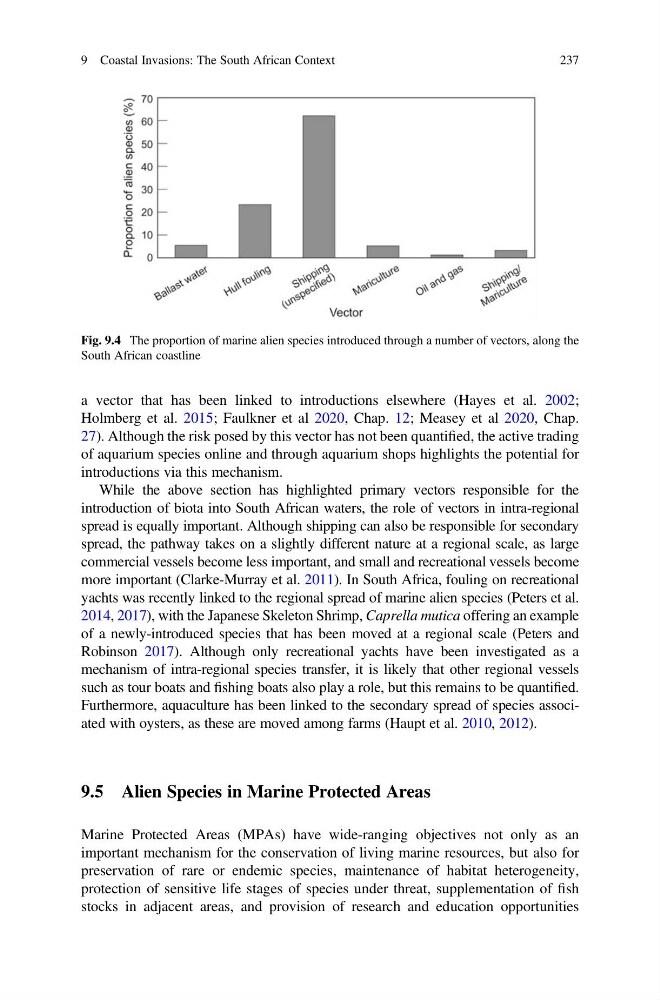
Fig. 9.4 The proportion of marine alien species introduced through a number of vectors, along the
South African coastline
9 Coastal Invasions: The South African Context
237
Holmberg et al. 2015; Faulkner et al 2020, Chap. 12; Measey et al 2020, Chap.
27). Although the risk posed by this vector has not been quantified, the active trading
of aquarium species online and through aquarium shops highlights the potential for
introductions via this mechanism.
While the above section has highlighted primary vectors responsible for the
introduction of biota into South African waters, the role of vectors in intra-regional
spread is equally important. Although shipping can also be responsible for secondary
spread, the pathway takes on a slightly different nature at a regional scale, as large
commercial vessels become less important, and small and recreational vessels become
more important (Clarke-Murray et al. 2011). In South Africa, fouling on recreational
yachts was recently linked to the regional spread of marine alien species (Peters et al.
2014, 2017), with the Japanese Skeleton Shrimp, Caprella mutica offering an example
of a newly-introduced species that has been moved at a regional scale (Peters and
Robinson 2017). Although only recreational yachts have been investigated as a
mechanism of intra-regional species transfer, it is likely that other regional vessels
such as tour boats and fishing boats also play a role, but this remains to be quantified.
Furthermore, aquaculture has been linked to the secondary spread of species associated with oysters, as these are moved among farms (Haupt et al. 2010, 2012).
9.5 Alien Species in Marine Protected Areas
Marine Protected Areas (MPAs) have wide-ranging objectives not only as an
important mechanism for the conservation of living marine resources, but also for
preservation of rare or endemic species, maintenance of habitat heterogeneity,
protection of sensitive life stages of species under threat, supplementation of fish
stocks in adjacent areas, and provision of research and education opportunities
Fig. 9.4 The proportion of marine alien species introduced through a number of vectors, along the
South African coastline
9 Coastal Invasions: The South African Context
237