

products of the international working group that he and Prof. Michael Usher
coordinated on invasions into protected areas, emphasised, for the first time, just
how important the management of biological invasions would be for attempts to
protect the world’s biodiversity (Usher et al. 1988; Macdonald et al. 1989). The
efforts of this international working group provided the impetus for the formation of
the first IUCN specialist group on biological invasions, the Invasive Species Specialist Group.
2.6 The NPER Sub-Programme on Invasive Biota
in the CSIR (1982–1985)
Between 1972 and 1985, the CSIR implemented the National Programme for Ecosystem Research (NPER) to address a wide diversity of complex environmental
problems that required a multi-organisational, interdisciplinary research approach
(Huntley 1987). The programme, later administered by the CSIR’s Foundation for
Research Development, provided unprecedented opportunities for cooperative ecological research in South Africa. The central goal of the programme was to develop a
predictive understanding of the structure, functioning and dynamics of South African
terrestrial and inland water ecosystems (Huntley 1987). A sub-programme, entitled
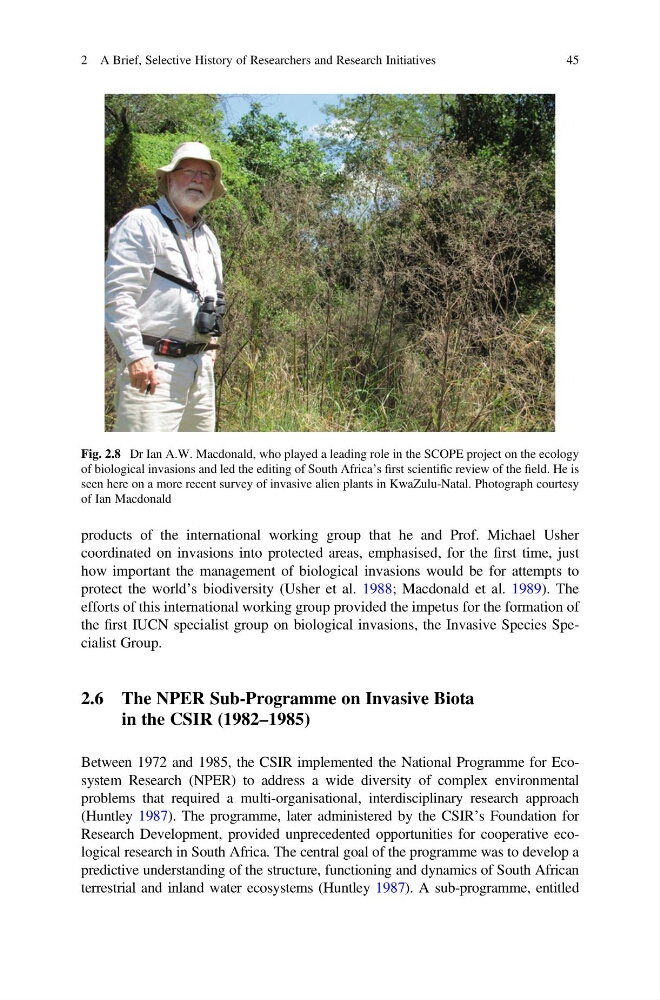
Fig. 2.8 Dr Ian A.W. Macdonald, who played a leading role in the SCOPE project on the ecology
of biological invasions and led the editing of South Africa’s first scientific review of the field. He is
seen here on a more recent survey of invasive alien plants in KwaZulu-Natal. Photograph courtesy
of Ian Macdonald
2 A Brief, Selective History of Researchers and Research Initiatives
45
coordinated on invasions into protected areas, emphasised, for the first time, just
how important the management of biological invasions would be for attempts to
protect the world’s biodiversity (Usher et al. 1988; Macdonald et al. 1989). The
efforts of this international working group provided the impetus for the formation of
the first IUCN specialist group on biological invasions, the Invasive Species Specialist Group.
2.6 The NPER Sub-Programme on Invasive Biota
in the CSIR (1982–1985)
Between 1972 and 1985, the CSIR implemented the National Programme for Ecosystem Research (NPER) to address a wide diversity of complex environmental
problems that required a multi-organisational, interdisciplinary research approach
(Huntley 1987). The programme, later administered by the CSIR’s Foundation for
Research Development, provided unprecedented opportunities for cooperative ecological research in South Africa. The central goal of the programme was to develop a
predictive understanding of the structure, functioning and dynamics of South African
terrestrial and inland water ecosystems (Huntley 1987). A sub-programme, entitled
Fig. 2.8 Dr Ian A.W. Macdonald, who played a leading role in the SCOPE project on the ecology
of biological invasions and led the editing of South Africa’s first scientific review of the field. He is
seen here on a more recent survey of invasive alien plants in KwaZulu-Natal. Photograph courtesy
of Ian Macdonald
2 A Brief, Selective History of Researchers and Research Initiatives
45