

instruments [12]. Although many assays are available to study biomolecular interactions, most require labelled reporter molecules such as fluorophores or antibodies
(AlphaScreen, immunoprecipitation [13]) or large quantities of material. The advantage of SPR lies in its reliable instrumentation, automation, disposable sensor chips
and versatility of surface chemistries. Table 1 lists the main advantages and disadvantages of the SPR methodology.
1.1.3 Isothermal Titration Colorimetry (ITC)
ITC is a physical technique that allows in vitro study of the thermodynamic
parameters of macromolecules or drug interactions in solution. Using temperature
variation, it is possible to quantify the interaction by measuring the heat that is
released or adsorbed during binding [14, 15]. The microcalorimeter has two cells,
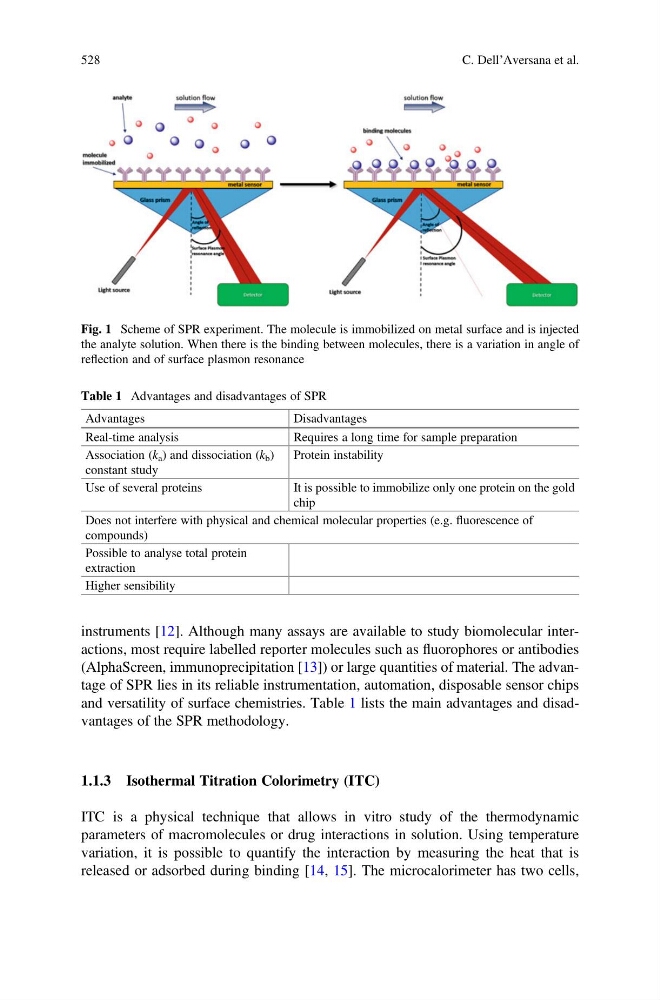
Fig. 1 Scheme of SPR experiment. The molecule is immobilized on metal surface and is injected
the analyte solution. When there is the binding between molecules, there is a variation in angle of
reflection and of surface plasmon resonance
Table 1 Advantages and disadvantages of SPR
Advantages
Disadvantages
Real-time analysis
Requires a long time for sample preparation
Association (k a ) and dissociation (k b )
constant study
Protein instability
Use of several proteins
It is possible to immobilize only one protein on the gold
chip
Does not interfere with physical and chemical molecular properties (e.g. fluorescence of
compounds)
Possible to analyse total protein
extraction
Higher sensibility
528
C. Dell’Aversana et al.
(AlphaScreen, immunoprecipitation [13]) or large quantities of material. The advantage of SPR lies in its reliable instrumentation, automation, disposable sensor chips
and versatility of surface chemistries. Table 1 lists the main advantages and disadvantages of the SPR methodology.
1.1.3 Isothermal Titration Colorimetry (ITC)
ITC is a physical technique that allows in vitro study of the thermodynamic
parameters of macromolecules or drug interactions in solution. Using temperature
variation, it is possible to quantify the interaction by measuring the heat that is
released or adsorbed during binding [14, 15]. The microcalorimeter has two cells,
Fig. 1 Scheme of SPR experiment. The molecule is immobilized on metal surface and is injected
the analyte solution. When there is the binding between molecules, there is a variation in angle of
reflection and of surface plasmon resonance
Table 1 Advantages and disadvantages of SPR
Advantages
Disadvantages
Real-time analysis
Requires a long time for sample preparation
Association (k a ) and dissociation (k b )
constant study
Protein instability
Use of several proteins
It is possible to immobilize only one protein on the gold
chip
Does not interfere with physical and chemical molecular properties (e.g. fluorescence of
compounds)
Possible to analyse total protein
extraction
Higher sensibility
528
C. Dell’Aversana et al.