

Compliance with Ethical Standards
Funding: This work was supported by the U.S. National Cancer Institute [2R01 CA-095039].
Conflict of Interest: All authors declare that they do not have a conflict of interest.
Ethical Approval: This chapter does not contain any studies with human participants or animals
performed by any of the authors.
References
1. International Human Genome Sequencing C (2004) Finishing the euchromatic sequence of the
human genome. Nature 431(7011):931–945. https://doi.org/10.1038/nature03001
2. Bestor TH (2000) The DNA methyltransferases of mammals. Hum Mol Genet 9
(16):2395–2402
3. Warnecke PM, Bestor TH (2000) Cytosine methylation and human cancer. Curr Opin Oncol
12(1):68–73
4. Panning B, Jaenisch R (1998) RNA and the epigenetic regulation of X chromosome inactivation. Cell 93(3):305–308
5. Song J, Teplova M, Ishibe-Murakami S, Patel DJ (2012) Structure-based mechanistic insights
into DNMT1-mediated maintenance DNA methylation. Science 335(6069):709–712. https://
doi.org/10.1126/science.1214453
6. Klose RJ, Bird AP (2006) Genomic DNA methylation: the mark and its mediators. Trends
Biochem Sci 31(2):89–97. https://doi.org/10.1016/j.tibs.2005.12.008
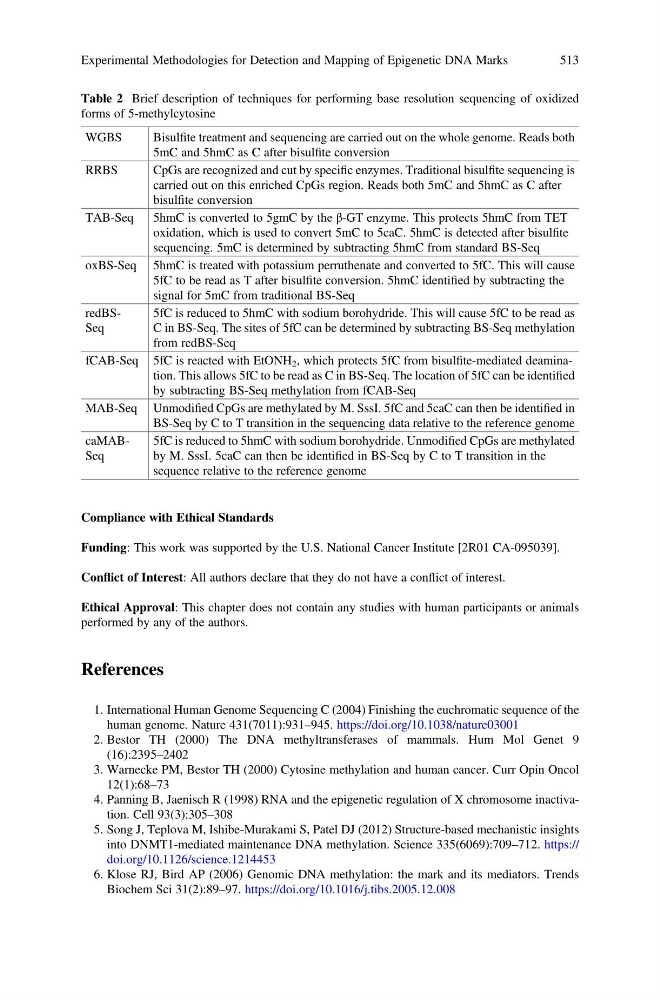
Table 2 Brief description of techniques for performing base resolution sequencing of oxidized
forms of 5-methylcytosine
WGBS
Bisulfite treatment and sequencing are carried out on the whole genome. Reads both
5mC and 5hmC as C after bisulfite conversion
RRBS
CpGs are recognized and cut by specific enzymes. Traditional bisulfite sequencing is
carried out on this enriched CpGs region. Reads both 5mC and 5hmC as C after
bisulfite conversion
TAB-Seq
5hmC is converted to 5gmC by the β-GT enzyme. This protects 5hmC from TET
oxidation, which is used to convert 5mC to 5caC. 5hmC is detected after bisulfite
sequencing. 5mC is determined by subtracting 5hmC from standard BS-Seq
oxBS-Seq 5hmC is treated with potassium perruthenate and converted to 5fC. This will cause
5fC to be read as T after bisulfite conversion. 5hmC identified by subtracting the
signal for 5mC from traditional BS-Seq
redBSSeq
5fC is reduced to 5hmC with sodium borohydride. This will cause 5fC to be read as
C in BS-Seq. The sites of 5fC can be determined by subtracting BS-Seq methylation
from redBS-Seq
fCAB-Seq 5fC is reacted with EtONH 2 , which protects 5fC from bisulfite-mediated deamination. This allows 5fC to be read as C in BS-Seq. The location of 5fC can be identified
by subtracting BS-Seq methylation from fCAB-Seq
MAB-Seq Unmodified CpGs are methylated by M. SssI. 5fC and 5caC can then be identified in
BS-Seq by C to T transition in the sequencing data relative to the reference genome
caMABSeq
5fC is reduced to 5hmC with sodium borohydride. Unmodified CpGs are methylated
by M. SssI. 5caC can then be identified in BS-Seq by C to T transition in the
sequence relative to the reference genome
Experimental Methodologies for Detection and Mapping of Epigenetic DNA Marks
513
Funding: This work was supported by the U.S. National Cancer Institute [2R01 CA-095039].
Conflict of Interest: All authors declare that they do not have a conflict of interest.
Ethical Approval: This chapter does not contain any studies with human participants or animals
performed by any of the authors.
References
1. International Human Genome Sequencing C (2004) Finishing the euchromatic sequence of the
human genome. Nature 431(7011):931–945. https://doi.org/10.1038/nature03001
2. Bestor TH (2000) The DNA methyltransferases of mammals. Hum Mol Genet 9
(16):2395–2402
3. Warnecke PM, Bestor TH (2000) Cytosine methylation and human cancer. Curr Opin Oncol
12(1):68–73
4. Panning B, Jaenisch R (1998) RNA and the epigenetic regulation of X chromosome inactivation. Cell 93(3):305–308
5. Song J, Teplova M, Ishibe-Murakami S, Patel DJ (2012) Structure-based mechanistic insights
into DNMT1-mediated maintenance DNA methylation. Science 335(6069):709–712. https://
doi.org/10.1126/science.1214453
6. Klose RJ, Bird AP (2006) Genomic DNA methylation: the mark and its mediators. Trends
Biochem Sci 31(2):89–97. https://doi.org/10.1016/j.tibs.2005.12.008
Table 2 Brief description of techniques for performing base resolution sequencing of oxidized
forms of 5-methylcytosine
WGBS
Bisulfite treatment and sequencing are carried out on the whole genome. Reads both
5mC and 5hmC as C after bisulfite conversion
RRBS
CpGs are recognized and cut by specific enzymes. Traditional bisulfite sequencing is
carried out on this enriched CpGs region. Reads both 5mC and 5hmC as C after
bisulfite conversion
TAB-Seq
5hmC is converted to 5gmC by the β-GT enzyme. This protects 5hmC from TET
oxidation, which is used to convert 5mC to 5caC. 5hmC is detected after bisulfite
sequencing. 5mC is determined by subtracting 5hmC from standard BS-Seq
oxBS-Seq 5hmC is treated with potassium perruthenate and converted to 5fC. This will cause
5fC to be read as T after bisulfite conversion. 5hmC identified by subtracting the
signal for 5mC from traditional BS-Seq
redBSSeq
5fC is reduced to 5hmC with sodium borohydride. This will cause 5fC to be read as
C in BS-Seq. The sites of 5fC can be determined by subtracting BS-Seq methylation
from redBS-Seq
fCAB-Seq 5fC is reacted with EtONH 2 , which protects 5fC from bisulfite-mediated deamination. This allows 5fC to be read as C in BS-Seq. The location of 5fC can be identified
by subtracting BS-Seq methylation from fCAB-Seq
MAB-Seq Unmodified CpGs are methylated by M. SssI. 5fC and 5caC can then be identified in
BS-Seq by C to T transition in the sequencing data relative to the reference genome
caMABSeq
5fC is reduced to 5hmC with sodium borohydride. Unmodified CpGs are methylated
by M. SssI. 5caC can then be identified in BS-Seq by C to T transition in the
sequence relative to the reference genome
Experimental Methodologies for Detection and Mapping of Epigenetic DNA Marks
513