

6 Conclusions
Due to their prevalent role in epigenetic gene regulation, methyllysine and
methylarginine domain readers have emerged as potential drug targets for smallmolecule intervention. The shallow aromatic-binding pockets have initially
presented a challenge for targeting such domains with small molecules [249], in
contrast with the great success achieved with bromodomain inhibitors. Nonetheless,
the development of potent small molecules inhibiting the protein-protein interaction
of methyllysine readers (Tudor, MBT, chromo-, and PHD domain) and their modified histones has proven the druggability of these sites, and, even if for many
potential targets no small-molecule ligands are known yet or only rather weak
inhibitors have been found so far, the increasing knowledge gained about the
structure-activity relationships of the identified ligands is paving the way for the
development of drug candidates targeting these readers. Future research efforts are
needed in order to learn more about the biological actions and therapeutic advantages of these proteins especially those domains (PWWP, WD40, ankyrin repeats,
and ADD domains) not yet targeted.
NH 2
N
H
O
HO
H
N
O
N
+
N
H
O
H
N
O
O
NH 2
N
H
O
HO
H
N
O
N
+
N
H
O
H
N
O
O
NH
NH 2
O
H
N
O
N
N
H
O
H
N
O
N
H
H
H
UNC5114
peptidomimetic compound #1
O
H
N
O
N
N
H
O
N
N
H
H
H
UNC5115
OCH 3
N
H
O
H
N
O
N
+
N
H
O
H
N
O
O
H 2 N
HN
H 2 N
NH
H 2 N
O
JARID2 114-118 K116me3
peptidomimetic compound #3
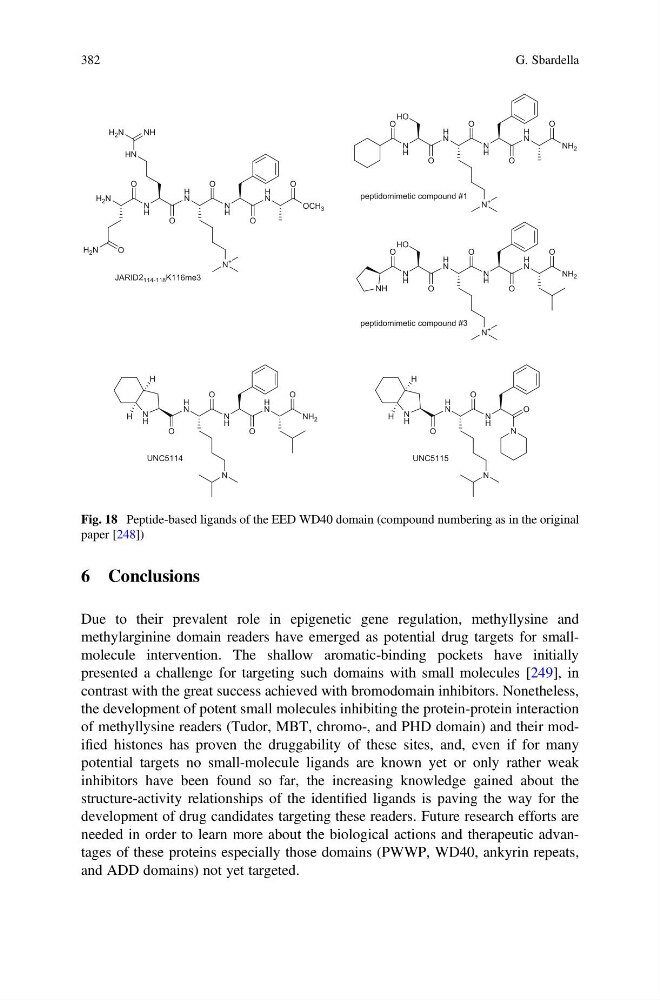
Fig. 18 Peptide-based ligands of the EED WD40 domain (compound numbering as in the original
paper [248])
382
G. Sbardella
Due to their prevalent role in epigenetic gene regulation, methyllysine and
methylarginine domain readers have emerged as potential drug targets for smallmolecule intervention. The shallow aromatic-binding pockets have initially
presented a challenge for targeting such domains with small molecules [249], in
contrast with the great success achieved with bromodomain inhibitors. Nonetheless,
the development of potent small molecules inhibiting the protein-protein interaction
of methyllysine readers (Tudor, MBT, chromo-, and PHD domain) and their modified histones has proven the druggability of these sites, and, even if for many
potential targets no small-molecule ligands are known yet or only rather weak
inhibitors have been found so far, the increasing knowledge gained about the
structure-activity relationships of the identified ligands is paving the way for the
development of drug candidates targeting these readers. Future research efforts are
needed in order to learn more about the biological actions and therapeutic advantages of these proteins especially those domains (PWWP, WD40, ankyrin repeats,
and ADD domains) not yet targeted.
NH 2
N
H
O
HO
H
N
O
N
+
N
H
O
H
N
O
O
NH 2
N
H
O
HO
H
N
O
N
+
N
H
O
H
N
O
O
NH
NH 2
O
H
N
O
N
N
H
O
H
N
O
N
H
H
H
UNC5114
peptidomimetic compound #1
O
H
N
O
N
N
H
O
N
N
H
H
H
UNC5115
OCH 3
N
H
O
H
N
O
N
+
N
H
O
H
N
O
O
H 2 N
HN
H 2 N
NH
H 2 N
O
JARID2 114-118 K116me3
peptidomimetic compound #3
Fig. 18 Peptide-based ligands of the EED WD40 domain (compound numbering as in the original
paper [248])
382
G. Sbardella