

rapidly (20 min to 1 h per compound), and the resulting data gives valuable
information about the ligand. Advantages of this assay to ITC include the low
reagent amounts required and that once immobilized, a protein chip can be
regenerated and reused for typically multiple cycles of SPR. In SPR, several proteins
can be tested in parallel, whereas in ITC this can take several hours. A disadvantage
of SPR is that the interaction measured is of the protein and ligand, while the protein
is immobilized to a chip, which may disrupt or augment the availability of the protein
to ligand binding. Due to the speed and sensitivity of SPR, it has been utilized in
fragment screening against BRD4 BD1, CREBBP, and PCAF bromodomains
[104]. In this study, 656 fragments were screened against BRD4 BD1 and CREBBP,
7 potential hits were measured in a 3-point titration, and 3 were verified as binders to
BRD4 BD1 and CREBBP. In a parallel series of experiments, two fragment scaffolds were discovered as binders to the PCAF bromodomain. This study also
demonstrated the importance of DMSO as an additive in the SPR running buffer
where higher percentages have diminishing effect on observed K d s. An analogous
assay, bio-layer interferometry, has also been used in bromodomain ligand
discovery [105].
4.2.8 DSF Has Been Used to Assess Isoform Selectivity of Bromodomain
Inhibitors
DSF is a thermal shift assay that has been utilized as a screening technique, to
rank order hits, and to access bromodomain isoform selectivity. DSF uses a
solvatochromatic fluorescent dye. In polar media, the fluorescence of the dye is
quenched, while in hydrophobic environments such as denatured proteins, the
fluorescence is increased. In this experiment, the dye is incubated with a protein.
As the temperature is gradually increased, the protein denatures exposing the
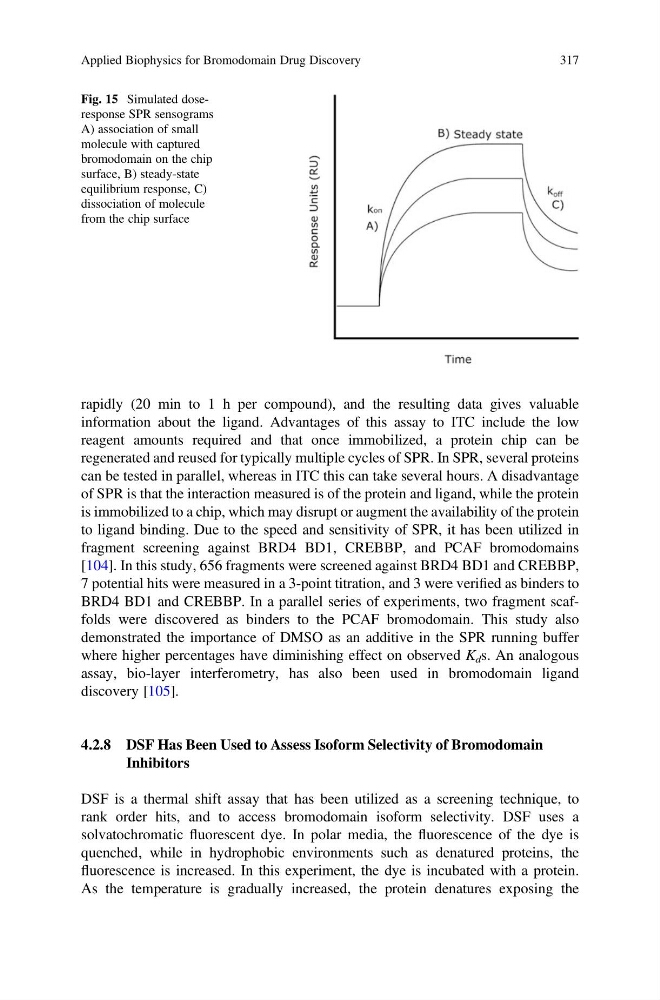
Fig. 15 Simulated doseresponse SPR sensograms
A) association of small
molecule with captured
bromodomain on the chip
surface, B) steady-state
equilibrium response, C)
dissociation of molecule
from the chip surface
Applied Biophysics for Bromodomain Drug Discovery
317
information about the ligand. Advantages of this assay to ITC include the low
reagent amounts required and that once immobilized, a protein chip can be
regenerated and reused for typically multiple cycles of SPR. In SPR, several proteins
can be tested in parallel, whereas in ITC this can take several hours. A disadvantage
of SPR is that the interaction measured is of the protein and ligand, while the protein
is immobilized to a chip, which may disrupt or augment the availability of the protein
to ligand binding. Due to the speed and sensitivity of SPR, it has been utilized in
fragment screening against BRD4 BD1, CREBBP, and PCAF bromodomains
[104]. In this study, 656 fragments were screened against BRD4 BD1 and CREBBP,
7 potential hits were measured in a 3-point titration, and 3 were verified as binders to
BRD4 BD1 and CREBBP. In a parallel series of experiments, two fragment scaffolds were discovered as binders to the PCAF bromodomain. This study also
demonstrated the importance of DMSO as an additive in the SPR running buffer
where higher percentages have diminishing effect on observed K d s. An analogous
assay, bio-layer interferometry, has also been used in bromodomain ligand
discovery [105].
4.2.8 DSF Has Been Used to Assess Isoform Selectivity of Bromodomain
Inhibitors
DSF is a thermal shift assay that has been utilized as a screening technique, to
rank order hits, and to access bromodomain isoform selectivity. DSF uses a
solvatochromatic fluorescent dye. In polar media, the fluorescence of the dye is
quenched, while in hydrophobic environments such as denatured proteins, the
fluorescence is increased. In this experiment, the dye is incubated with a protein.
As the temperature is gradually increased, the protein denatures exposing the
Fig. 15 Simulated doseresponse SPR sensograms
A) association of small
molecule with captured
bromodomain on the chip
surface, B) steady-state
equilibrium response, C)
dissociation of molecule
from the chip surface
Applied Biophysics for Bromodomain Drug Discovery
317