

23
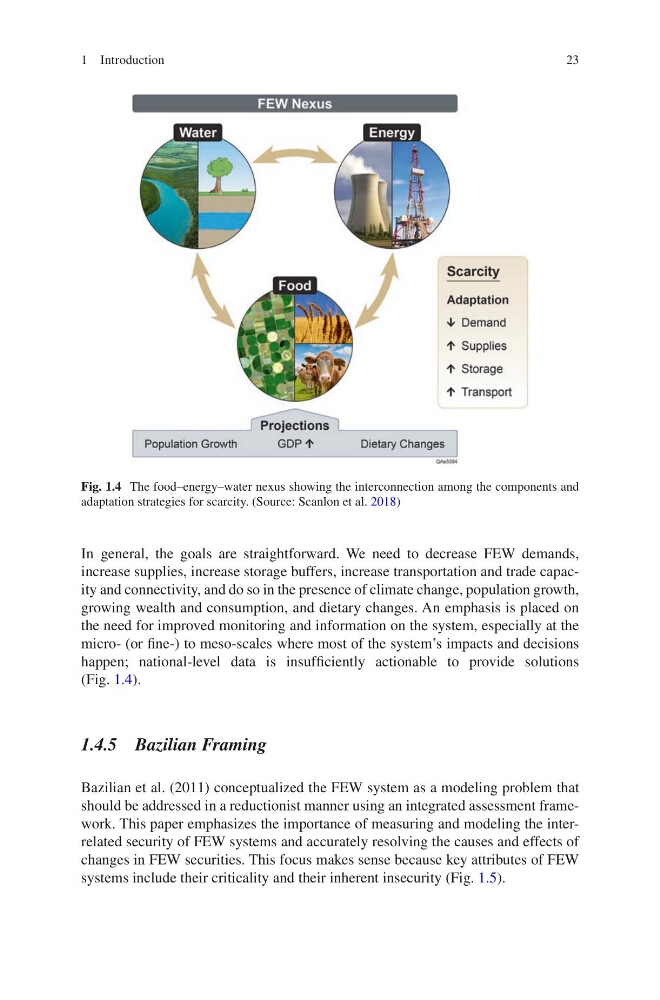
Fig. 1.4 The food–energy–water nexus showing the interconnection among the components and
adaptation strategies for scarcity. (Source: Scanlon et al. 2018)
In general, the goals are straightforward. We need to decrease FEW demands,
increase supplies, increase storage buffers, increase transportation and trade capacity and connectivity, and do so in the presence of climate change, population growth,
growing wealth and consumption, and dietary changes. An emphasis is placed on
the need for improved monitoring and information on the system, especially at the
micro- (or fine-) to meso-scales where most of the system’s impacts and decisions
happen; national-level data is insufficiently actionable to provide solutions
(Fig. 1.4).
1.4.5 Bazilian Framing
Bazilian et al. (2011) conceptualized the FEW system as a modeling problem that
should be addressed in a reductionist manner using an integrated assessment framework. This paper emphasizes the importance of measuring and modeling the interrelated security of FEW systems and accurately resolving the causes and effects of
changes in FEW securities. This focus makes sense because key attributes of FEW
systems include their criticality and their inherent insecurity (Fig. 1.5).
1 Introduction
Fig. 1.4 The food–energy–water nexus showing the interconnection among the components and
adaptation strategies for scarcity. (Source: Scanlon et al. 2018)
In general, the goals are straightforward. We need to decrease FEW demands,
increase supplies, increase storage buffers, increase transportation and trade capacity and connectivity, and do so in the presence of climate change, population growth,
growing wealth and consumption, and dietary changes. An emphasis is placed on
the need for improved monitoring and information on the system, especially at the
micro- (or fine-) to meso-scales where most of the system’s impacts and decisions
happen; national-level data is insufficiently actionable to provide solutions
(Fig. 1.4).
1.4.5 Bazilian Framing
Bazilian et al. (2011) conceptualized the FEW system as a modeling problem that
should be addressed in a reductionist manner using an integrated assessment framework. This paper emphasizes the importance of measuring and modeling the interrelated security of FEW systems and accurately resolving the causes and effects of
changes in FEW securities. This focus makes sense because key attributes of FEW
systems include their criticality and their inherent insecurity (Fig. 1.5).
1 Introduction