

287
large dams, by collecting winter season precipitation and slowly releasing it to rivers during the growing season. Global warming trends are especially strong in
mountainous regions, and this warming effectively reduces the ability of mountains
to provide raw freshwater storage infrastructure services.
The soft infrastructure for raw water is comprised of consumption, ownership,
finance, and governance.
Raw water is mostly consumed by irrigated agriculture, which is capable of
using raw freshwater as a direct input to growing operations. Some raw freshwater
is used by cities and factories that do not make use of municipal water supplies. For
example, the south-north transfer in China will provide a large fraction of the raw
freshwater needed by northern Chinese megacities, by moving water hundreds of
miles from the humid southern Yangtze river to the more arid North China Plain.
Paper mills, steel mills, and power plants are common examples of industries that
need a high volume of non-potable quality freshwater, and that normally utilize raw
water as a result. Water canals and dams are usually publicly owned and financed
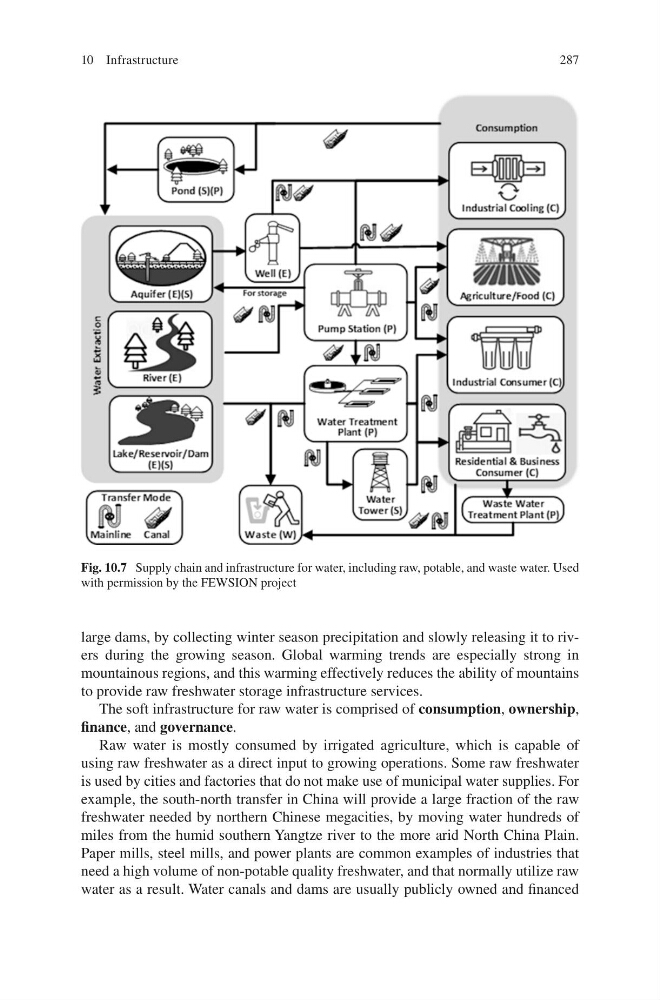
Fig. 10.7 Supply chain and infrastructure for water, including raw, potable, and waste water. Used
with permission by the FEWSION project
10 Infrastructure
large dams, by collecting winter season precipitation and slowly releasing it to rivers during the growing season. Global warming trends are especially strong in
mountainous regions, and this warming effectively reduces the ability of mountains
to provide raw freshwater storage infrastructure services.
The soft infrastructure for raw water is comprised of consumption, ownership,
finance, and governance.
Raw water is mostly consumed by irrigated agriculture, which is capable of
using raw freshwater as a direct input to growing operations. Some raw freshwater
is used by cities and factories that do not make use of municipal water supplies. For
example, the south-north transfer in China will provide a large fraction of the raw
freshwater needed by northern Chinese megacities, by moving water hundreds of
miles from the humid southern Yangtze river to the more arid North China Plain.
Paper mills, steel mills, and power plants are common examples of industries that
need a high volume of non-potable quality freshwater, and that normally utilize raw
water as a result. Water canals and dams are usually publicly owned and financed
Fig. 10.7 Supply chain and infrastructure for water, including raw, potable, and waste water. Used
with permission by the FEWSION project
10 Infrastructure