

275
across jurisdictional boundaries for specialty foods, but most of the system is
national in scale. Packaged food is a major part of the modern food supply, especially
in the USA. Because it is relatively easy to store and can accept inputs from global
sources, the production and transportation of packaged food helps to alleviate seasonal mismatches between local crop production and the constant demand by people for food.
Soft infrastructure in the food sector involves consumers, owners, financiers,
and governance (Fig. 10.3).
In the USA the food infrastructure is privately owned by a combination of small
and large businesses, known as “agribusiness.” In the developing world the food
infrastructure tends to be locally owned, or even owned by the consumers themselves (e.g., subsistence farming, family farming). Finance tends to be private.
Consumers are ultimately people, but may also be value-added food processing and
manufacturing operations or even energy companies (in the case of grain ethanol).
Governance over the food system ranges from local market control to national regulatory agencies like the Food and Drug Administration (FDA) in the USA. The FDA
enforces grading labels and quality standards that distinguish grades such as organic,
prime, and “natural,” and requires labeling of ingredients and nutritional values.
Most countries require some kind of random testing for food quality and safety; the
primary concern of this testing is the prevention of contamination of food products
by infectious diseases. Unlike bulk grain or most raw FEW commodities, packaged
food and meat tends to be non-subsidized and is usually sold at market prices. Bulk
grains and some dairy products tend to be price-controlled or subsidized as part of
national food security policies.
Regulated and subsidized markets serve to prevent agribusiness from collapsing
during droughts and periods of low prices, and stabilize the supply of bulk grain in
what would otherwise be a highly risky and cyclical business. This type of regulation and subsidy is politically popular in countries with a large traditional farming
population, and also ensures that grain is normally overproduced. This helps ensure
food security. Bulk grain trade serves as a large substitutionary mechanism for local
water, as pointed out by Allan (1998) as the “virtual water trade.” There are many
countries in arid regions that feed their populations and animals largely with
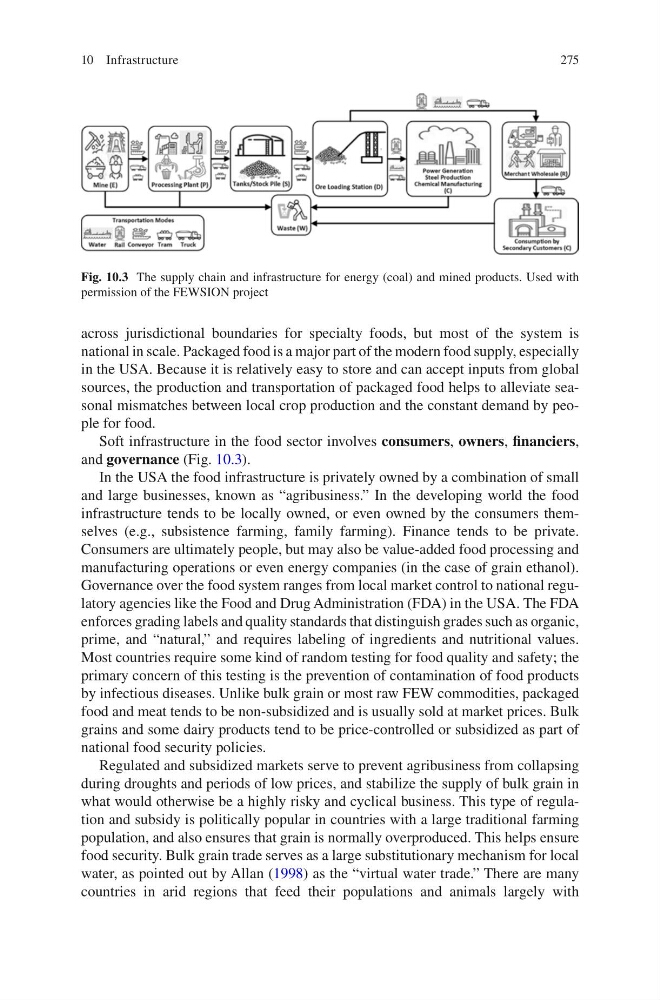
Fig. 10.3 The supply chain and infrastructure for energy (coal) and mined products. Used with
permission of the FEWSION project
10 Infrastructure
across jurisdictional boundaries for specialty foods, but most of the system is
national in scale. Packaged food is a major part of the modern food supply, especially
in the USA. Because it is relatively easy to store and can accept inputs from global
sources, the production and transportation of packaged food helps to alleviate seasonal mismatches between local crop production and the constant demand by people for food.
Soft infrastructure in the food sector involves consumers, owners, financiers,
and governance (Fig. 10.3).
In the USA the food infrastructure is privately owned by a combination of small
and large businesses, known as “agribusiness.” In the developing world the food
infrastructure tends to be locally owned, or even owned by the consumers themselves (e.g., subsistence farming, family farming). Finance tends to be private.
Consumers are ultimately people, but may also be value-added food processing and
manufacturing operations or even energy companies (in the case of grain ethanol).
Governance over the food system ranges from local market control to national regulatory agencies like the Food and Drug Administration (FDA) in the USA. The FDA
enforces grading labels and quality standards that distinguish grades such as organic,
prime, and “natural,” and requires labeling of ingredients and nutritional values.
Most countries require some kind of random testing for food quality and safety; the
primary concern of this testing is the prevention of contamination of food products
by infectious diseases. Unlike bulk grain or most raw FEW commodities, packaged
food and meat tends to be non-subsidized and is usually sold at market prices. Bulk
grains and some dairy products tend to be price-controlled or subsidized as part of
national food security policies.
Regulated and subsidized markets serve to prevent agribusiness from collapsing
during droughts and periods of low prices, and stabilize the supply of bulk grain in
what would otherwise be a highly risky and cyclical business. This type of regulation and subsidy is politically popular in countries with a large traditional farming
population, and also ensures that grain is normally overproduced. This helps ensure
food security. Bulk grain trade serves as a large substitutionary mechanism for local
water, as pointed out by Allan (1998) as the “virtual water trade.” There are many
countries in arid regions that feed their populations and animals largely with
Fig. 10.3 The supply chain and infrastructure for energy (coal) and mined products. Used with
permission of the FEWSION project
10 Infrastructure