

219
quality standards over time, but limitations in enforcement, along with the complexities in understanding how different pollutants and polluters interact, can
impede such improvements.
One final point on the Clean Water Act bears mention: its emphasis on pointsource pollution means that regulation for drinking water supplies in urban areas
polluted by point sources subject to NPDES permits is far tighter than regulation for
water users near farms, where non-point sources prevail. Regulation of non-point
sources of pollution falls to the states, creating a “de facto fifty-state experiment in
regulation—or rather, non-regulation –” of non-point source pollution (Craig and
Roberts 2015, p. 2). Agricultural operations are a major contributor. Craig and
Roberts note relatively few cases where states have found political support for regulating non-point source pollution: the fate of salmon in the Pacific Northwest, the
"blue-baby syndrome" resulting from nitrates, and the degradation of the Chesapeake
Bay, for example. More recently, health impacts of harmful algal (cyanobacteria)
blooms have garnered political attention in watersheds throughout the country
(see Sect. 5.2.3).
8.2.1.2 Safe Drinking Water Act
The Safe Drinking Water Act (SDWA), enacted in 1974 and amended in 1996, was
created to protect both surface and subsurface drinking water sources. According to
Pollans (2016), almost one-third of the pollutants regulated by the SDWA enter
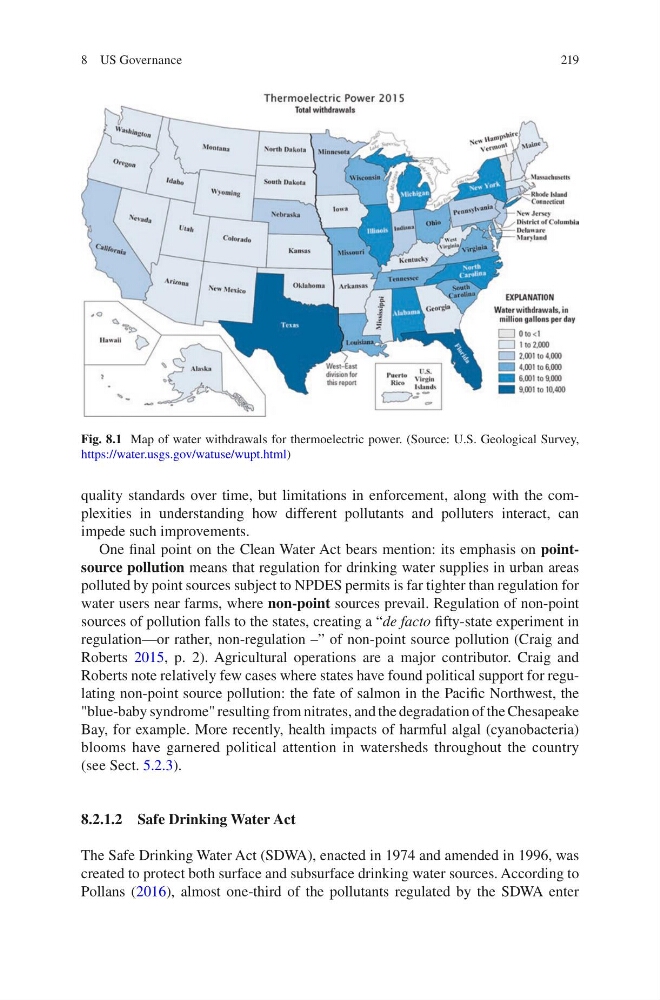
Fig. 8.1 Map of water withdrawals for thermoelectric power. (Source: U.S. Geological Survey,
https://water.usgs.gov/watuse/wupt.html)
8 US Governance
quality standards over time, but limitations in enforcement, along with the complexities in understanding how different pollutants and polluters interact, can
impede such improvements.
One final point on the Clean Water Act bears mention: its emphasis on pointsource pollution means that regulation for drinking water supplies in urban areas
polluted by point sources subject to NPDES permits is far tighter than regulation for
water users near farms, where non-point sources prevail. Regulation of non-point
sources of pollution falls to the states, creating a “de facto fifty-state experiment in
regulation—or rather, non-regulation –” of non-point source pollution (Craig and
Roberts 2015, p. 2). Agricultural operations are a major contributor. Craig and
Roberts note relatively few cases where states have found political support for regulating non-point source pollution: the fate of salmon in the Pacific Northwest, the
"blue-baby syndrome" resulting from nitrates, and the degradation of the Chesapeake
Bay, for example. More recently, health impacts of harmful algal (cyanobacteria)
blooms have garnered political attention in watersheds throughout the country
(see Sect. 5.2.3).
8.2.1.2 Safe Drinking Water Act
The Safe Drinking Water Act (SDWA), enacted in 1974 and amended in 1996, was
created to protect both surface and subsurface drinking water sources. According to
Pollans (2016), almost one-third of the pollutants regulated by the SDWA enter
Fig. 8.1 Map of water withdrawals for thermoelectric power. (Source: U.S. Geological Survey,
https://water.usgs.gov/watuse/wupt.html)
8 US Governance