

74
3.3
Effects of Volcanism
and Earthquakes
on Sustainable Development
Primary effects of major volcanic eruptions and
devastating earthquakes are clearly severely disadvantageous for the development of the society.
In poor countries they further increase the misery of people, causing financial loss and human
tragedies like in Haiti in 2010. In such countries
the few rich people in better constructed houses
have greater chance to survive a devastating
earthquake and retain the majority of properties
making financial differences and thus tension
present in the community even worse. Destroyed
infrastructure, temporary or prolonged suspension of services (e.g. public health, waste disposal) may lead to the risk of pandemics.
Removing the ruins of buildings and reconstruction consumes huge money which the countries
or settlements involved can cover within different times periods depending on its development
and the size of damage. The earthquake in the
city of Kobe in Japan in 1995 caused a damage
of around 120 billion US dollars which is
regarded to be one of the most expensive earthquake damages in the world (Abramovitz 2001).
Despite this the developed and rich countries
could meet the costs relatively soon. Longer
time was required (and partly is still ongoing in
2019) for clearing away the destruction of the
magnitude 9 earthquake occurred not far off the
Japanese shores and the associated tsunami in
2011 (see Sect. 4.1.1).
International solidarity including financial
support could bring some benefits for the given
country or settlement as rebuilt buildings can be
earthquake safer, better settlement structure and
more modern infrastructure can be created, and
slums, ghettos can be cleared. Of course, these
benefits will only remain if the given country can
also realise more effective production and maintain it for the long term.
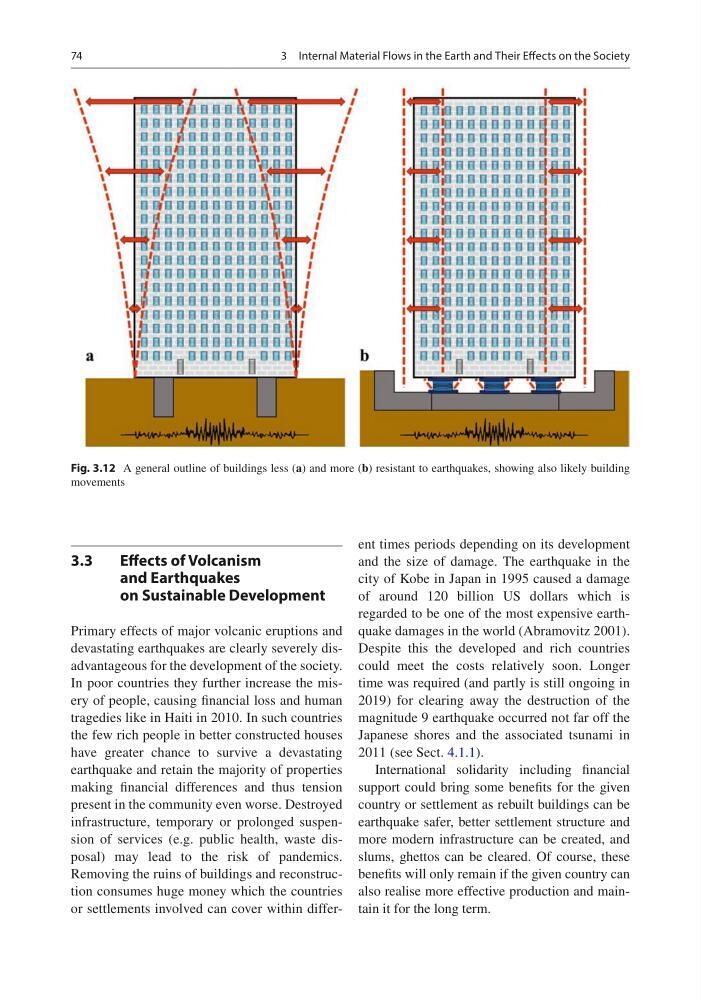
Fig. 3.12 A general outline of buildings less (a) and more (b) resistant to earthquakes, showing also likely building
movements
3 Internal Material Flows in the Earth and Their Effects on the Society
3.3
Effects of Volcanism
and Earthquakes
on Sustainable Development
Primary effects of major volcanic eruptions and
devastating earthquakes are clearly severely disadvantageous for the development of the society.
In poor countries they further increase the misery of people, causing financial loss and human
tragedies like in Haiti in 2010. In such countries
the few rich people in better constructed houses
have greater chance to survive a devastating
earthquake and retain the majority of properties
making financial differences and thus tension
present in the community even worse. Destroyed
infrastructure, temporary or prolonged suspension of services (e.g. public health, waste disposal) may lead to the risk of pandemics.
Removing the ruins of buildings and reconstruction consumes huge money which the countries
or settlements involved can cover within different times periods depending on its development
and the size of damage. The earthquake in the
city of Kobe in Japan in 1995 caused a damage
of around 120 billion US dollars which is
regarded to be one of the most expensive earthquake damages in the world (Abramovitz 2001).
Despite this the developed and rich countries
could meet the costs relatively soon. Longer
time was required (and partly is still ongoing in
2019) for clearing away the destruction of the
magnitude 9 earthquake occurred not far off the
Japanese shores and the associated tsunami in
2011 (see Sect. 4.1.1).
International solidarity including financial
support could bring some benefits for the given
country or settlement as rebuilt buildings can be
earthquake safer, better settlement structure and
more modern infrastructure can be created, and
slums, ghettos can be cleared. Of course, these
benefits will only remain if the given country can
also realise more effective production and maintain it for the long term.
Fig. 3.12 A general outline of buildings less (a) and more (b) resistant to earthquakes, showing also likely building
movements
3 Internal Material Flows in the Earth and Their Effects on the Society