

66
these occur during the eruption of a single volcano. Generally, one is dominant among the
gases released by the eruption. Sulphur dioxide
and hydrochloric acid are produced in smaller
quantities during the eruption and in certain cases
CO 2 contributes to intensified acid deposition that
threatens plant cultivation and natural life as well.
Major eruptions could influence weather on a
global scale and may cause climatic anomalies as
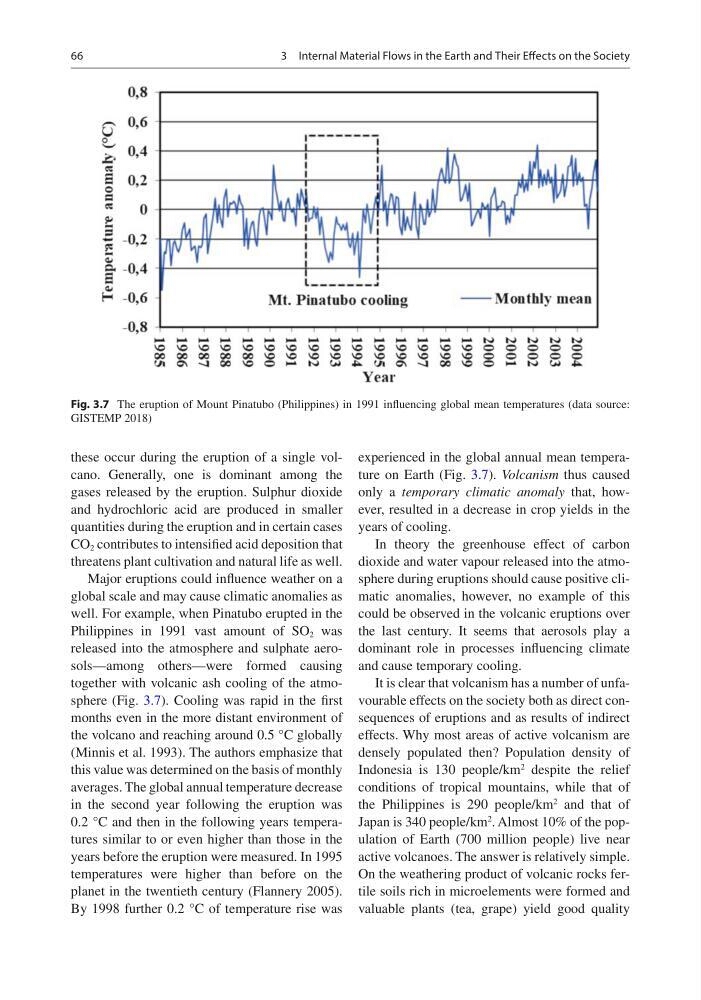
well. For example, when Pinatubo erupted in the
Philippines in 1991 vast amount of SO 2 was
released into the atmosphere and sulphate aerosols—among others—were formed causing
together with volcanic ash cooling of the atmosphere (Fig. 3.7). Cooling was rapid in the first
months even in the more distant environment of
the volcano and reaching around 0.5 °C globally
(Minnis et al. 1993). The authors emphasize that
this value was determined on the basis of monthly
averages. The global annual temperature decrease
in the second year following the eruption was
0.2 °C and then in the following years temperatures similar to or even higher than those in the
years before the eruption were measured. In 1995
temperatures were higher than before on the
planet in the twentieth century (Flannery 2005).
By 1998 further 0.2 °C of temperature rise was
experienced in the global annual mean temperature on Earth (Fig. 3.7). Volcanism thus caused
only a temporary climatic anomaly that, however, resulted in a decrease in crop yields in the
years of cooling.
In theory the greenhouse effect of carbon
dioxide and water vapour released into the atmosphere during eruptions should cause positive climatic anomalies, however, no example of this
could be observed in the volcanic eruptions over
the last century. It seems that aerosols play a
dominant role in processes influencing climate
and cause temporary cooling.
It is clear that volcanism has a number of unfavourable effects on the society both as direct consequences of eruptions and as results of indirect
effects. Why most areas of active volcanism are
densely populated then? Population density of
Indonesia is 130 people/km
2
despite the relief
conditions of tropical mountains, while that of
the Philippines is 290 people/km
2
and that of
Japan is 340 people/km
2
. Almost 10% of the population of Earth (700 million people) live near
active volcanoes. The answer is relatively simple.
On the weathering product of volcanic rocks fertile soils rich in microelements were formed and
valuable plants (tea, grape) yield good quality
Fig. 3.7 The eruption of Mount Pinatubo (Philippines) in 1991 influencing global mean temperatures (data source:
GISTEMP 2018)
3 Internal Material Flows in the Earth and Their Effects on the Society
these occur during the eruption of a single volcano. Generally, one is dominant among the
gases released by the eruption. Sulphur dioxide
and hydrochloric acid are produced in smaller
quantities during the eruption and in certain cases
CO 2 contributes to intensified acid deposition that
threatens plant cultivation and natural life as well.
Major eruptions could influence weather on a
global scale and may cause climatic anomalies as
well. For example, when Pinatubo erupted in the
Philippines in 1991 vast amount of SO 2 was
released into the atmosphere and sulphate aerosols—among others—were formed causing
together with volcanic ash cooling of the atmosphere (Fig. 3.7). Cooling was rapid in the first
months even in the more distant environment of
the volcano and reaching around 0.5 °C globally
(Minnis et al. 1993). The authors emphasize that
this value was determined on the basis of monthly
averages. The global annual temperature decrease
in the second year following the eruption was
0.2 °C and then in the following years temperatures similar to or even higher than those in the
years before the eruption were measured. In 1995
temperatures were higher than before on the
planet in the twentieth century (Flannery 2005).
By 1998 further 0.2 °C of temperature rise was
experienced in the global annual mean temperature on Earth (Fig. 3.7). Volcanism thus caused
only a temporary climatic anomaly that, however, resulted in a decrease in crop yields in the
years of cooling.
In theory the greenhouse effect of carbon
dioxide and water vapour released into the atmosphere during eruptions should cause positive climatic anomalies, however, no example of this
could be observed in the volcanic eruptions over
the last century. It seems that aerosols play a
dominant role in processes influencing climate
and cause temporary cooling.
It is clear that volcanism has a number of unfavourable effects on the society both as direct consequences of eruptions and as results of indirect
effects. Why most areas of active volcanism are
densely populated then? Population density of
Indonesia is 130 people/km
2
despite the relief
conditions of tropical mountains, while that of
the Philippines is 290 people/km
2
and that of
Japan is 340 people/km
2
. Almost 10% of the population of Earth (700 million people) live near
active volcanoes. The answer is relatively simple.
On the weathering product of volcanic rocks fertile soils rich in microelements were formed and
valuable plants (tea, grape) yield good quality
Fig. 3.7 The eruption of Mount Pinatubo (Philippines) in 1991 influencing global mean temperatures (data source:
GISTEMP 2018)
3 Internal Material Flows in the Earth and Their Effects on the Society