

54
material and energy resources), on the other hand
humans can influence all elements of the environment they can change the elements and can create
an artificial environment out of natural materials
after transforming them.
The society has to always accommodate to the
natural environment to some extent, however, the
society also transforms the environment gradually during its development. Major effects on the
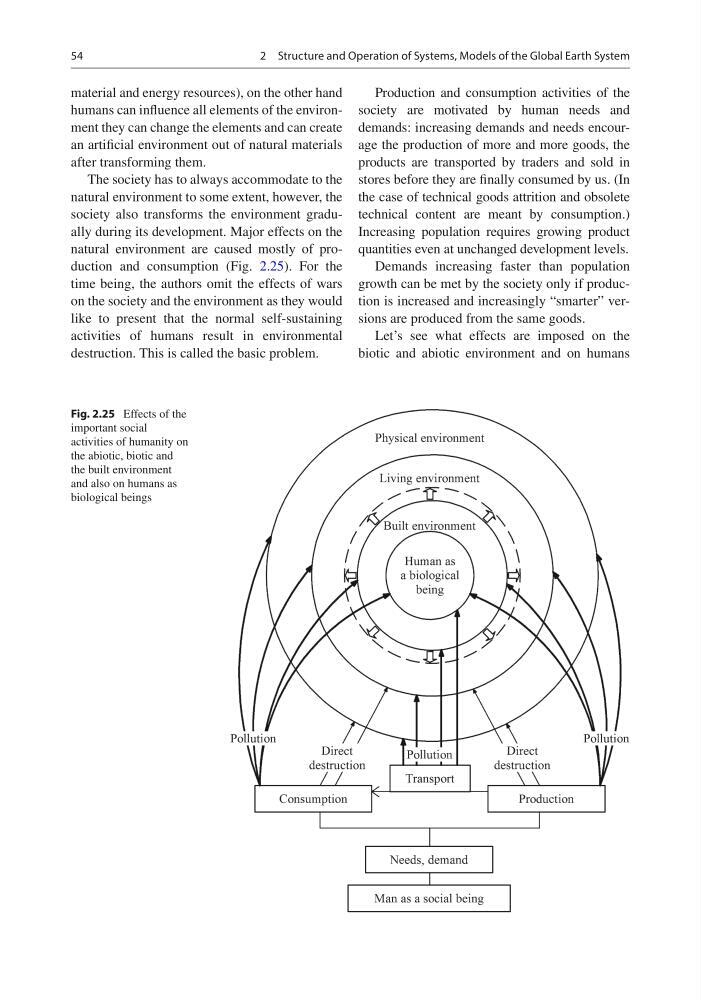
natural environment are caused mostly of production and consumption (Fig. 2.25). For the
time being, the authors omit the effects of wars
on the society and the environment as they would
like to present that the normal self-sustaining
activities of humans result in environmental
destruction. This is called the basic problem.
Production and consumption activities of the
society are motivated by human needs and
demands: increasing demands and needs encourage the production of more and more goods, the
products are transported by traders and sold in
stores before they are finally consumed by us. (In
the case of technical goods attrition and obsolete
technical content are meant by consumption.)
Increasing population requires growing product
quantities even at unchanged development levels.
Demands increasing faster than population
growth can be met by the society only if production is increased and increasingly “smarter” versions are produced from the same goods.
Let’s see what effects are imposed on the
biotic and abiotic environment and on humans
Fig. 2.25 Effects of the
important social
activities of humanity on
the abiotic, biotic and
the built environment
and also on humans as
biological beings
2 Structure and Operation of Systems, Models of the Global Earth System
material and energy resources), on the other hand
humans can influence all elements of the environment they can change the elements and can create
an artificial environment out of natural materials
after transforming them.
The society has to always accommodate to the
natural environment to some extent, however, the
society also transforms the environment gradually during its development. Major effects on the
natural environment are caused mostly of production and consumption (Fig. 2.25). For the
time being, the authors omit the effects of wars
on the society and the environment as they would
like to present that the normal self-sustaining
activities of humans result in environmental
destruction. This is called the basic problem.
Production and consumption activities of the
society are motivated by human needs and
demands: increasing demands and needs encourage the production of more and more goods, the
products are transported by traders and sold in
stores before they are finally consumed by us. (In
the case of technical goods attrition and obsolete
technical content are meant by consumption.)
Increasing population requires growing product
quantities even at unchanged development levels.
Demands increasing faster than population
growth can be met by the society only if production is increased and increasingly “smarter” versions are produced from the same goods.
Let’s see what effects are imposed on the
biotic and abiotic environment and on humans
Fig. 2.25 Effects of the
important social
activities of humanity on
the abiotic, biotic and
the built environment
and also on humans as
biological beings
2 Structure and Operation of Systems, Models of the Global Earth System